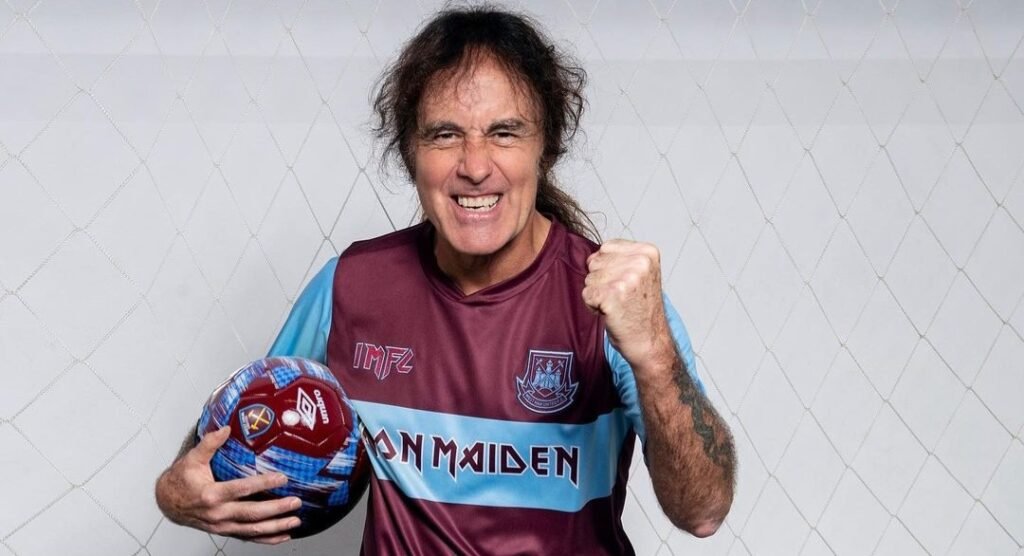



When people talk about the World Cup, the mind immediately goes to official anthems, chart hits, and the songs that accompany each edition of the tournament. Metal, however, has almost always played a different game. Bands have rarely turned their attention to the most-watched sporting event on the planet, yet over the years there have been a few surprising exceptions—especially considering that some musicians are deeply passionate about football, even going as far as supporting their national teams from the stands.
For that reason, a few of them have written tracks with explicit references to football’s ultimate competition, revisiting famous moments, iconic slogans, and the most passionate expressions of national support.
When people talk about the World Cup, the mind immediately goes to official anthems, chart hits, and the songs that accompany each edition of the tournament. Metal, however, has almost always played a different game. Bands have rarely turned their attention to the most-watched sporting event on the planet, yet over the years there have been a few surprising exceptions—especially considering that some musicians are deeply passionate about football, even going as far as supporting their national teams from the stands.
For that reason, a few of them have written tracks with explicit references to football’s ultimate competition, revisiting famous moments, iconic slogans, and the most passionate expressions of national support.
When people talk about the World Cup, the mind immediately goes to official anthems, chart hits, and the songs that accompany each edition of the tournament. Metal, however, has almost always played a different game. Bands have rarely turned their attention to the most-watched sporting event on the planet, yet over the years there have been a few surprising exceptions—especially considering that some musicians are deeply passionate about football, even going as far as supporting their national teams from the stands.
For that reason, a few of them have written tracks with explicit references to football’s ultimate competition, revisiting famous moments, iconic slogans, and the most passionate expressions of national support.
When people talk about the World Cup, the mind immediately goes to official anthems, chart hits, and the songs that accompany each edition of the tournament. Metal, however, has almost always played a different game. Bands have rarely turned their attention to the most-watched sporting event on the planet, yet over the years there have been a few surprising exceptions—especially considering that some musicians are deeply passionate about football, even going as far as supporting their national teams from the stands.
For that reason, a few of them have written tracks with explicit references to football’s ultimate competition, revisiting famous moments, iconic slogans, and the most passionate expressions of national support.
When people talk about the World Cup, the mind immediately goes to official anthems, chart hits, and the songs that accompany each edition of the tournament. Metal, however, has almost always played a different game. Bands have rarely turned their attention to the most-watched sporting event on the planet, yet over the years there have been a few surprising exceptions—especially considering that some musicians are deeply passionate about football, even going as far as supporting their national teams from the stands.
For that reason, a few of them have written tracks with explicit references to football’s ultimate competition, revisiting famous moments, iconic slogans, and the most passionate expressions of national support.

The profile of Nanowar of Steel is well known: parody-driven, sarcastic, and deliberately over-the-top. And as true Italians, they could not avoid addressing one of the most traumatic sporting events in the country’s history. During the 1994 World Cup in the United States, Italy reached the final in Pasadena after a flawless run through the knockout stages. Their final opponent, however, was a star-studded Brazil, and Italy managed to hold on until penalties, where the decisive—and infamous—moment occurred: Roberto Baggio, Italy’s standout player of the tournament, blasted the final penalty over the bar, effectively handing Brazil their fourth World Cup title and triggering heartbreak across the nation. Nanowar of Steel transformed that moment into something almost mythological, delivered with epic drama and satire, further amplified by the contribution of Joakim Brodén from Sabaton. The result is exactly what one would expect from them: grandiose storytelling wrapped in irony.
The profile of Nanowar of Steel is well known: parody-driven, sarcastic, and deliberately over-the-top. And as true Italians, they could not avoid addressing one of the most traumatic sporting events in the country’s history. During the 1994 World Cup in the United States, Italy reached the final in Pasadena after a flawless run through the knockout stages. Their final opponent, however, was a star-studded Brazil, and Italy managed to hold on until penalties, where the decisive—and infamous—moment occurred: Roberto Baggio, Italy’s standout player of the tournament, blasted the final penalty over the bar, effectively handing Brazil their fourth World Cup title and triggering heartbreak across the nation. Nanowar of Steel transformed that moment into something almost mythological, delivered with epic drama and satire, further amplified by the contribution of Joakim Brodén from Sabaton. The result is exactly what one would expect from them: grandiose storytelling wrapped in irony.
The profile of Nanowar of Steel is well known: parody-driven, sarcastic, and deliberately over-the-top. And as true Italians, they could not avoid addressing one of the most traumatic sporting events in the country’s history. During the 1994 World Cup in the United States, Italy reached the final in Pasadena after a flawless run through the knockout stages. Their final opponent, however, was a star-studded Brazil, and Italy managed to hold on until penalties, where the decisive—and infamous—moment occurred: Roberto Baggio, Italy’s standout player of the tournament, blasted the final penalty over the bar, effectively handing Brazil their fourth World Cup title and triggering heartbreak across the nation. Nanowar of Steel transformed that moment into something almost mythological, delivered with epic drama and satire, further amplified by the contribution of Joakim Brodén from Sabaton. The result is exactly what one would expect from them: grandiose storytelling wrapped in irony.
The profile of Nanowar of Steel is well known: parody-driven, sarcastic, and deliberately over-the-top. And as true Italians, they could not avoid addressing one of the most traumatic sporting events in the country’s history. During the 1994 World Cup in the United States, Italy reached the final in Pasadena after a flawless run through the knockout stages. Their final opponent, however, was a star-studded Brazil, and Italy managed to hold on until penalties, where the decisive—and infamous—moment occurred: Roberto Baggio, Italy’s standout player of the tournament, blasted the final penalty over the bar, effectively handing Brazil their fourth World Cup title and triggering heartbreak across the nation. Nanowar of Steel transformed that moment into something almost mythological, delivered with epic drama and satire, further amplified by the contribution of Joakim Brodén from Sabaton. The result is exactly what one would expect from them: grandiose storytelling wrapped in irony.
The profile of Nanowar of Steel is well known: parody-driven, sarcastic, and deliberately over-the-top. And as true Italians, they could not avoid addressing one of the most traumatic sporting events in the country’s history. During the 1994 World Cup in the United States, Italy reached the final in Pasadena after a flawless run through the knockout stages. Their final opponent, however, was a star-studded Brazil, and Italy managed to hold on until penalties, where the decisive—and infamous—moment occurred: Roberto Baggio, Italy’s standout player of the tournament, blasted the final penalty over the bar, effectively handing Brazil their fourth World Cup title and triggering heartbreak across the nation. Nanowar of Steel transformed that moment into something almost mythological, delivered with epic drama and satire, further amplified by the contribution of Joakim Brodén from Sabaton. The result is exactly what one would expect from them: grandiose storytelling wrapped in irony.

Brujeria also referenced the World Cup in their discography, naturally in support of Mexico, and the connection becomes even clearer in the track that follows. The death/grind supergroup has featured musicians from various countries over time: Sweden (Adrian Erlandsson), England (Shane Embury), and especially the United States. However, its core identity, particularly its founding members the late Juan Brujo and Pinche Peach, is Mexican. Everything in Brujeria revolves around that identity: from the gimmicks and stage names to the lyrics and the overall concept. This cultural foundation also feeds into México Campeón, a full-blown anthem celebrating the Mexican national team and dreaming of World Cup glory in the next editions, three of them held in Mexico in 1970 and 1986, as well as the 2026 tournament co-hosted with the United States and Canada. The track appears on Pocho Aztlan and the EP Ángel Chilango, where the group also depicted the “Ángel Chilango” character holding the World Cup trophy, turning it into a symbol of support for Mexico’s national side.
Brujeria also referenced the World Cup in their discography, naturally in support of Mexico, and the connection becomes even clearer in the track that follows. The death/grind supergroup has featured musicians from various countries over time: Sweden (Adrian Erlandsson), England (Shane Embury), and especially the United States. However, its core identity, particularly its founding members the late Juan Brujo and Pinche Peach, is Mexican. Everything in Brujeria revolves around that identity: from the gimmicks and stage names to the lyrics and the overall concept. This cultural foundation also feeds into México Campeón, a full-blown anthem celebrating the Mexican national team and dreaming of World Cup glory in the next editions, three of them held in Mexico in 1970 and 1986, as well as the 2026 tournament co-hosted with the United States and Canada. The track appears on Pocho Aztlan and the EP Ángel Chilango, where the group also depicted the “Ángel Chilango” character holding the World Cup trophy, turning it into a symbol of support for Mexico’s national side.
Brujeria also referenced the World Cup in their discography, naturally in support of Mexico, and the connection becomes even clearer in the track that follows. The death/grind supergroup has featured musicians from various countries over time: Sweden (Adrian Erlandsson), England (Shane Embury), and especially the United States. However, its core identity, particularly its founding members the late Juan Brujo and Pinche Peach, is Mexican. Everything in Brujeria revolves around that identity: from the gimmicks and stage names to the lyrics and the overall concept. This cultural foundation also feeds into México Campeón, a full-blown anthem celebrating the Mexican national team and dreaming of World Cup glory in the next editions, three of them held in Mexico in 1970 and 1986, as well as the 2026 tournament co-hosted with the United States and Canada. The track appears on Pocho Aztlan and the EP Ángel Chilango, where the group also depicted the “Ángel Chilango” character holding the World Cup trophy, turning it into a symbol of support for Mexico’s national side.
Brujeria also referenced the World Cup in their discography, naturally in support of Mexico, and the connection becomes even clearer in the track that follows. The death/grind supergroup has featured musicians from various countries over time: Sweden (Adrian Erlandsson), England (Shane Embury), and especially the United States. However, its core identity, particularly its founding members the late Juan Brujo and Pinche Peach, is Mexican. Everything in Brujeria revolves around that identity: from the gimmicks and stage names to the lyrics and the overall concept. This cultural foundation also feeds into México Campeón, a full-blown anthem celebrating the Mexican national team and dreaming of World Cup glory in the next editions, three of them held in Mexico in 1970 and 1986, as well as the 2026 tournament co-hosted with the United States and Canada. The track appears on Pocho Aztlan and the EP Ángel Chilango, where the group also depicted the “Ángel Chilango” character holding the World Cup trophy, turning it into a symbol of support for Mexico’s national side.
Brujeria also referenced the World Cup in their discography, naturally in support of Mexico, and the connection becomes even clearer in the track that follows. The death/grind supergroup has featured musicians from various countries over time: Sweden (Adrian Erlandsson), England (Shane Embury), and especially the United States. However, its core identity, particularly its founding members the late Juan Brujo and Pinche Peach, is Mexican. Everything in Brujeria revolves around that identity: from the gimmicks and stage names to the lyrics and the overall concept. This cultural foundation also feeds into México Campeón, a full-blown anthem celebrating the Mexican national team and dreaming of World Cup glory in the next editions, three of them held in Mexico in 1970 and 1986, as well as the 2026 tournament co-hosted with the United States and Canada. The track appears on Pocho Aztlan and the EP Ángel Chilango, where the group also depicted the “Ángel Chilango” character holding the World Cup trophy, turning it into a symbol of support for Mexico’s national side.

Skyclad are a cult name in the British metal scene. While part of the post–New Wave of British Heavy Metal , the Newcastle band is widely regarded as one of the pioneers of folk metal, alongside other international acts exploring similar territory. A key track illustrating this connection is They Think It’s All Over, (Well Is It Now?), whose title references one of the most famous moments in English football history. It echoes the iconic words of commentator Kenneth Wolstenholme during the 1966 World Cup final between England and West Germany, when England secured a 4–2 victory to win their first—and so far only—World Cup on home soil. The song itself takes a critical stance, using that historic triumph as a lens to reflect on modern England, suggesting a nation that clings to past glory while overlooking present-day social issues.
Skyclad are a cult name in the British metal scene. While part of the post–New Wave of British Heavy Metal , the Newcastle band is widely regarded as one of the pioneers of folk metal, alongside other international acts exploring similar territory. A key track illustrating this connection is They Think It’s All Over, (Well Is It Now?), whose title references one of the most famous moments in English football history. It echoes the iconic words of commentator Kenneth Wolstenholme during the 1966 World Cup final between England and West Germany, when England secured a 4–2 victory to win their first—and so far only—World Cup on home soil. The song itself takes a critical stance, using that historic triumph as a lens to reflect on modern England, suggesting a nation that clings to past glory while overlooking present-day social issues.
Skyclad are a cult name in the British metal scene. While part of the post–New Wave of British Heavy Metal , the Newcastle band is widely regarded as one of the pioneers of folk metal, alongside other international acts exploring similar territory. A key track illustrating this connection is They Think It’s All Over, (Well Is It Now?), whose title references one of the most famous moments in English football history. It echoes the iconic words of commentator Kenneth Wolstenholme during the 1966 World Cup final between England and West Germany, when England secured a 4–2 victory to win their first—and so far only—World Cup on home soil. The song itself takes a critical stance, using that historic triumph as a lens to reflect on modern England, suggesting a nation that clings to past glory while overlooking present-day social issues.
Skyclad are a cult name in the British metal scene. While part of the post–New Wave of British Heavy Metal , the Newcastle band is widely regarded as one of the pioneers of folk metal, alongside other international acts exploring similar territory. A key track illustrating this connection is They Think It’s All Over, (Well Is It Now?), whose title references one of the most famous moments in English football history. It echoes the iconic words of commentator Kenneth Wolstenholme during the 1966 World Cup final between England and West Germany, when England secured a 4–2 victory to win their first—and so far only—World Cup on home soil. The song itself takes a critical stance, using that historic triumph as a lens to reflect on modern England, suggesting a nation that clings to past glory while overlooking present-day social issues.
Skyclad are a cult name in the British metal scene. While part of the post–New Wave of British Heavy Metal , the Newcastle band is widely regarded as one of the pioneers of folk metal, alongside other international acts exploring similar territory. A key track illustrating this connection is They Think It’s All Over, (Well Is It Now?), whose title references one of the most famous moments in English football history. It echoes the iconic words of commentator Kenneth Wolstenholme during the 1966 World Cup final between England and West Germany, when England secured a 4–2 victory to win their first—and so far only—World Cup on home soil. The song itself takes a critical stance, using that historic triumph as a lens to reflect on modern England, suggesting a nation that clings to past glory while overlooking present-day social issues.

Another metal track tied to the World Cup comes from Germany, specifically Metalforce, which operated under that name between 2008 and 2011 before changes to its lineup and identity. Under that moniker, they released a self-titled album and a series of singles, including On Your Way. The band explicitly stated that the song was written to support all teams participating in the 2010 World Cup in South Africa—not just Germany. They also recorded a German-language version, Geh den Weg, dedicated specifically to the national team. What stands out is that the track doesn’t follow the usual stadium-chant formula. Instead, Tarek Maghary channels the epic language of power metal—reminiscent of bands like Manowar or Virgin Steele—and applies it to football, blending two worlds with surprising coherence.
Another metal track tied to the World Cup comes from Germany, specifically Metalforce, which operated under that name between 2008 and 2011 before changes to its lineup and identity. Under that moniker, they released a self-titled album and a series of singles, including On Your Way. The band explicitly stated that the song was written to support all teams participating in the 2010 World Cup in South Africa—not just Germany. They also recorded a German-language version, Geh den Weg, dedicated specifically to the national team. What stands out is that the track doesn’t follow the usual stadium-chant formula. Instead, Tarek Maghary channels the epic language of power metal—reminiscent of bands like Manowar or Virgin Steele—and applies it to football, blending two worlds with surprising coherence.
Another metal track tied to the World Cup comes from Germany, specifically Metalforce, which operated under that name between 2008 and 2011 before changes to its lineup and identity. Under that moniker, they released a self-titled album and a series of singles, including On Your Way. The band explicitly stated that the song was written to support all teams participating in the 2010 World Cup in South Africa—not just Germany. They also recorded a German-language version, Geh den Weg, dedicated specifically to the national team. What stands out is that the track doesn’t follow the usual stadium-chant formula. Instead, Tarek Maghary channels the epic language of power metal—reminiscent of bands like Manowar or Virgin Steele—and applies it to football, blending two worlds with surprising coherence.
Another metal track tied to the World Cup comes from Germany, specifically Metalforce, which operated under that name between 2008 and 2011 before changes to its lineup and identity. Under that moniker, they released a self-titled album and a series of singles, including On Your Way. The band explicitly stated that the song was written to support all teams participating in the 2010 World Cup in South Africa—not just Germany. They also recorded a German-language version, Geh den Weg, dedicated specifically to the national team. What stands out is that the track doesn’t follow the usual stadium-chant formula. Instead, Tarek Maghary channels the epic language of power metal—reminiscent of bands like Manowar or Virgin Steele—and applies it to football, blending two worlds with surprising coherence.
Another metal track tied to the World Cup comes from Germany, specifically Metalforce, which operated under that name between 2008 and 2011 before changes to its lineup and identity. Under that moniker, they released a self-titled album and a series of singles, including On Your Way. The band explicitly stated that the song was written to support all teams participating in the 2010 World Cup in South Africa—not just Germany. They also recorded a German-language version, Geh den Weg, dedicated specifically to the national team. What stands out is that the track doesn’t follow the usual stadium-chant formula. Instead, Tarek Maghary channels the epic language of power metal—reminiscent of bands like Manowar or Virgin Steele—and applies it to football, blending two worlds with surprising coherence.

Last but not least is a track by Beekeeper, a thrash trio from San Diego, released on their four-track EP Group of Death in December 2022, during the Qatar World Cup. At that tournament, the United States faced England, Iran, and Wales in the group stage. Perhaps a dose of old-school thrash was exactly what the US team needed to keep morale high—or at least that’s the spirit of the release. The EP makes its intent unmistakable: to sarcastically mock and provoke opponents, especially England and its famous “It’s Coming Home” mantra. That aim culminates in The Cup Is Not Coming Home, a tongue-in-cheek, over-the-top tribute built around a deliberately one-sided rivalry, delivered through the satirical, theatrical lens typical of thrash metal humor.
Last but not least is a track by Beekeeper, a thrash trio from San Diego, released on their four-track EP Group of Death in December 2022, during the Qatar World Cup. At that tournament, the United States faced England, Iran, and Wales in the group stage. Perhaps a dose of old-school thrash was exactly what the US team needed to keep morale high—or at least that’s the spirit of the release. The EP makes its intent unmistakable: to sarcastically mock and provoke opponents, especially England and its famous “It’s Coming Home” mantra. That aim culminates in The Cup Is Not Coming Home, a tongue-in-cheek, over-the-top tribute built around a deliberately one-sided rivalry, delivered through the satirical, theatrical lens typical of thrash metal humor.
Last but not least is a track by Beekeeper, a thrash trio from San Diego, released on their four-track EP Group of Death in December 2022, during the Qatar World Cup. At that tournament, the United States faced England, Iran, and Wales in the group stage. Perhaps a dose of old-school thrash was exactly what the US team needed to keep morale high—or at least that’s the spirit of the release. The EP makes its intent unmistakable: to sarcastically mock and provoke opponents, especially England and its famous “It’s Coming Home” mantra. That aim culminates in The Cup Is Not Coming Home, a tongue-in-cheek, over-the-top tribute built around a deliberately one-sided rivalry, delivered through the satirical, theatrical lens typical of thrash metal humor.
Last but not least is a track by Beekeeper, a thrash trio from San Diego, released on their four-track EP Group of Death in December 2022, during the Qatar World Cup. At that tournament, the United States faced England, Iran, and Wales in the group stage. Perhaps a dose of old-school thrash was exactly what the US team needed to keep morale high—or at least that’s the spirit of the release. The EP makes its intent unmistakable: to sarcastically mock and provoke opponents, especially England and its famous “It’s Coming Home” mantra. That aim culminates in The Cup Is Not Coming Home, a tongue-in-cheek, over-the-top tribute built around a deliberately one-sided rivalry, delivered through the satirical, theatrical lens typical of thrash metal humor.
Last but not least is a track by Beekeeper, a thrash trio from San Diego, released on their four-track EP Group of Death in December 2022, during the Qatar World Cup. At that tournament, the United States faced England, Iran, and Wales in the group stage. Perhaps a dose of old-school thrash was exactly what the US team needed to keep morale high—or at least that’s the spirit of the release. The EP makes its intent unmistakable: to sarcastically mock and provoke opponents, especially England and its famous “It’s Coming Home” mantra. That aim culminates in The Cup Is Not Coming Home, a tongue-in-cheek, over-the-top tribute built around a deliberately one-sided rivalry, delivered through the satirical, theatrical lens typical of thrash metal humor.


testo minimo
Articoli correlati

Deceptive Chaos: Innocent Names, Ruthless Sound