Extreme is the way

Les Légions Noires: The Dark Side of France – Part one

In the early 1990s, black metal spread from Norway to the rest of Europe, giving rise to numerous groups of musicians gathered into real sects. One of the first formed across the Alps, quickly becoming the most distinctive of them all.

The Spread of Metal Beyond the Alps

Between the late 1980s and the early 1990s, Europe underwent a major musical shift. Extreme metal—born out of thrash and the earliest waves of American death metal—crossed the Atlantic and spread rapidly across the continent, taking root in nearly every major country.

Yet another genre was about to revolutionize the global extreme scene, and its development would be distinctly European. In the preceding years, bands such as Venom (England), Bathory (Sweden), Mercyful Fate (Denmark), and Celtic Frost (Switzerland) began shaping a new musical form. While stylistically close to thrash, its ideological foundations explored previously uncharted territory—chaos, Satanism, and the mystery of death—hallmarks of what would soon be known as black metal.

Norway became the epicenter of this emerging sound. Mayhem is widely regarded as its founding force, soon followed by Emperor, Darkthrone, Burzum, Satyricon, and many others who defined its unmistakable identity. Before long, black metal spread beyond Scandinavia and across Europe, inspiring notable scenes in Germany, Poland, Greece, the Netherlands, and eventually Italy. But what was happening in France during this time?

Across the Alps, heavy metal had already begun to flourish in the early 1980s, with bands such as Trust, Sortilège, ADX, and High Power contributing to what could be described as a “New Wave of French Heavy Metal.” However, within a few years, even the so-called “Country of Lights” began to drift toward darker sonic territories.

The storm of extreme metal quickly swept across the English Channel, unleashing a surge of influences across France. While Paris was already a hub of artistic evolution, several other cities and regions became crucial breeding grounds for bands pushing toward heavier, darker, and more aggressive sounds.

Nice emerged as one such hotspot, home to Agressor—one of the earliest French extreme metal acts—alongside Marseille, which gave rise to bands like Stregoica, Abraxas, and Mircalla. From there, the movement spread northward through Montpellier, Lyon, Avignon, Clermont-Ferrand, Tours, and Lille.

Agressor, thrash/death metal band formed in 1985
However, one region in particular would prove pivotal to the French extreme metal scene—a place far removed from major urban centers, which would soon be recognized as the national cradle of black metal. By then, it was clear: France was ready to write its own chapter in the history of extreme music—one that, while less celebrated than others, remains deeply fascinating to this day.

The Birth of the Black Legions

Amid this dynamic climate, Brittany began to draw increasing attention. Located in northwestern France, with Rennes as its capital, the region is bordered by the Atlantic Ocean and the English Channel—a striking natural landscape shaped by rugged coastlines, dense forests, and vast plains, all under the influence of a distinctly northern maritime climate.

Brittany also stands apart culturally and politically from the rest of France. Alongside French, Breton and Gallo are widely spoken, creating a strong sense of bilingual identity. The region is also deeply tied to the myths of King Arthur and the Knights of the Round Table, further enriching its unique cultural fabric.

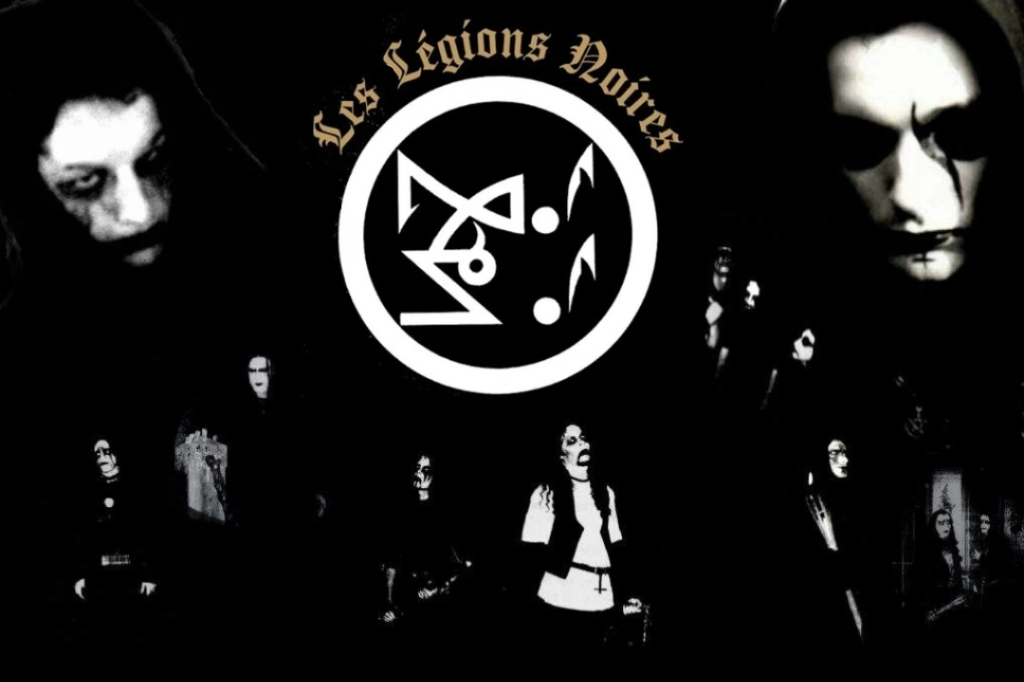
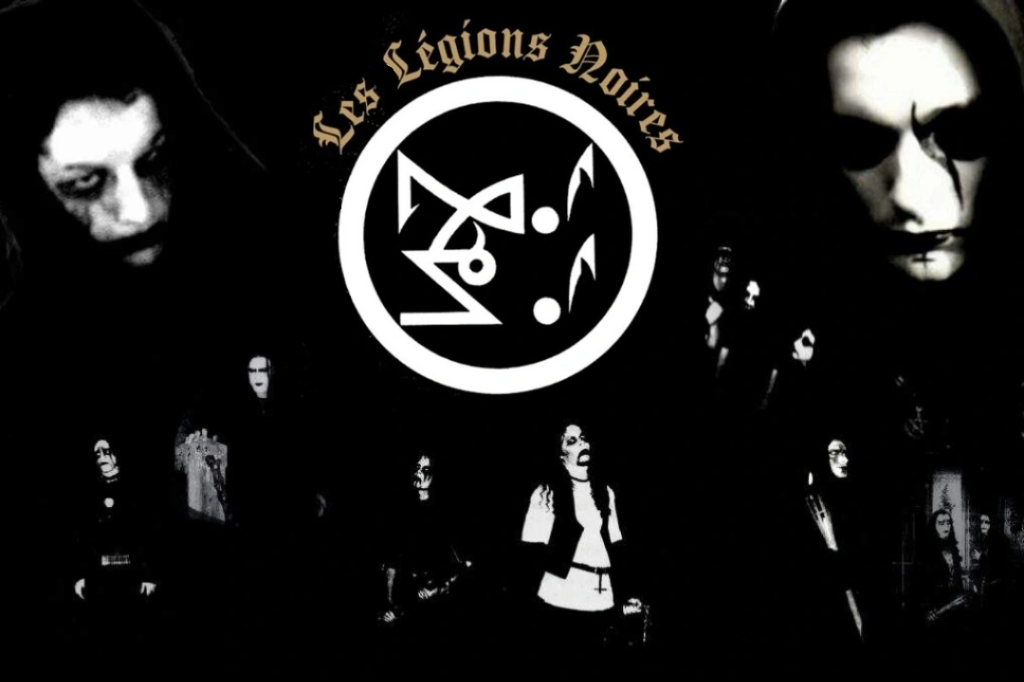
These deeply rooted traditions give Brittany an almost autonomous identity—despite the absence of strong historical secessionist movements. In such a distinctive and vibrant setting, far removed from conventional notions of “Frenchness,” the emergence of a new and singular musical scene was perhaps inevitable. It was here that a tight-knit circle of musicians would form what history now remembers as Les Légions NoiresThe Black Legions.

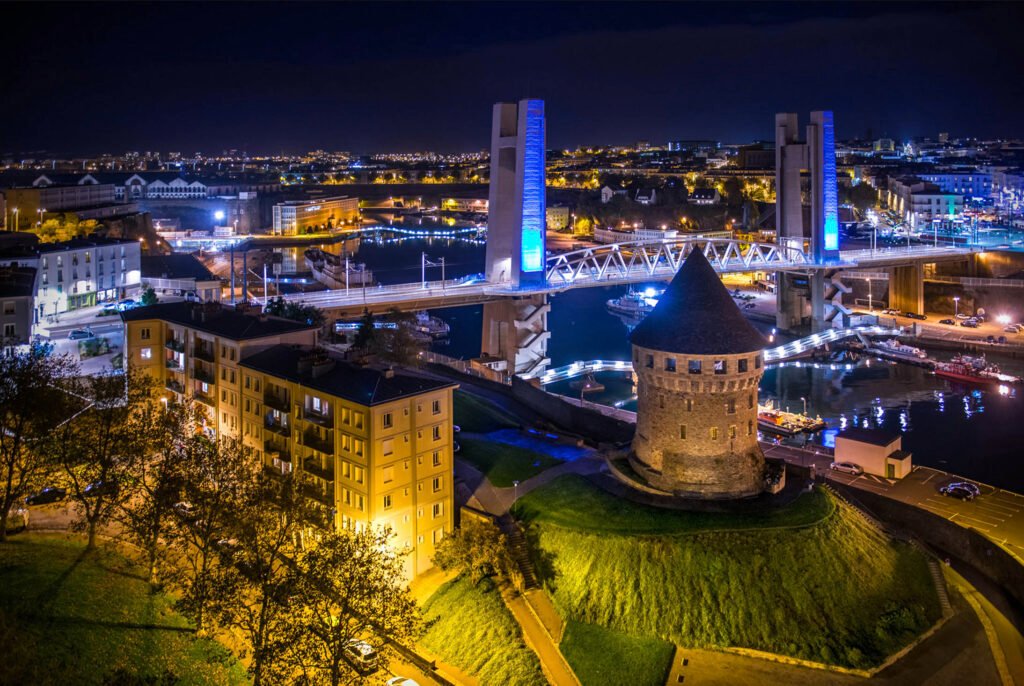
Brest, the city in which the Black Legions were born

The collective emerged in the Brest area in the early 1990s, founded by a group of artists united by their passion for black metal and its associated ideologies. The exact reasons behind its formation remain unclear, though the most plausible theory suggests it was conceived as a counterforce to Norway’s infamous Inner Circle.

As is well known, the Scandinavian circle revolved around Euronymous, who turned his record shop, Helvete, into a meeting point for key figures in the scene. There, musicians exchanged recordings and discussed doctrines rooted in black metal’s core themes, particularly paganism.

While the Black Legions shared certain similarities with their Nordic counterparts, they also developed key differences that set them apart. For one, the group was defined by gloatre, a language invented by its leader Vordb Dréagvor Uèzréèvb. It’s no coincidence that many of the associated projects bore highly unconventional names such as Brenoritvrezorkre, Vagézaryavtre, and Belkètre.

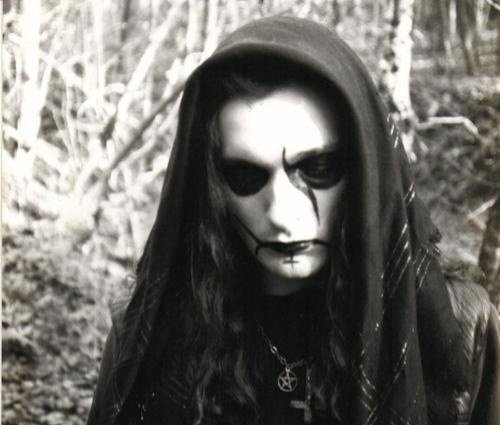
Vordb Dréagvor Uèzréèvb, the leader of the Black Legions

Secondly, the French collective also had its own gathering place—a dilapidated castle near Brest. However, unlike Helvete, strict internal rules governed the group. Their ideologies—centered around vampirism, Satanism, and apocalyptic visions—were to remain strictly within the confines of the circle, avoiding the kind of violent incidents that marked the Norwegian scene.

Members were prohibited from using weapons or drugs and were required to contribute actively to the creation of new material, released exclusively through their own independent labels: Drakkar Productions, Embassy Productions, and Tragic Empire Records.

With this rigid and well-defined structure, the Black Legions produced a substantial body of work that gradually secured its place in the history of French extreme metal. The bands, personalities, and releases were all intricately interconnected, forming a dense and enigmatic network—one that still stands as one of the darkest and most intriguing musical movements of its time.

Continues

Related articles

Leave a Reply

Your email address will not be published. Required fields are marked *

Share