Extreme is the way

Dark Queens: The Greatest All-Female Bands in Extreme Metal – Part one

In the collective imagination, it is difficult to associate women with a genre considered too masculine. But reality tells a different story.

Metal has long been seen as male-dominated, with icons like Bruce Dickinson and James Hetfield. In extreme subgenres like death and black metal, this perception is even stronger, with bands such as Death and Cannibal Corpse typically coming to mind.

Extreme metal often demands formidable vocal and instrumental skills, leading to assumptions that women cannot meet these challenges.

However, reality tells a different story: not only are there women who can compete exceptionally well in a world widely considered male-dominated, but they also possess remarkable vocal and instrumental talents. In fact, it is thanks to them that extreme metal continues to uphold its name and vitality.

As the title suggests, the research behind this article does not focus on frontwomen of bands that also include male members—such as Arch Enemy with Alissa White-Gluz—but rather on entirely all-female lineups that have made history in extreme metal and are still regarded today as true pillars. To begin, here are some artists who were already active before the turn of the millennium.

Derkéta

There is no doubt about which was the first all-female band in the history of extreme metal.

Derkéta

Derkéta was officially formed in 1988 in Pittsburgh, Pennsylvania, by Sharon Bascovsky (vocals and guitars) and Terri Heggen (drums). Their official debut dates back to 1989, with a demo featuring two tracks—The Unholy Ground and Time of Awakening—showcasing a visceral death/doom sound inspired by contemporary acts such as Immolation, Incantation, Winter, and Necrovore.

After releasing their second demo in 1990, also titled The Unholy Ground, Derkéta began attracting attention from several record labels, including Seraphic Decay Records, through which they recorded their third demo, Premature Burial. Their status within the underground scene grew stronger, especially after bassist Mary Bielich joined the lineup.

Shortly thereafter, Terri and Mary left the band prematurely to focus on another project (which we’ll discuss shortly). Sharon, on the other hand, persevered, continuing to write new material until, after a long hiatus, she teamed up with Jim Sadist of the already established Nunslaughter to record three new tracks, two of which appeared on a split release with the death metal band in 1999.

In 2003, the band released a compilation titled Goddess of Death, which included two previously unreleased tracks: Your Rotting Flesh and Spirits in the Morgue, the latter recorded with bassist Heather Harris, who briefly joined the lineup.

The following years were turbulent, with the band entering a long period of inactivity until 2012, when Terri Heggen and Mary Bielich returned alongside new bassist Robin Mazen to record their first—and so far only—full-length album, In Death We Meet, remaining faithful to the sound they had developed over twenty years earlier.

Mythic

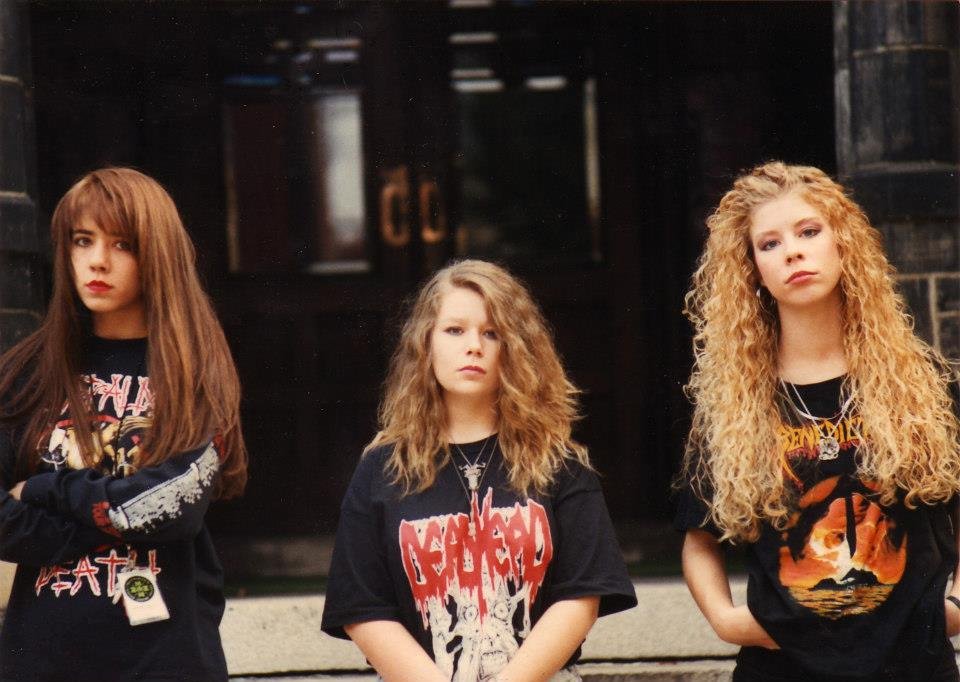
Mythic was formed in early 1991 when guitarist Dana Duffey contacted Derkéta after discovering them in an underground fanzine, asking if they were interested in adding a fourth member. At the time, however, the Pittsburgh band had already split up—unknown to Dana, who was then living in Toledo, Ohio.

Dana decided to travel to Pennsylvania to meet former Derkéta members Mary Bielich and Terri Heggen. The meeting proved successful, and within just a few days, Dana relocated to Pittsburgh, joining the group and becoming its lead vocalist and primary songwriter.

From left to right: Mary Bielich, Dana Duffey, and Terri Heggen

Within a month, they recorded a three-song demo—The Destroyer, Scarred for Life, and Grande Grimoire—which quickly circulated through the local underground scene, highlighting the trio’s evident talent, especially Duffey’s deep, rumbling growl.

Mythic began touring across the East Coast, performing at various festivals, including in Michigan and Ohio. Later in 1991, they recorded another demo titled The Immortal Realm, which soon gained significant attention from labels such as Relapse Records.

Eager to continue recording, the band entered the studio again to produce the EP Mourning in the Winter Solstice, released in 1992 in multiple formats, including CD, vinyl (both standard black and limited blue editions), and cassette.

Shortly before the release, however, Mythic parted ways with Terri Heggen, bringing in Rick “Slim” Boast as a temporary drummer for their final live tour, culminating in what would be their last performance at Milwaukee Metalfest.

A few months later, Mary and Dana also parted ways, with Duffey going on to form a new band called Demonic Christ. Despite their short lifespan, Mythic left a profound mark on extreme metal, paving the way for future generations of female musicians.

Astarte

While the United States has long been a fertile ground for extreme metal, the same can be said for Greece, which—alongside Scandinavian countries—has maintained a strong tradition within the genre.

Alongside cult bands such as Rotting Christ, Necromantia, and Varathron, the Greek black metal scene also saw the rise of a unique exception at the time: Astarte.

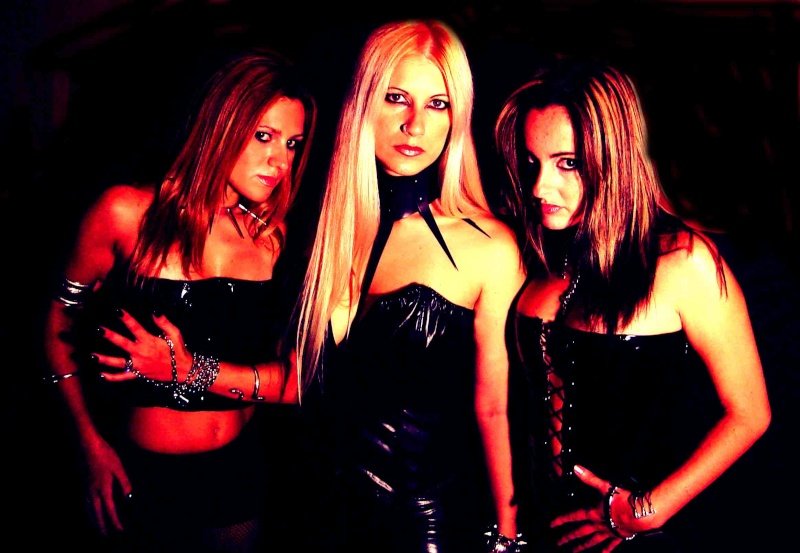
Astarte in 2005. At the center stands out Tristessa, the band’s frontwoman.

Formed in 1995 under the name Lloth, the band consisted of Maria Kolokouri (known as Tristessa) on bass and acoustic guitars, Nemesis on guitars, Kinthia on vocals and guitars, and Psychoslaughter (from the death/doom band Invocation) as a session drummer.

In May 1997, they recorded their first official demo, Dancing in the Dark Lakes of Evil, characterized by fast, aggressive music with a nightmarish atmosphere typical of Greek black metal. Shortly thereafter, the band changed its name to Astarte and officially entered the extreme scene with their debut album Doomed Dark Years in 1998.

This record, though raw and unrefined, displayed great ambition, with long compositions showcasing their full range of ideas—dark keyboards, tremolo-picked guitars, and melodic passages that gave their sound a mature edge.

After two years of intense work, the band gained recognition across Europe and released their second album, Rise from Within, featuring a more complex and atmospheric yet equally aggressive sound.

In February 2002, Astarte released their third album, Quod Superius, Sicut Inferius, blending aggression with more poetic melodies, moving closer to symphonic black metal. Subsequent lineup changes saw Tristessa recruit Katharsis (keyboards) and Hybris (guitars).

In 2004, they released Sirens, continuing their evolution toward more extreme sounds, followed by Demonized, which leaned toward blackened death metal.

Tragically, the band’s career came to an abrupt halt in 2014 when Tristessa passed away after battling leukemia. Later that year, former members of the band’s original incarnation reformed Lloth in her honor.

Kittie

Returning to North America, focusing on Canada, another band that played a crucial role in advancing women’s presence in extreme metal is Kittie.

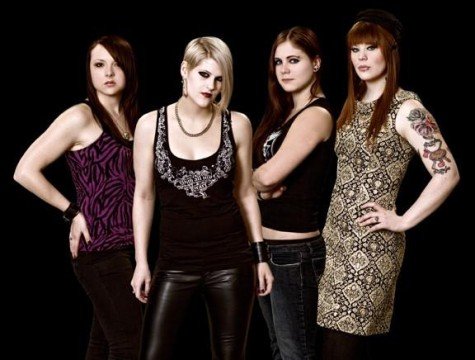
Kittie

The group was formed in 1996 when Mercedes Lander (drums) and Fallon Bowman (guitar) met during an extracurricular gymnastics class. Mercedes’ sister, Morgan Lander, became the lead vocalist and guitarist, while Tanya Candler joined as bassist before being replaced by Talena Atfield.

In 1999, Kittie released their first demo through NG Records, attracting the attention of producer Garth Richardson. That same year, they released their debut full-length Spit, which received critical acclaim for its intensity—a blend of death metal and nu metal that surprised many listeners.

In 2001, Fallon Bowman left the band, leading Morgan Lander to take over both rhythm and lead guitar duties. Shortly after, the band released their second album, Oracle, which was even heavier, combining death and thrash elements and selling over 30,000 copies.

Up until 2004, the year their third album was released, Kittie went through constant lineup changes. In 2001, Jeff Phillips joined the band, becoming the only male member ever to be part of Kittie, while in 2002, Talena Atfield was replaced by Jennifer Arroyo. Shortly after, Jeff Phillips also left the project in favor of Lisa Marx, establishing the final lineup for the recording of Until the End.

On March 23, 2005, Morgan Lander announced the departure of both Lisa Marx and Jennifer Arroyo—while Jennifer’s exit was amicable, Lisa’s came as a complete shock. The band subsequently reshaped their lineup once again, bringing in two new musicians: Tara McLeod on guitar and Trish Doan on bass.

On February 7, 2006, they released the EP Never Again through Rock Ridge Music. The following year, after founding their own label, X of Infamy, the band released their fourth full-length album, Funeral for Yesterday. From February to the end of March, the Canadians embarked on a promotional tour for the album alongside Walls of Jericho, 36 Crazyfists, Dead To Fall, and In This Moment.

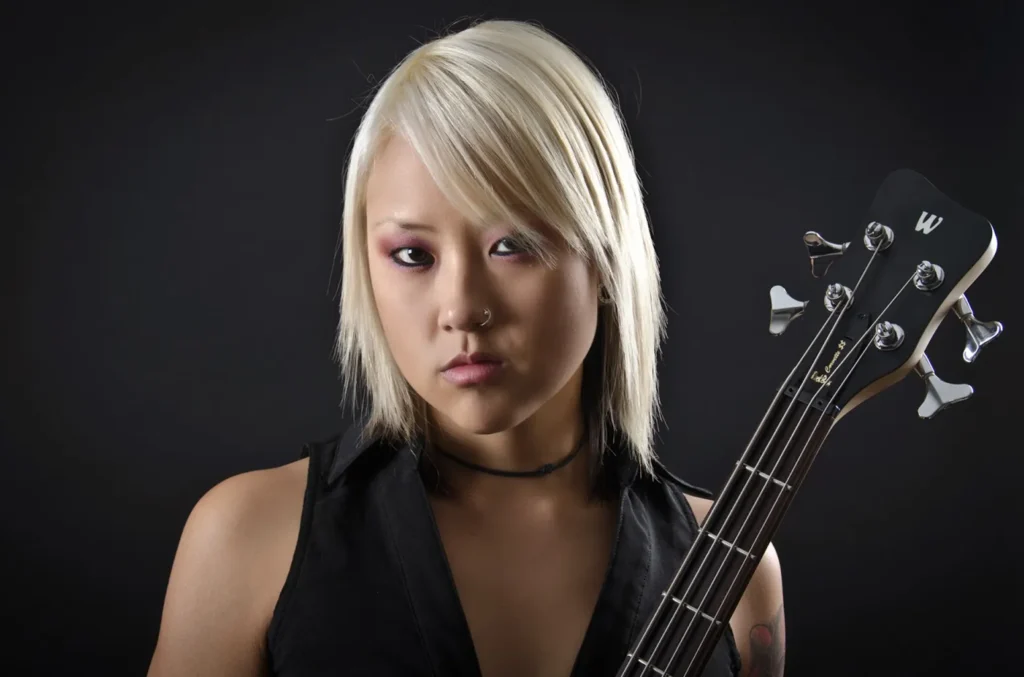
The positive reception encouraged the band to extend the tour until May 2007 and even organize another tour in South America. On March 4, 2006, Kittie announced that Trish Doan had left the band due to anorexia (which would tragically lead to her passing in 2017), and she was replaced by Ivy Vujic, who transitioned from session player to the band’s official bassist.

Trish Doan, bassist for Kittie from 2005 to 2006. Billboard

In 2009, Kittie signed with E1 Music and released In the Black. Their sixth album, I’ve Failed You, followed in 2011.

After a long period of inactivity, Morgan Lander expressed uncertainty about the band’s future in 2019, largely due to the loss of Trish Doan, whose passing deeply affected her willingness to continue the project.

Continues

Related articles

Leave a Reply

Your email address will not be published. Required fields are marked *

Share