

Adolescence and First Steps in Music
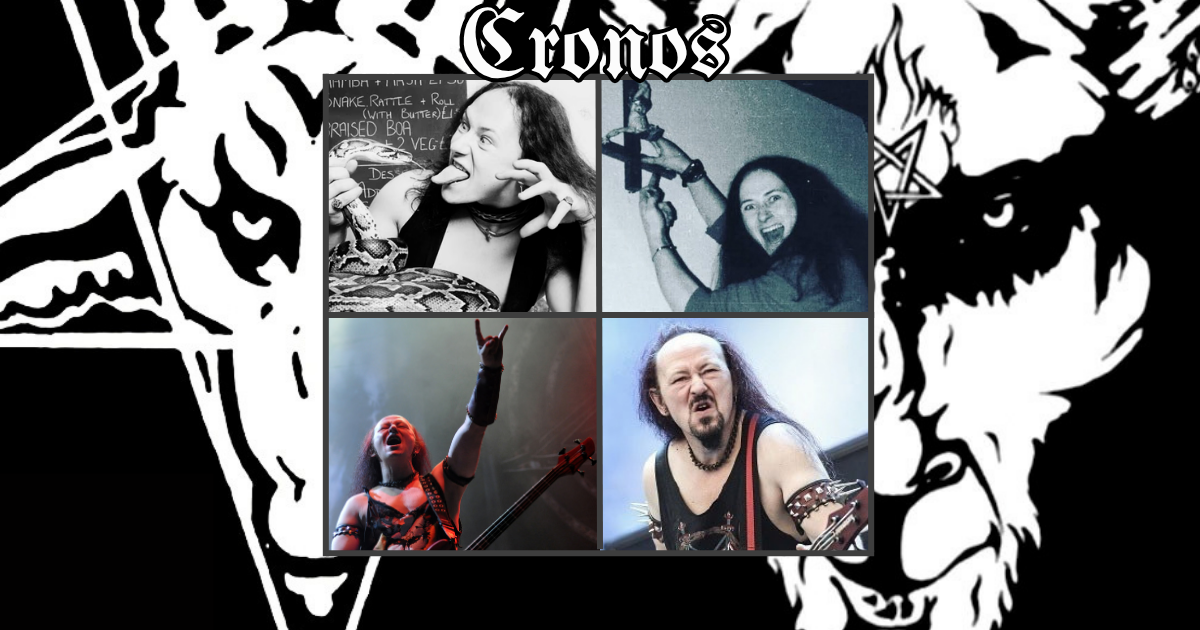
Some personalities stand out for all sorts of reasons: because of an unconventional character, because they accomplished extraordinary things, or because they invented a genre, an imagery, a whole dimension that history would never erase. Conrad Lant belonged to all of these categories: a unique, unconventional and eccentric personality who, precisely through his way of being — and living — gave birth to something that would eventually become immortal.
Born in London on January 15, 1963, Lant moved with his family to Newcastle upon Tyne when he was seven. It was a city far removed from the frenzy of London, deeply tied to shipbuilding and mining, industries that were beginning to enter a period of profound crisis in those very years. The environment in which Conrad grew up was therefore that of a working-class city shaped by the economic and social transformations Britain was undergoing.
Even at school, Lant was already showing a character that was not particularly inclined to follow the rules. As a teenager, he attended Ralph Gardner High School in North Shields, an institution he remembered as rather tough, where boxing was even among the students’ sports. In that environment, he quickly learned to develop his own character, and in the meantime he had already found a way to channel all that tension: music.
At the time, Lant was developing his musical tastes: Elvis Presley, David Bowie, T. Rex, and above all Status Quo, with whom he became almost obsessed. When he was eleven, he attended all six of their shows at Newcastle City Hall. Then came Led Zeppelin, Deep Purple, and Black Sabbath, bands that drew him toward a heavier sound and, step by step, led him to the real turning point in his musical tastes and approach.
At fourteen, punk arrived, bringing with it a new possibility not so much because of its politics, but because of its attitude: the noise, the provocation, the rejection of conventions, and that liberating feeling of being able to step onto a stage without having to prove that you were someone else.
After leaving school, however, things did not immediately get easier. Lant was forced to turn to the local employment office, hoping to find a job connected to his interests in art and music. The first offer was anything but encouraging: working as a piano tuner. He would later recall the situation with irony: he could not even play the piano, let alone tune one.
The turning point came about six months later, when he spotted an advertisement for a part-time job in the Audio Visual sector. It was at Impulse Studios in Wallsend, a place that would become hugely important in the years to come. Even more importantly, he had finally found a job that could fill his days doing something he actually enjoyed.
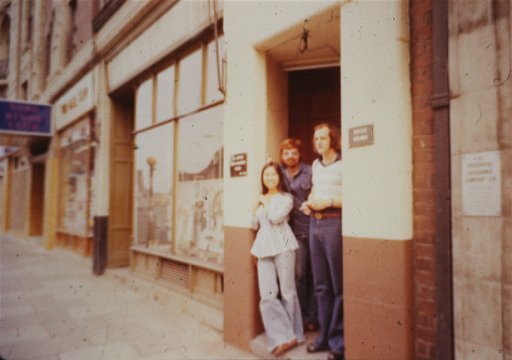
So Lant became a sound engineer and tape operator, while outside work he continued looking for a band to play with. He had already been part of Album Graecum and, at fourteen, had joined DwarfStar, but the group did not seem to fit his attitude. Then, while spending time at the studio, he met Guillotine, a local band looking for a new guitarist.
The first time he saw the band rehearsing, he realised they could be exactly what he was looking for. They were not simply about making things louder; they also used more advanced equipment than was standard at the time. In short, they were a band aware of its own potential and, for Lant, the ideal place to begin his journey. He answered the advertisement and joined as second guitarist, alongside guitarist Jeff Dunn, drummer Tony Bray, and singer Clive Archer. It was a decision that would go on to write a chapter in modern music history.
The Birth of Venom
The band was changing its skin — and its name. The three were looking for a more aggressive and memorable moniker than Guillotine and eventually found it in Venom. They also decided to change their own names to create fully fledged characters. Clive adopted the nickname Jesus Christ; Jeff became Mantas; Tony Bray chose Abaddon, taking the name from the angel of the abyss; while Conrad became Cronos, inspired by the Greek god Cronus.
This decision gave rise to the identity of Venom, one deeply reflected in those names. Cronos himself later explained that he had been interested in Satanism and esotericism from a young age, which is why, together with his bandmates, he made the occult, the Devil, witchcraft and satanic symbolism an integral part of the band’s identity.
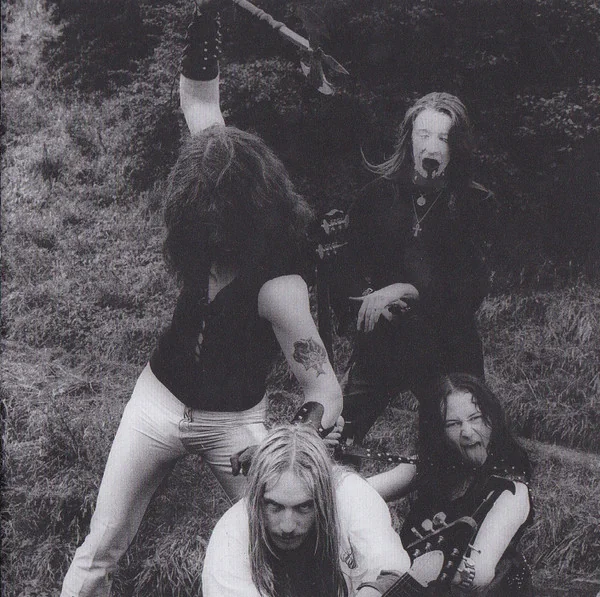
Tony Bray (Abbadon), Clive Archer (Jesus Christ), Conrad Lant (Cronos) and Jeff Dunn (Mantas).
Metal Talk
At the time, this was far from common. Artists such as Black Sabbath and Angel Witch merely hinted at the esoteric realm. In contrast, Venom decided to go much further, taking both punk’s concept of rebellion and occult imagery to their extremes, then combining them and making them explicit. Because, as Cronos later put it: “Ozzy Osbourne talked about the Devil; I wanted to be the Devil.”
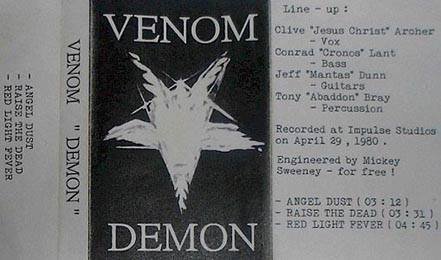
And so came the logo, the pentagram, the Sigil of Baphomet and inverted crosses. Things that had never been seen before on music record covers — just like the music itself. The first demos, released in 1980, were titled Demon and In League with Satan, featuring an aggressive, raw and explicit sound that hit you straight in the face, accompanied by imagery that needed no explanation. This was the point of no return.
The First Venom Era: From Welcome to Hell to the Split
After Archer left Venom, In 1981 the bandcaptured their sonic identity on record with Welcome to Hell, which already contained all the elements of their new identity: speed, noise, blasphemy, demonic imagery and an almost relentless determination to push hard rock beyond its limits—recorded at Impulse Studios, the album captured on vinyl the raw sound that would become Venom’s trademark.
The complete breakthrough, however, came in 1982 with Black Metal. The title of a song first became the title of an album, then the name of an aesthetic, and eventually that of an entire subgenre that would emerge from this record — even more explicit, dark, raw and perfectly aligned with what the band represented. A landmark release that would later become a blueprint for black metal.
In 1983, At War with Satan was released, with the trio attempting to expand its stylistic horizons. The album opens with an almost twenty-minute suite centred on the battle between Heaven and Hell. It was considerably more ambitious than the previous two albums, showing Cronos and his bandmates’ desire to move beyond the formula that had made them recognisable.
Two years later, Possessed arrived, their fourth studio album and the final chapter of Venom’s first era. The band returned to a more direct approach, with tracks such as Powerdrive, Burn This Place to the Ground and the title track bringing back to the forefront the combination of speed, aggression and satanic imagery that had defined the group from the very beginning.
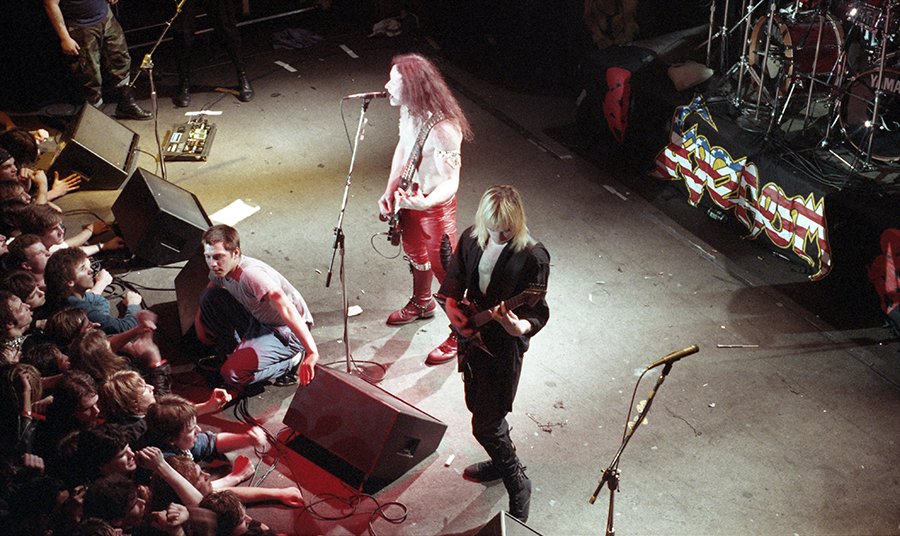
By then, however, something was already changing. The original lineup would remain together for a little while longer, but the band’s most prolific period had reached a turning point. After Possessed, the lineup that had created that sound and imagery began to lose members. In 1986, Mantas left the band, opening a new chapter in which Cronos and Abaddon attempted to carry on with two new guitarists, Mike Hickey and Jimi Clare.
The result was Calm Before the Storm, released in 1987. It presented a different band, with a cleaner sound that was less tied to the formula of their early years. Behind the scenes, however, tensions continued to grow. Eventually, Cronos left Venom, along with Hickey and Clare, to form a self-titled project to pursue his musical path away from his former band.
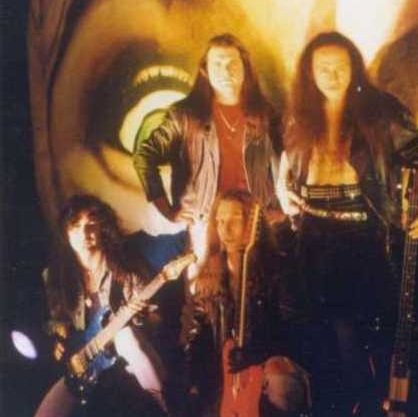
The new band focused on a more direct and melodic form of heavy metal, while retaining the hard-rock component that had accompanied his earliest influences. The group released two albums, Dancing in the Dark (1990) and Rock ’n’ Roll Disease (1991), but the project was short-lived and ended soon afterwards.
It was the end of Venom’s first great era, but not the end of their story. And certainly not the end of Cronos’ story either. From that point on, he would begin to pursue his career on several fronts, continuing to make music while also building, away from the stage, a life very different from that of the character he had created.
The Man Behind Cronos
Away from the spotlight, Conrad Lant was nothing like Cronos. After his first period with Venom, he devoted himself to fitness, becoming an instructor, attending courses and gyms, and even working with members of the British Army.
Another major passion was hiking, which he pursued regularly and which eventually led to one of the darkest episodes of his life. In the early 2000s, while climbing in Wales, a rock broke loose beneath another climber’s feet and struck Lant on the back of the head. The accident caused serious problems with his neck, muscles and tendons and, for a time, prevented him from playing and continuing his musical activities.
Initially convinced that his musical career might be over, he turned his attention to computers and graphic design. A friend working in IT in Newcastle suggested that he try his hand at designing graphics for the company, and Lant began using Photoshop, eventually working as a multimedia developer. It was not, however, a complete departure from his past. He himself saw graphic design as a continuation of the same creative impulse that had originally led him toward music and art.
Over the years, that creativity had taken many different forms. Away from the stage, Lant also spoke of his passion for birdwatching, poetry, and artists far removed from Venom’s musical universe, such as Joni Mitchell and Edgar Allan Poe. His love of Kate Bush also belonged to this less predictable side of his personality. In 1980, when he was still only seventeen, he even managed to meet her at a signing session in Newcastle and get a kiss.
Ultimately, he was a far more multifaceted person than the character he portrayed on stage. Cronos had built his mythology around the Devil, provocation and extremity; Conrad Lant, away from the spotlight, continued to seek out new ways to observe, learn and create.
The Second Venom Era: Cronos at the Centre
Meanwhile, Venom persisted even without Cronos. After his departure, Abaddon brought in Tony “Demolition Man” Dolan of Atomkraft to take his place, while Mantas returned to the lineup. This new formation produced Prime Evil (1989), Temples of Ice (1991) and The Waste Lands (1992). It was a different chapter, but one that failed to bring the band back to the heights of its early years and eventually ended with the departures of Dolan and Mantas.
Then, in 1995, came what had once seemed unlikely: Cronos contacted Mantas and Abaddon to find out whether they were willing to reform the original lineup. The three decided to give it a try with a concert at the Waldrock Festival in the Netherlands. The answer came onstage.
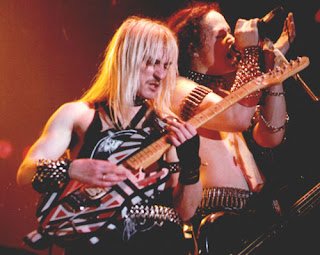
The reunion, however, did not last long. After Cast in Stone in 1997, Abaddon left Venom once again. From then on, the band increasingly revolved not around several central figures, but around a single one: Cronos, who built an increasingly stable lineup, with Mantas remaining alongside new drummer Antton, Cronos’ brother. The result was a new album: Resurrection, released in 2000, which marked a new starting point for Venom.
This lineup also fell apart soon afterwards, as Mantas left the project and Lant once again found himself recruiting new musicians. In 2006, Metal Black came out, featuring Antton on drums and Mike Hickey on guitar. The title itself openly referenced the record that had given the genre its name, but the band was now looking forward.
True stability arrived a few years later. With guitarist Stuart “La Rage” Dixon and drummer Danny “Dante” Needham joining the band, Cronos found a lineup that would remain together for many years. The first album by this trio was Fallen Angels, released in 2011, followed by From the Very Depths and Storm the Gates.
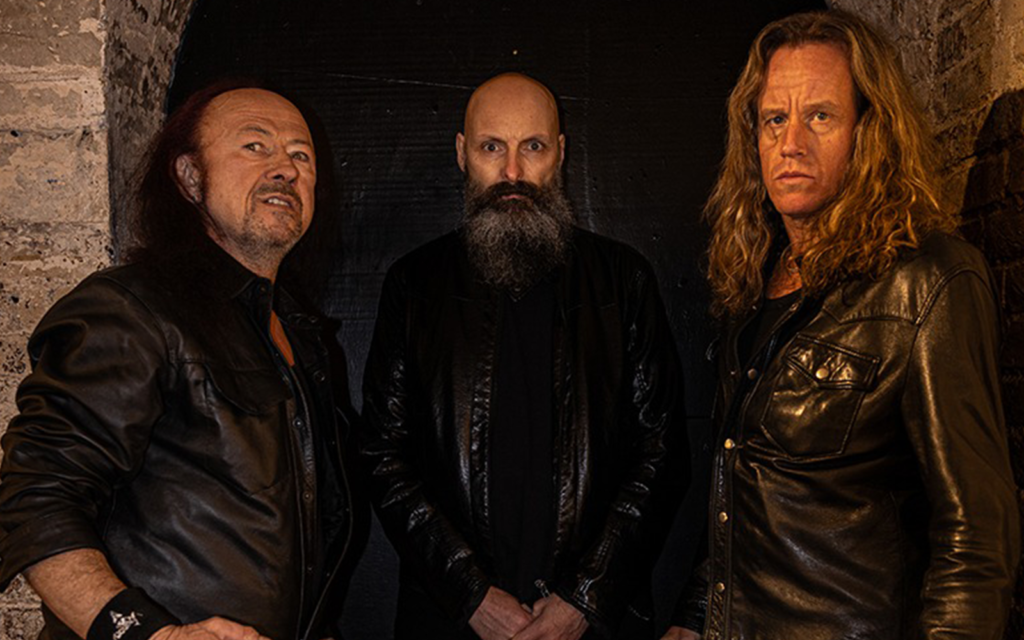
This was by now a very different phase from the band’s early years. Cronos was the only remaining original member, but he was no longer trying to recreate the past. Mantas, Abaddon and Demolition Man formed Venom Inc, which led to legal disputes and, inevitably, a fierce rivalry. As he himself would explain, he could not keep playing Welcome to Hell for the rest of his life. With Dixon and Needham, he wanted to keep experimenting and finding new solutions while preserving Venom’s identity.
The Final Years and Death
For more than forty years, Cronos continued to carry Venom forward, navigating lineup changes, splits, reunions and new generations of musicians. Even when the past seemed increasingly distant, he never stopped looking ahead, both onstage and in the studio.
On May 1, 2026, Venom released Into Oblivion, their sixteenth studio album, representing an effective synthesis of the band’s latest incarnation. The sound remained rough, heavy, and deeply rooted in its origins, combining speed metal, thrash, and the dirty, direct attitude that had always characterised Cronos.
At the same time, however, the album revealed a lineup far removed from the primal fury of the early 1980s, with tighter songwriting and a decidedly more modern production. It was not an attempt to return to Black Metal, but rather the way Venom continued, more than forty years later, to interpret their own identity.
Ultimately, this was yet another chapter in a story that seemed destined to continue. Cronos still had another stretch of his career ahead of him, having regained stability after finding a solid lineup, clearly defined ideas and new chapters to explore. Then, suddenly, that story came to a halt.

Conrad Lant died on September 29, 2026, at the age of 63. The news was made public on October 1, but the cause of death was not disclosed. With him disappeared the last figure to remain at the heart of Venom’s story for almost the entire existence of the band.
But Cronos’ story does not end with his death. From the very beginning, Venom had taken elements already present in heavy metal and punk. It pushed them toward a more extreme form, transforming noise, speed, provocation and satanic imagery into a new identity that became a fundamental reference point for bands such as Metallica, Megadeth, Slayer, Celtic Frost, and the entire first wave of musicians who would go on to shape the genre’s history.
And this is where Conrad Lant’s true legacy can be found not simply in the records, nor solely in the character of Cronos, but in proving that music could become something more: a sound, an image, an attitude and an identity capable of outliving the people who created them.
The boy from Newcastle upon Tyne who had started simply looking for a band to play with had become Cronos, giving Venom a face and, together with them, helping permanently change the way metal could be played, described, and imagined.
The music remains. And with it, so does his name.
Related articles
Ozzy Osbourne: From Darkness to Legend – Part one
Paul Di’Anno: The Story of a Wild, Unbreakable Spirit