Introduction
Metal is a genre in constant evolution. In just over half a century, it has spawned countless subgenres, often by bands who inadvertently created new styles that became influential movements and trademarks.
You still see this today, as artists experiment by fusing extreme sounds with other genres and influences. But looking back, before today’s “identity” was defined, this process was even clearer.
Between the late ’80s and early ’90s, metal began exploring its most extreme sounds. Thrash thrived in California’s Bay Area, while bands like Venom, Bathory, and Celtic Frost took a harsher approach that later inspired black metal. Metal kept innovating beyond these early extremes.
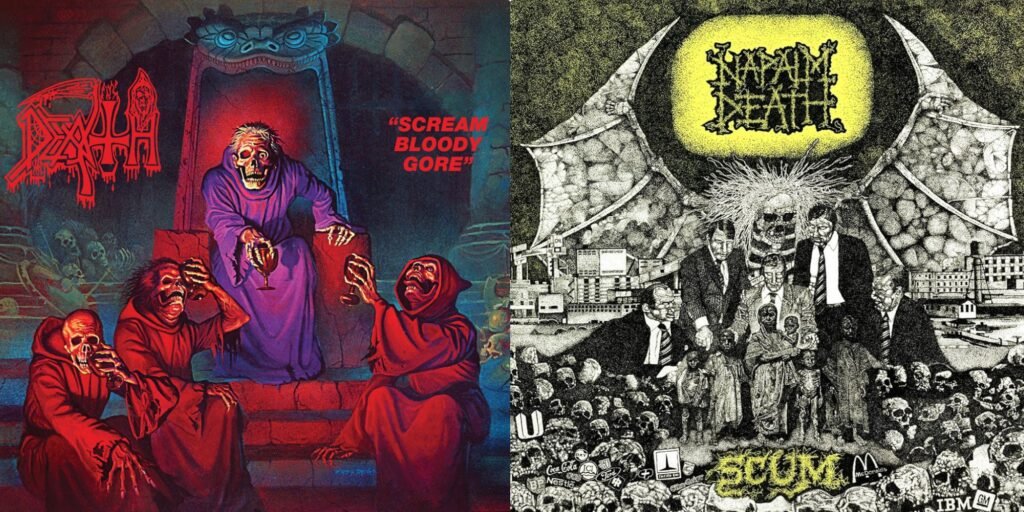
After bands such as Possessed, Master, and Massacre laid the groundwork for a more aggressive and ferocious sound, Death refined it with Scream Bloody Gore (1987) and Leprosy (1988). Together with their peers—Obituary and Morbid Angel among them—they helped shape what would soon be recognized as death metal, with landmark releases like Slowly We Rot and Altars of Madness, both released in 1989.
Meanwhile, in England, Napalm Death released Scum (1987), introducing a sound that was faster, more chaotic, and more disturbing than anything heard before. Bands like Carcass, with Reek of Putrefaction, and Extreme Noise Terror, with A Holocaust in Your Head (both 1988), followed suit, officially giving birth to grindcore.
Two new subgenres emerged—defining extreme metal’s identity—yet both rapidly evolved, notably in one city’s scene.
Just as Sweden developed two distinct death metal movements—Stockholm with its classic “buzzsaw” tone, and Gothenburg with its melodic approach—the United States had its own dual epicenters: Tampa, Florida, home to the iconic Morrisound Studios and the genre’s technical refinement, and New York, where a different, more visceral interpretation took shape.
In Florida, the sound was aggressive yet polished, technical, and complex. In the Northeast, it became groovier, heavier, and more direct—drawing on grindcore’s ferocity and hardcore’s underground ethos.
From this environment, brutal death metal was born—a style that pushed every aspect of classic death metal to its extreme. And from there, another closely related but even more attitude-driven form emerged: slam death metal.
Origin and Definition
The New York Death Metal movement was crucial in shaping bands with new sounds. Some, like Incantation, chose a darker, cavernous style; others, such as Immolation, played with more dissonance. A few groups became true innovators in the scene.
Facebook, Suffocation official page
Among them, Suffocation stands out as the architects of a brutally transformative sound that shattered the conventions of traditional death metal: suffocating growls, relentless drumming alternating between blast beats and double bass, and heavily down-tuned guitars driven by tight palm-muted riffs.
Their EP Human Waste hinted at what was to come, but it was their debut full-length, Effigy of the Forgotten, that delivered the full impact. Tracks like the title cut and Habitual Infamy became instantly iconic—every element, from instrumentation to Frank Mullen’s monstrous vocals, radiated sheer brutality.
One track, however, deserves special attention: the opener.
Liege of Inveracity begins with seismic vocals, hyper-speed rhythms, and chaotic guitar work driving forward relentlessly until around the 2:50 mark—when something changes. Out of nowhere, one of the most iconic breakdowns in extreme music history kicks in.
Everything slows down and becomes heavier. The drums shift into a crushing pace, but it’s the riff that truly defines the moment: no longer frantic and technical, it becomes rhythmic, saturated, and overwhelmingly oppressive—like the guitar is physically hammering the listener’s eardrums for twenty straight seconds. It was a groundbreaking innovation that didn’t go unnoticed.
After this release, Suffocation inspired contemporaries who gathered at venues like Sparks, Amour Venue, and Action House, fueling New York’s underground scene. Many were based in Long Island; one would define Suffocation’s legacy.
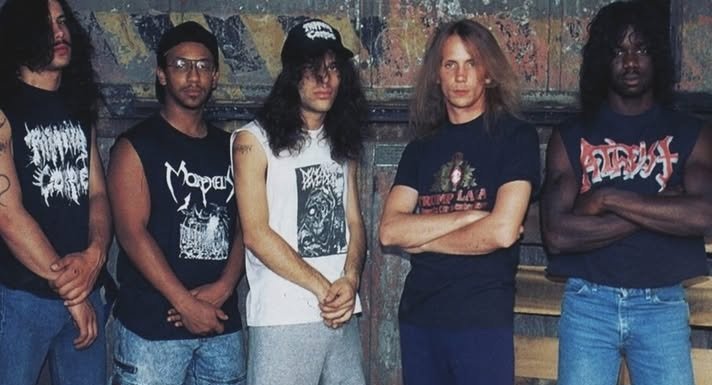
Internal Bleeding, formed in 1991 by drummer Bill Tolley and guitarist Chris Pervelis, quickly became one of the most active bands in the New York underground despite limited visibility. They began writing and recording relentlessly, refining a sound that was already clearly recognizable in their early demos, Perpetual Degradation (1992) and Invocation of Evil (1993).
Speed and aggression remained central, but riffs grew heavier, and breakdowns became more intense. Groove became prominent, which set Internal Bleeding apart from others.
What they needed was a name for this emerging style. That name came during a discussion between Anthony Miola, Chris Pervelis and Bill Tolley in the fall of 1992 in Huntington. At the time, the band described their music as “Barbaric Moshing Death Vomit,” but they felt it didn’t quite fit.
“Mosh is for thrash bands. Mosh is weak,” Tolley said. “We should call our music
‘slam,’ because that’s what we are. One slam riff after another after another. Our music is all groove. No one is doing that.” The idea stuck instantly. Pervelis, excited by the concept, sealed it with a phrase that would become legendary: “Yeah, it’s Total Fucking Slam!”
Interestingly, Internal Bleeding formed around the same time Effigy of the Forgotten was released—but their inspiration wasn’t coincidental. Pervelis has openly cited Liege of Inveracity as a key influence, especially those now-famous twenty seconds. Those slow, crushing, percussive riffs hit like falling boulders—something only the word “slam” could truly capture. That was the defining moment in the birth of slam death metal. And with Internal Bleeding, the style began to carve out its own identity.
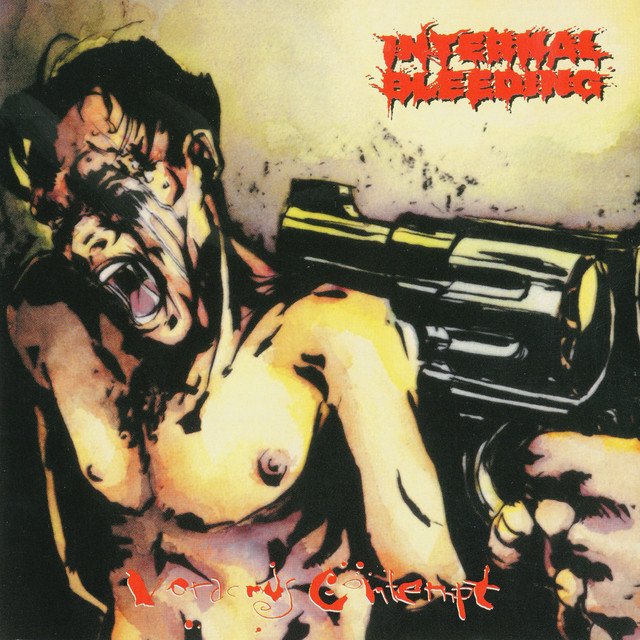
By the time their debut Voracious Contempt dropped in 1995, the message was clear: slam wasn’t just a way of playing—it was a way of feeling death metal. While Suffocation continued refining their technical prowess, Internal Bleeding stuck to their formula, even incorporating pre-recorded dialogue intros that would later become a genre staple.
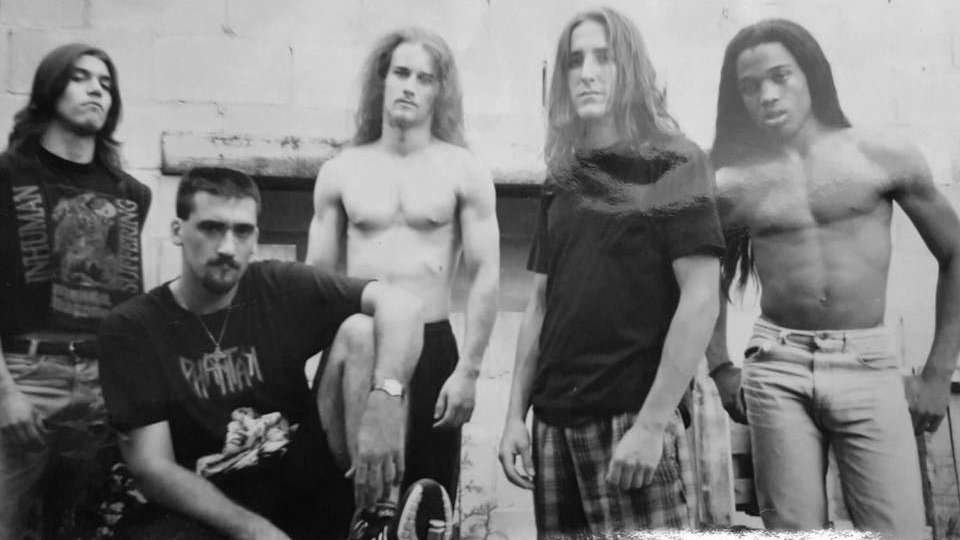
As they solidified their sound, a growing wave of bands emerged around them, all sharing the same philosophy. Each contributed to a sonic framework built on monolithic mid-tempos, syncopated riffs, and groove-heavy breakdowns—translating the raw energy of Long Island and the Bronx into extreme music.
Pyrexia, with their debut Sermon of Mockery (1993), fully defined these stylistic coordinates. Its raw production and straightforward yet crushing structures prioritized impact over technicality. Alongside Voracious Contempt, it stands as one of the foundational works of slam.
Immortal Suffering followed a more turbulent path. Formed in 1992, they disbanded in 1998 and only resurfaced in 2013, eventually releasing two full-length albums with a more modern sound. However, their early demos—Immortal Suffering (1994) and Eternal Damnation (1995)—remain essential documents of the genre’s formative years. A later compilation, Images of Immortal Damnation (2013), collected these recordings, offering a comprehensive look at their early work.
Afterbirth also deserves recognition for creating one of the earliest “proto-slam” releases with Psychopathic Embryotomy (1994). Their approach combined the emerging stylistic traits with ultra-guttural vocals—pioneering a vocal style that would later become a defining feature of the genre.
Other bands like Dehumanized, Mangled, and Repudilation—despite their short lifespans—produced demos that were crucial in shaping the sound. Releases such as Purging of Impurity (1996), Terminal Punishment (1996), and Mutilated Sexual Orifice (1995) clearly showcased the stylistic blueprint that would dominate the following decade.
From this underground New York “workshop,” the influence began to spread outward. That suffocating, groove-laden sound became a new code within brutal death metal—and beyond—allowing the term “slam” to circulate more widely within the underground.
Even outside New York, its impact was felt. From Baltimore, Maryland, Dying Fetus played a key role. While maintaining a more technical and hardcore-influenced approach, they incorporated saturated breakdowns and syncopated riffs that would deeply influence the evolution of slam. Albums like Killing on Adrenaline (1998) and Destroy the Opposition (2000) proved that brutal groove could thrive beyond the New York scene, helping expand and solidify the genre’s sonic foundation.
What was once a niche trend for tape traders suddenly became a global language. And its roots traced back to those Long Island venues and Bronx garages—where, for the first time, death metal learned to slow down… in order to become even more devastating.
Continues

Slam Death Metal: From Roots to Revolution – Part two
31 October 2025
Related articles

INTERNAL BLEEDING – Voracious Contempt
21 October 2022

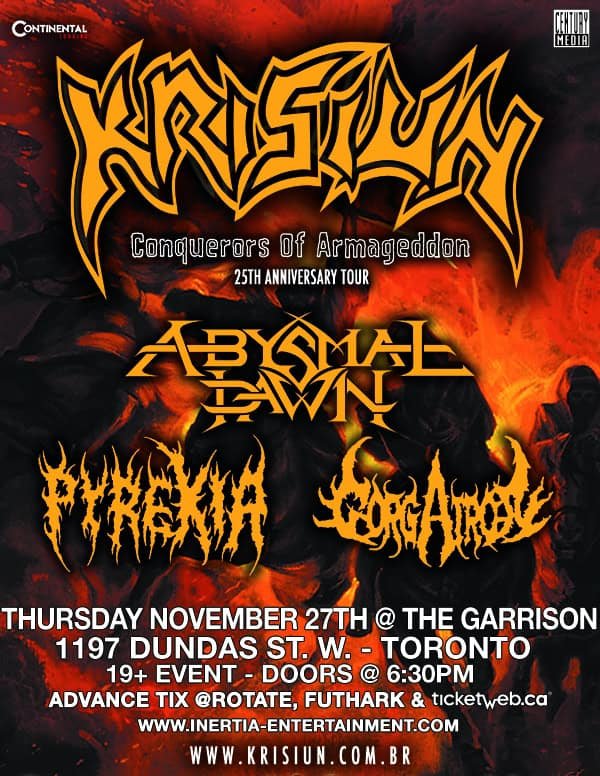
Krisiun+ Abysmal Dawn + Pyrexia + Gorgatron
2 December 2025

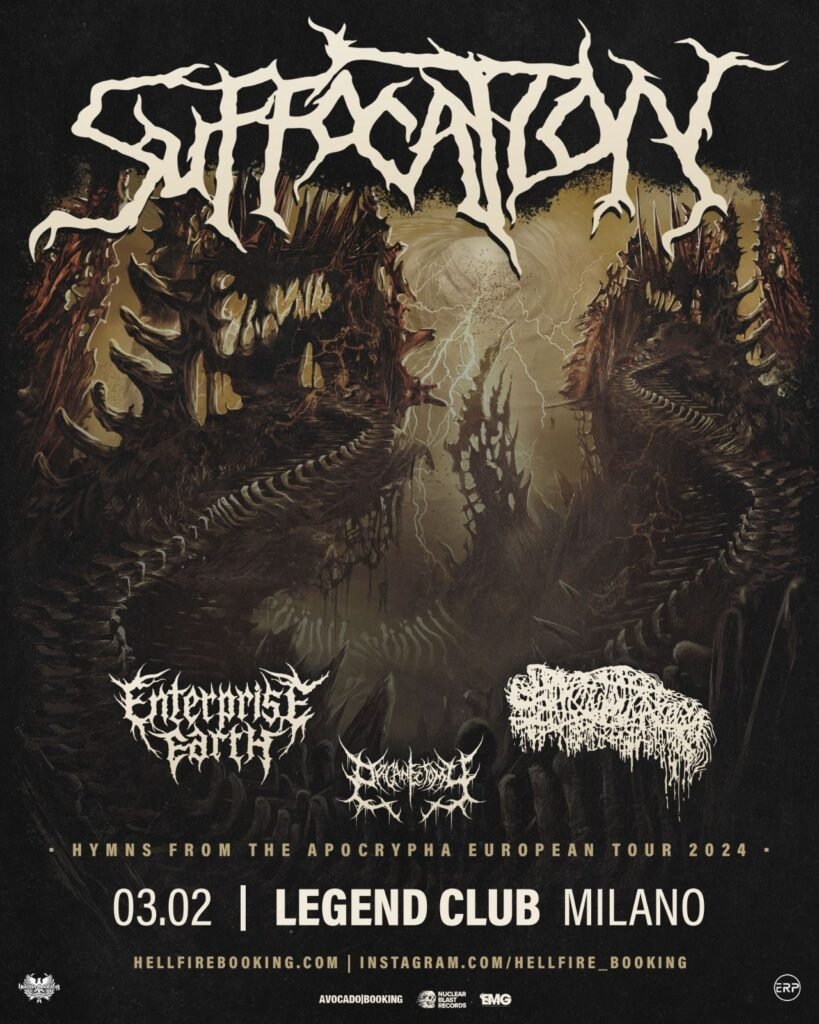
Suffocation + Enterprise Earth + Sanguisugabogg + Organectomy
9 February 2024