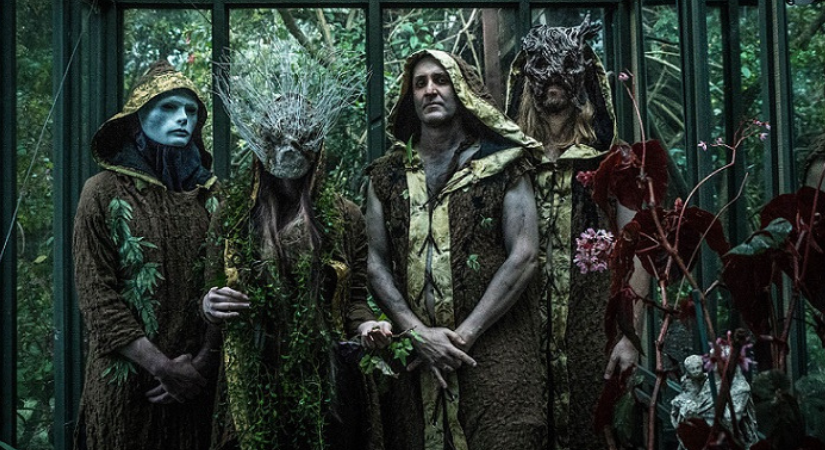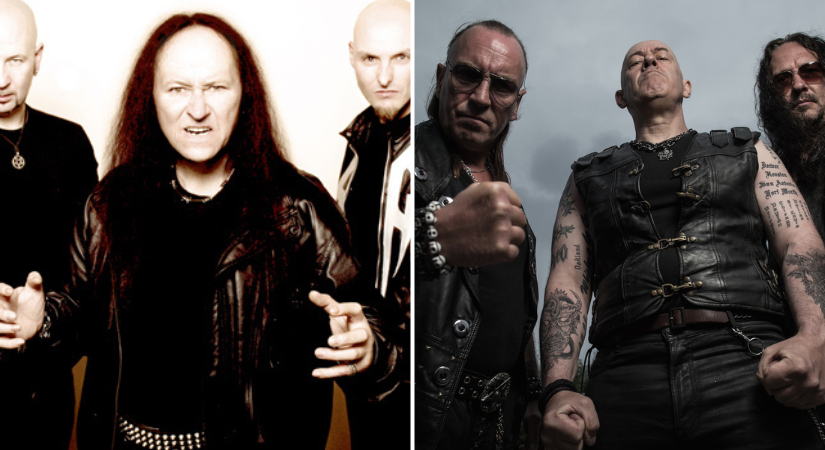



The world of metal is often associated with aggressive sounds, provocative lyrics, and a rebellious aesthetic—especially in more extreme subgenres. But beyond these surface-level labels, there’s clearly much more beneath.
Over the years, a number of musicians have stood out not only for their music but also for their civic, social, and humanitarian efforts. Many have received awards and recognition for actions whose impact has gone far beyond the stage. From promoting peace between conflicting cultures to fighting inequality, metal has proven it can be a powerful voice beyond music—sometimes achieving results even politicians have failed to achieve.
The world of metal is often associated with aggressive sounds, provocative lyrics, and a rebellious aesthetic—especially in more extreme subgenres. But beyond these surface-level labels, there’s clearly much more beneath.
Over the years, a number of musicians have stood out not only for their music but also for their civic, social, and humanitarian efforts. Many have received awards and recognition for actions whose impact has gone far beyond the stage. From promoting peace between conflicting cultures to fighting inequality, metal has proven it can be a powerful voice beyond music—sometimes achieving results even politicians have failed to achieve.
The world of metal is often associated with aggressive sounds, provocative lyrics, and a rebellious aesthetic—especially in more extreme subgenres. But beyond these surface-level labels, there’s clearly much more beneath.
Over the years, a number of musicians have stood out not only for their music but also for their civic, social, and humanitarian efforts. Many have received awards and recognition for actions whose impact has gone far beyond the stage. From promoting peace between conflicting cultures to fighting inequality, metal has proven it can be a powerful voice beyond music—sometimes achieving results even politicians have failed to achieve.
The world of metal is often associated with aggressive sounds, provocative lyrics, and a rebellious aesthetic—especially in more extreme subgenres. But beyond these surface-level labels, there’s clearly much more beneath.
Over the years, a number of musicians have stood out not only for their music but also for their civic, social, and humanitarian efforts. Many have received awards and recognition for actions whose impact has gone far beyond the stage. From promoting peace between conflicting cultures to fighting inequality, metal has proven it can be a powerful voice beyond music—sometimes achieving results even politicians have failed to achieve.
The world of metal is often associated with aggressive sounds, provocative lyrics, and a rebellious aesthetic—especially in more extreme subgenres. But beyond these surface-level labels, there’s clearly much more beneath.
Over the years, a number of musicians have stood out not only for their music but also for their civic, social, and humanitarian efforts. Many have received awards and recognition for actions whose impact has gone far beyond the stage. From promoting peace between conflicting cultures to fighting inequality, metal has proven it can be a powerful voice beyond music—sometimes achieving results even politicians have failed to achieve.

Bruce Dickinson is an obvious name for this category, and for good reason: the famous Sarajevo concert of 1994. At the time, during the Yugoslav Wars, the city—and Bosnia as a whole—had been under Serbian siege for nearly two years, with civilians living in inhumane conditions under constant bombardment. In such an apocalyptic scenario, the idea of organizing a concert seemed not only insane but impossible. Dickinson, temporarily out of Iron Maiden and touring with his solo band, accepted an invitation from UNPROFOR (United Nations Protection Force) and local organizers. Traveling through dangerous regions in an armored convoy, he performed on December 14 at the Bosnian Cultural Centre (BKC) in a historic show. The act was more than an artistic performance; it served as a gesture of solidarity and courage—demonstrating that culture persists even under fire. For this, Dickinson received honorary citizenship of Sarajevo, an award he has described as among the most meaningful of his life.
Bruce Dickinson is an obvious name for this category, and for good reason: the famous Sarajevo concert of 1994. At the time, during the Yugoslav Wars, the city—and Bosnia as a whole—had been under Serbian siege for nearly two years, with civilians living in inhumane conditions under constant bombardment. In such an apocalyptic scenario, the idea of organizing a concert seemed not only insane but impossible. Dickinson, temporarily out of Iron Maiden and touring with his solo band, accepted an invitation from UNPROFOR (United Nations Protection Force) and local organizers. Traveling through dangerous regions in an armored convoy, he performed on December 14 at the Bosnian Cultural Centre (BKC) in a historic show. The act was more than an artistic performance; it served as a gesture of solidarity and courage—demonstrating that culture persists even under fire. For this, Dickinson received honorary citizenship of Sarajevo, an award he has described as among the most meaningful of his life.
Bruce Dickinson is an obvious name for this category, and for good reason: the famous Sarajevo concert of 1994. At the time, during the Yugoslav Wars, the city—and Bosnia as a whole—had been under Serbian siege for nearly two years, with civilians living in inhumane conditions under constant bombardment. In such an apocalyptic scenario, the idea of organizing a concert seemed not only insane but impossible. Dickinson, temporarily out of Iron Maiden and touring with his solo band, accepted an invitation from UNPROFOR (United Nations Protection Force) and local organizers. Traveling through dangerous regions in an armored convoy, he performed on December 14 at the Bosnian Cultural Centre (BKC) in a historic show. The act was more than an artistic performance; it served as a gesture of solidarity and courage—demonstrating that culture persists even under fire. For this, Dickinson received honorary citizenship of Sarajevo, an award he has described as among the most meaningful of his life.
Bruce Dickinson is an obvious name for this category, and for good reason: the famous Sarajevo concert of 1994. At the time, during the Yugoslav Wars, the city—and Bosnia as a whole—had been under Serbian siege for nearly two years, with civilians living in inhumane conditions under constant bombardment. In such an apocalyptic scenario, the idea of organizing a concert seemed not only insane but impossible. Dickinson, temporarily out of Iron Maiden and touring with his solo band, accepted an invitation from UNPROFOR (United Nations Protection Force) and local organizers. Traveling through dangerous regions in an armored convoy, he performed on December 14 at the Bosnian Cultural Centre (BKC) in a historic show. The act was more than an artistic performance; it served as a gesture of solidarity and courage—demonstrating that culture persists even under fire. For this, Dickinson received honorary citizenship of Sarajevo, an award he has described as among the most meaningful of his life.
Bruce Dickinson is an obvious name for this category, and for good reason: the famous Sarajevo concert of 1994. At the time, during the Yugoslav Wars, the city—and Bosnia as a whole—had been under Serbian siege for nearly two years, with civilians living in inhumane conditions under constant bombardment. In such an apocalyptic scenario, the idea of organizing a concert seemed not only insane but impossible. Dickinson, temporarily out of Iron Maiden and touring with his solo band, accepted an invitation from UNPROFOR (United Nations Protection Force) and local organizers. Traveling through dangerous regions in an armored convoy, he performed on December 14 at the Bosnian Cultural Centre (BKC) in a historic show. The act was more than an artistic performance; it served as a gesture of solidarity and courage—demonstrating that culture persists even under fire. For this, Dickinson received honorary citizenship of Sarajevo, an award he has described as among the most meaningful of his life.

Sammy Hagar, former Van Halen member, is known for far more than his musical career. On the humanitarian side, he founded the Hagar Family Foundation, a nonprofit organization created with his wife, Kari. Its mission is to deliver food and funds as quickly as possible to charities and people in need. Hagar’s long-standing commitment to this cause was recognized in 2017, when he received the Humanitarian Award at the Loudwire Music Awards.
Sammy Hagar, former Van Halen member, is known for far more than his musical career. On the humanitarian side, he founded the Hagar Family Foundation, a nonprofit organization created with his wife, Kari. Its mission is to deliver food and funds as quickly as possible to charities and people in need. Hagar’s long-standing commitment to this cause was recognized in 2017, when he received the Humanitarian Award at the Loudwire Music Awards.
Sammy Hagar, former Van Halen member, is known for far more than his musical career. On the humanitarian side, he founded the Hagar Family Foundation, a nonprofit organization created with his wife, Kari. Its mission is to deliver food and funds as quickly as possible to charities and people in need. Hagar’s long-standing commitment to this cause was recognized in 2017, when he received the Humanitarian Award at the Loudwire Music Awards.
Sammy Hagar, former Van Halen member, is known for far more than his musical career. On the humanitarian side, he founded the Hagar Family Foundation, a nonprofit organization created with his wife, Kari. Its mission is to deliver food and funds as quickly as possible to charities and people in need. Hagar’s long-standing commitment to this cause was recognized in 2017, when he received the Humanitarian Award at the Loudwire Music Awards.
Sammy Hagar, former Van Halen member, is known for far more than his musical career. On the humanitarian side, he founded the Hagar Family Foundation, a nonprofit organization created with his wife, Kari. Its mission is to deliver food and funds as quickly as possible to charities and people in need. Hagar’s long-standing commitment to this cause was recognized in 2017, when he received the Humanitarian Award at the Loudwire Music Awards.

Derrick Green has often been a divisive figure. As the current frontman of Sepultura, he has received praise for his work with the band, while also facing criticism from fans nostalgic for the Cavalera era. From a humanitarian standpoint, however, there is little debate. Green has consistently supported animal rights and environmental protection, using his platform to speak out against violence in all its forms. His efforts led to him being named an ambassador for non-violence by the Non-Violence Project Foundation, an international organization dedicated to education and awareness against violence. He officially presented this role to the public during Rock in Rio in 2013.
Derrick Green has often been a divisive figure. As the current frontman of Sepultura, he has received praise for his work with the band, while also facing criticism from fans nostalgic for the Cavalera era. From a humanitarian standpoint, however, there is little debate. Green has consistently supported animal rights and environmental protection, using his platform to speak out against violence in all its forms. His efforts led to him being named an ambassador for non-violence by the Non-Violence Project Foundation, an international organization dedicated to education and awareness against violence. He officially presented this role to the public during Rock in Rio in 2013.
Derrick Green has often been a divisive figure. As the current frontman of Sepultura, he has received praise for his work with the band, while also facing criticism from fans nostalgic for the Cavalera era. From a humanitarian standpoint, however, there is little debate. Green has consistently supported animal rights and environmental protection, using his platform to speak out against violence in all its forms. His efforts led to him being named an ambassador for non-violence by the Non-Violence Project Foundation, an international organization dedicated to education and awareness against violence. He officially presented this role to the public during Rock in Rio in 2013.
Derrick Green has often been a divisive figure. As the current frontman of Sepultura, he has received praise for his work with the band, while also facing criticism from fans nostalgic for the Cavalera era. From a humanitarian standpoint, however, there is little debate. Green has consistently supported animal rights and environmental protection, using his platform to speak out against violence in all its forms. His efforts led to him being named an ambassador for non-violence by the Non-Violence Project Foundation, an international organization dedicated to education and awareness against violence. He officially presented this role to the public during Rock in Rio in 2013.
Derrick Green has often been a divisive figure. As the current frontman of Sepultura, he has received praise for his work with the band, while also facing criticism from fans nostalgic for the Cavalera era. From a humanitarian standpoint, however, there is little debate. Green has consistently supported animal rights and environmental protection, using his platform to speak out against violence in all its forms. His efforts led to him being named an ambassador for non-violence by the Non-Violence Project Foundation, an international organization dedicated to education and awareness against violence. He officially presented this role to the public during Rock in Rio in 2013.

Yoshiki, drummer and leader of X Japan, has received recognition not only for his music but also for his philanthropic work. In March 2021, he was awarded the Medal with the Dark Blue Ribbon by the Japanese government, an honor reserved for individuals who make exceptionally generous donations to public institutions. His contributions have been numerous. In April 2020, he donated 10 million yen to the National Center for Global Health and Medicine to support COVID-19 research. That same year, he gave another 10 million yen to the Japanese Red Cross in memory of the Tōhoku earthquake, along with $24,000 to Meals on Wheels in Los Angeles to support elderly people affected by the pandemic. His charitable work extends further: he donated $100,000 to relief efforts following Hurricane Harvey in 2017 and has supported multiple initiatives for victims of tsunamis and earthquakes in Japan and China.
Yoshiki, drummer and leader of X Japan, has received recognition not only for his music but also for his philanthropic work. In March 2021, he was awarded the Medal with the Dark Blue Ribbon by the Japanese government, an honor reserved for individuals who make exceptionally generous donations to public institutions. His contributions have been numerous. In April 2020, he donated 10 million yen to the National Center for Global Health and Medicine to support COVID-19 research. That same year, he gave another 10 million yen to the Japanese Red Cross in memory of the Tōhoku earthquake, along with $24,000 to Meals on Wheels in Los Angeles to support elderly people affected by the pandemic. His charitable work extends further: he donated $100,000 to relief efforts following Hurricane Harvey in 2017 and has supported multiple initiatives for victims of tsunamis and earthquakes in Japan and China.
Yoshiki, drummer and leader of X Japan, has received recognition not only for his music but also for his philanthropic work. In March 2021, he was awarded the Medal with the Dark Blue Ribbon by the Japanese government, an honor reserved for individuals who make exceptionally generous donations to public institutions. His contributions have been numerous. In April 2020, he donated 10 million yen to the National Center for Global Health and Medicine to support COVID-19 research. That same year, he gave another 10 million yen to the Japanese Red Cross in memory of the Tōhoku earthquake, along with $24,000 to Meals on Wheels in Los Angeles to support elderly people affected by the pandemic. His charitable work extends further: he donated $100,000 to relief efforts following Hurricane Harvey in 2017 and has supported multiple initiatives for victims of tsunamis and earthquakes in Japan and China.
Yoshiki, drummer and leader of X Japan, has received recognition not only for his music but also for his philanthropic work. In March 2021, he was awarded the Medal with the Dark Blue Ribbon by the Japanese government, an honor reserved for individuals who make exceptionally generous donations to public institutions. His contributions have been numerous. In April 2020, he donated 10 million yen to the National Center for Global Health and Medicine to support COVID-19 research. That same year, he gave another 10 million yen to the Japanese Red Cross in memory of the Tōhoku earthquake, along with $24,000 to Meals on Wheels in Los Angeles to support elderly people affected by the pandemic. His charitable work extends further: he donated $100,000 to relief efforts following Hurricane Harvey in 2017 and has supported multiple initiatives for victims of tsunamis and earthquakes in Japan and China.
Yoshiki, drummer and leader of X Japan, has received recognition not only for his music but also for his philanthropic work. In March 2021, he was awarded the Medal with the Dark Blue Ribbon by the Japanese government, an honor reserved for individuals who make exceptionally generous donations to public institutions. His contributions have been numerous. In April 2020, he donated 10 million yen to the National Center for Global Health and Medicine to support COVID-19 research. That same year, he gave another 10 million yen to the Japanese Red Cross in memory of the Tōhoku earthquake, along with $24,000 to Meals on Wheels in Los Angeles to support elderly people affected by the pandemic. His charitable work extends further: he donated $100,000 to relief efforts following Hurricane Harvey in 2017 and has supported multiple initiatives for victims of tsunamis and earthquakes in Japan and China.

In some cases, entire bands—not just individual musicians—have received honors, and Sabaton are a prime example. The Swedish group, known for its epic power metal, has built its reputation not only on its sound but also on its historically themed lyrics, often centered on war and remembrance. In 2016, during a tour in Brazil, they were awarded the “Tenente Max Wolff Filho” medal at the Museu Expedicionário in Curitiba. The recognition was given for honoring the memory of Brazilian soldiers in their song Smoking Snakes.
In some cases, entire bands—not just individual musicians—have received honors, and Sabaton are a prime example. The Swedish group, known for its epic power metal, has built its reputation not only on its sound but also on its historically themed lyrics, often centered on war and remembrance. In 2016, during a tour in Brazil, they were awarded the “Tenente Max Wolff Filho” medal at the Museu Expedicionário in Curitiba. The recognition was given for honoring the memory of Brazilian soldiers in their song Smoking Snakes.
In some cases, entire bands—not just individual musicians—have received honors, and Sabaton are a prime example. The Swedish group, known for its epic power metal, has built its reputation not only on its sound but also on its historically themed lyrics, often centered on war and remembrance. In 2016, during a tour in Brazil, they were awarded the “Tenente Max Wolff Filho” medal at the Museu Expedicionário in Curitiba. The recognition was given for honoring the memory of Brazilian soldiers in their song Smoking Snakes.
In some cases, entire bands—not just individual musicians—have received honors, and Sabaton are a prime example. The Swedish group, known for its epic power metal, has built its reputation not only on its sound but also on its historically themed lyrics, often centered on war and remembrance. In 2016, during a tour in Brazil, they were awarded the “Tenente Max Wolff Filho” medal at the Museu Expedicionário in Curitiba. The recognition was given for honoring the memory of Brazilian soldiers in their song Smoking Snakes.
In some cases, entire bands—not just individual musicians—have received honors, and Sabaton are a prime example. The Swedish group, known for its epic power metal, has built its reputation not only on its sound but also on its historically themed lyrics, often centered on war and remembrance. In 2016, during a tour in Brazil, they were awarded the “Tenente Max Wolff Filho” medal at the Museu Expedicionário in Curitiba. The recognition was given for honoring the memory of Brazilian soldiers in their song Smoking Snakes.

A band like The Hu is impossible to ignore. Hailing from Mongolia, they combine traditional instrumentation with a distinctive folk-metal sound, crafting music deeply rooted in their country’s history and culture. The band's distinctive artistic vision has been recognized by major institutions. In November 2022, The Hu were officially named “Artists for Peace” by UNESCO, becoming the first metal band to receive the honor. Two years earlier, they also received the Order of Genghis Khan—the highest national honor in Mongolia—for promoting values such as peace, cultural diversity, and environmental awareness through their music.
A band like The Hu is impossible to ignore. Hailing from Mongolia, they combine traditional instrumentation with a distinctive folk-metal sound, crafting music deeply rooted in their country’s history and culture. The band's distinctive artistic vision has been recognized by major institutions. In November 2022, The Hu were officially named “Artists for Peace” by UNESCO, becoming the first metal band to receive the honor. Two years earlier, they also received the Order of Genghis Khan—the highest national honor in Mongolia—for promoting values such as peace, cultural diversity, and environmental awareness through their music.
A band like The Hu is impossible to ignore. Hailing from Mongolia, they combine traditional instrumentation with a distinctive folk-metal sound, crafting music deeply rooted in their country’s history and culture. The band's distinctive artistic vision has been recognized by major institutions. In November 2022, The Hu were officially named “Artists for Peace” by UNESCO, becoming the first metal band to receive the honor. Two years earlier, they also received the Order of Genghis Khan—the highest national honor in Mongolia—for promoting values such as peace, cultural diversity, and environmental awareness through their music.
A band like The Hu is impossible to ignore. Hailing from Mongolia, they combine traditional instrumentation with a distinctive folk-metal sound, crafting music deeply rooted in their country’s history and culture. The band's distinctive artistic vision has been recognized by major institutions. In November 2022, The Hu were officially named “Artists for Peace” by UNESCO, becoming the first metal band to receive the honor. Two years earlier, they also received the Order of Genghis Khan—the highest national honor in Mongolia—for promoting values such as peace, cultural diversity, and environmental awareness through their music.
A band like The Hu is impossible to ignore. Hailing from Mongolia, they combine traditional instrumentation with a distinctive folk-metal sound, crafting music deeply rooted in their country’s history and culture. The band's distinctive artistic vision has been recognized by major institutions. In November 2022, The Hu were officially named “Artists for Peace” by UNESCO, becoming the first metal band to receive the honor. Two years earlier, they also received the Order of Genghis Khan—the highest national honor in Mongolia—for promoting values such as peace, cultural diversity, and environmental awareness through their music.

While all the cases mentioned so far are significant, few are as symbolically powerful as Orphaned Land. The Israeli band has long stood out for its blend of progressive and death/doom metal, enriched with Middle Eastern influences and traditional instruments like the bouzouki and saz, creating what is often labeled “oriental metal.” However, their importance goes far beyond music. In a region marked by deep political tensions—particularly regarding the Israeli-Palestinian conflict and strained relations with neighboring countries such as Lebanon and Iran—Orphaned Land has consistently promoted a message of peace. During a tour in Turkey in February 2012, they donated all proceeds from their Istanbul concert to victims of the 2011 Van earthquake. This gesture earned them the Friendship and Peace Award from the Turkish government, despite political tensions between Turkey and Israel. Frontman Kobi Farhi has also been individually recognized. In 2019, he received three separate awards in Turkey—from the Istanbul Commerce University, the mayor of Çankaya, and an anonymous government advisor—all honoring his efforts to promote peace and dialogue between cultures and religions often in conflict. Together, these stories highlight a side of metal that often goes overlooked: one where music becomes a vehicle for change, empathy, and real-world impact far beyond the stage.
While all the cases mentioned so far are significant, few are as symbolically powerful as Orphaned Land. The Israeli band has long stood out for its blend of progressive and death/doom metal, enriched with Middle Eastern influences and traditional instruments like the bouzouki and saz, creating what is often labeled “oriental metal.” However, their importance goes far beyond music. In a region marked by deep political tensions—particularly regarding the Israeli-Palestinian conflict and strained relations with neighboring countries such as Lebanon and Iran—Orphaned Land has consistently promoted a message of peace. During a tour in Turkey in February 2012, they donated all proceeds from their Istanbul concert to victims of the 2011 Van earthquake. This gesture earned them the Friendship and Peace Award from the Turkish government, despite political tensions between Turkey and Israel. Frontman Kobi Farhi has also been individually recognized. In 2019, he received three separate awards in Turkey—from the Istanbul Commerce University, the mayor of Çankaya, and an anonymous government advisor—all honoring his efforts to promote peace and dialogue between cultures and religions often in conflict. Together, these stories highlight a side of metal that often goes overlooked: one where music becomes a vehicle for change, empathy, and real-world impact far beyond the stage.
While all the cases mentioned so far are significant, few are as symbolically powerful as Orphaned Land. The Israeli band has long stood out for its blend of progressive and death/doom metal, enriched with Middle Eastern influences and traditional instruments like the bouzouki and saz, creating what is often labeled “oriental metal.” However, their importance goes far beyond music. In a region marked by deep political tensions—particularly regarding the Israeli-Palestinian conflict and strained relations with neighboring countries such as Lebanon and Iran—Orphaned Land has consistently promoted a message of peace. During a tour in Turkey in February 2012, they donated all proceeds from their Istanbul concert to victims of the 2011 Van earthquake. This gesture earned them the Friendship and Peace Award from the Turkish government, despite political tensions between Turkey and Israel. Frontman Kobi Farhi has also been individually recognized. In 2019, he received three separate awards in Turkey—from the Istanbul Commerce University, the mayor of Çankaya, and an anonymous government advisor—all honoring his efforts to promote peace and dialogue between cultures and religions often in conflict. Together, these stories highlight a side of metal that often goes overlooked: one where music becomes a vehicle for change, empathy, and real-world impact far beyond the stage.
While all the cases mentioned so far are significant, few are as symbolically powerful as Orphaned Land. The Israeli band has long stood out for its blend of progressive and death/doom metal, enriched with Middle Eastern influences and traditional instruments like the bouzouki and saz, creating what is often labeled “oriental metal.” However, their importance goes far beyond music. In a region marked by deep political tensions—particularly regarding the Israeli-Palestinian conflict and strained relations with neighboring countries such as Lebanon and Iran—Orphaned Land has consistently promoted a message of peace. During a tour in Turkey in February 2012, they donated all proceeds from their Istanbul concert to victims of the 2011 Van earthquake. This gesture earned them the Friendship and Peace Award from the Turkish government, despite political tensions between Turkey and Israel. Frontman Kobi Farhi has also been individually recognized. In 2019, he received three separate awards in Turkey—from the Istanbul Commerce University, the mayor of Çankaya, and an anonymous government advisor—all honoring his efforts to promote peace and dialogue between cultures and religions often in conflict. Together, these stories highlight a side of metal that often goes overlooked: one where music becomes a vehicle for change, empathy, and real-world impact far beyond the stage.
While all the cases mentioned so far are significant, few are as symbolically powerful as Orphaned Land. The Israeli band has long stood out for its blend of progressive and death/doom metal, enriched with Middle Eastern influences and traditional instruments like the bouzouki and saz, creating what is often labeled “oriental metal.” However, their importance goes far beyond music. In a region marked by deep political tensions—particularly regarding the Israeli-Palestinian conflict and strained relations with neighboring countries such as Lebanon and Iran—Orphaned Land has consistently promoted a message of peace. During a tour in Turkey in February 2012, they donated all proceeds from their Istanbul concert to victims of the 2011 Van earthquake. This gesture earned them the Friendship and Peace Award from the Turkish government, despite political tensions between Turkey and Israel. Frontman Kobi Farhi has also been individually recognized. In 2019, he received three separate awards in Turkey—from the Istanbul Commerce University, the mayor of Çankaya, and an anonymous government advisor—all honoring his efforts to promote peace and dialogue between cultures and religions often in conflict. Together, these stories highlight a side of metal that often goes overlooked: one where music becomes a vehicle for change, empathy, and real-world impact far beyond the stage.