

Analyzing a death metal album starts, above all, with understanding its architecture. Beneath the lightning-fast riffs and the relentless blast beats, each track is built on precise technical principles: downtuned guitars, intricate palm-muted tremolo picking, asymmetric structures, and, of course, guttural vocals.
Its classic setup is fierce and aggressive, yet many albums feature tracks or interludes that deliberately soften the atmosphere, creating a starkly different mood.
This happens because, in death metal, harmonies rely heavily on minor and Phrygian scales: the natural minor (Aeolian) evokes melancholy, the Phrygian conveys darkness, while the harmonic minor and dominant Phrygian add drama. Across its subgenres, these rules expand or adapt depending on the desired sound—for instance, prog death employs more exotic scales, while brutal death intensifies dissonance—but the core framework remains largely the same.
It’s precisely in this balance of technicality and emotion that some of the most striking moments emerge: instrumental tracks that, while embedded in sonic brutality, focus on melancholy, introspection, and atmosphere, revealing a deeper, more evocative side of death metal. Many examples exist, but the most memorable ones have cemented this trend.
Analyzing a death metal album starts, above all, with understanding its architecture. Beneath the lightning-fast riffs and the relentless blast beats, each track is built on precise technical principles: downtuned guitars, intricate palm-muted tremolo picking, asymmetric structures, and, of course, guttural vocals.
Its classic setup is fierce and aggressive, yet many albums feature tracks or interludes that deliberately soften the atmosphere, creating a starkly different mood.
This happens because, in death metal, harmonies rely heavily on minor and Phrygian scales: the natural minor (Aeolian) evokes melancholy, the Phrygian conveys darkness, while the harmonic minor and dominant Phrygian add drama. Across its subgenres, these rules expand or adapt depending on the desired sound—for instance, prog death employs more exotic scales, while brutal death intensifies dissonance—but the core framework remains largely the same.
It’s precisely in this balance of technicality and emotion that some of the most striking moments emerge: instrumental tracks that, while embedded in sonic brutality, focus on melancholy, introspection, and atmosphere, revealing a deeper, more evocative side of death metal. Many examples exist, but the most memorable ones have cemented this trend.
Analyzing a death metal album starts, above all, with understanding its architecture. Beneath the lightning-fast riffs and the relentless blast beats, each track is built on precise technical principles: downtuned guitars, intricate palm-muted tremolo picking, asymmetric structures, and, of course, guttural vocals.
Its classic setup is fierce and aggressive, yet many albums feature tracks or interludes that deliberately soften the atmosphere, creating a starkly different mood.
This happens because, in death metal, harmonies rely heavily on minor and Phrygian scales: the natural minor (Aeolian) evokes melancholy, the Phrygian conveys darkness, while the harmonic minor and dominant Phrygian add drama. Across its subgenres, these rules expand or adapt depending on the desired sound—for instance, prog death employs more exotic scales, while brutal death intensifies dissonance—but the core framework remains largely the same.
It’s precisely in this balance of technicality and emotion that some of the most striking moments emerge: instrumental tracks that, while embedded in sonic brutality, focus on melancholy, introspection, and atmosphere, revealing a deeper, more evocative side of death metal. Many examples exist, but the most memorable ones have cemented this trend.
Analyzing a death metal album starts, above all, with understanding its architecture. Beneath the lightning-fast riffs and the relentless blast beats, each track is built on precise technical principles: downtuned guitars, intricate palm-muted tremolo picking, asymmetric structures, and, of course, guttural vocals.
Its classic setup is fierce and aggressive, yet many albums feature tracks or interludes that deliberately soften the atmosphere, creating a starkly different mood.
This happens because, in death metal, harmonies rely heavily on minor and Phrygian scales: the natural minor (Aeolian) evokes melancholy, the Phrygian conveys darkness, while the harmonic minor and dominant Phrygian add drama. Across its subgenres, these rules expand or adapt depending on the desired sound—for instance, prog death employs more exotic scales, while brutal death intensifies dissonance—but the core framework remains largely the same.
It’s precisely in this balance of technicality and emotion that some of the most striking moments emerge: instrumental tracks that, while embedded in sonic brutality, focus on melancholy, introspection, and atmosphere, revealing a deeper, more evocative side of death metal. Many examples exist, but the most memorable ones have cemented this trend.
Analyzing a death metal album starts, above all, with understanding its architecture. Beneath the lightning-fast riffs and the relentless blast beats, each track is built on precise technical principles: downtuned guitars, intricate palm-muted tremolo picking, asymmetric structures, and, of course, guttural vocals.
Its classic setup is fierce and aggressive, yet many albums feature tracks or interludes that deliberately soften the atmosphere, creating a starkly different mood.
This happens because, in death metal, harmonies rely heavily on minor and Phrygian scales: the natural minor (Aeolian) evokes melancholy, the Phrygian conveys darkness, while the harmonic minor and dominant Phrygian add drama. Across its subgenres, these rules expand or adapt depending on the desired sound—for instance, prog death employs more exotic scales, while brutal death intensifies dissonance—but the core framework remains largely the same.
It’s precisely in this balance of technicality and emotion that some of the most striking moments emerge: instrumental tracks that, while embedded in sonic brutality, focus on melancholy, introspection, and atmosphere, revealing a deeper, more evocative side of death metal. Many examples exist, but the most memorable ones have cemented this trend.

Without a doubt, Voice of the Soul is the most well-known track in this category—not just for being one of the few instrumental pieces by Death, but for its symphonic approach. Every album by Chuck Schuldiner’s band is a masterpiece in its own right, but The Sound of Perseverance is perhaps the most expansive, showing everything except the pure death metal of their early days. Here, the change is striking: there are no drums, no harsh growls, only two guitars duetting through arpeggios and melodies in constant interplay, creating soft contrasts and intense emotion. The lead guitar emerges gradually, never overly virtuosic, and perfectly complements the acoustic rhythm guitar that supports it throughout, until both fade almost simultaneously at the end. In an album full of technical, precise, and powerful tracks, Voice of the Soul stands out, revealing a side of Death glimpsed only before.
Without a doubt, Voice of the Soul is the most well-known track in this category—not just for being one of the few instrumental pieces by Death, but for its symphonic approach. Every album by Chuck Schuldiner’s band is a masterpiece in its own right, but The Sound of Perseverance is perhaps the most expansive, showing everything except the pure death metal of their early days. Here, the change is striking: there are no drums, no harsh growls, only two guitars duetting through arpeggios and melodies in constant interplay, creating soft contrasts and intense emotion. The lead guitar emerges gradually, never overly virtuosic, and perfectly complements the acoustic rhythm guitar that supports it throughout, until both fade almost simultaneously at the end. In an album full of technical, precise, and powerful tracks, Voice of the Soul stands out, revealing a side of Death glimpsed only before.
Without a doubt, Voice of the Soul is the most well-known track in this category—not just for being one of the few instrumental pieces by Death, but for its symphonic approach. Every album by Chuck Schuldiner’s band is a masterpiece in its own right, but The Sound of Perseverance is perhaps the most expansive, showing everything except the pure death metal of their early days. Here, the change is striking: there are no drums, no harsh growls, only two guitars duetting through arpeggios and melodies in constant interplay, creating soft contrasts and intense emotion. The lead guitar emerges gradually, never overly virtuosic, and perfectly complements the acoustic rhythm guitar that supports it throughout, until both fade almost simultaneously at the end. In an album full of technical, precise, and powerful tracks, Voice of the Soul stands out, revealing a side of Death glimpsed only before.
Without a doubt, Voice of the Soul is the most well-known track in this category—not just for being one of the few instrumental pieces by Death, but for its symphonic approach. Every album by Chuck Schuldiner’s band is a masterpiece in its own right, but The Sound of Perseverance is perhaps the most expansive, showing everything except the pure death metal of their early days. Here, the change is striking: there are no drums, no harsh growls, only two guitars duetting through arpeggios and melodies in constant interplay, creating soft contrasts and intense emotion. The lead guitar emerges gradually, never overly virtuosic, and perfectly complements the acoustic rhythm guitar that supports it throughout, until both fade almost simultaneously at the end. In an album full of technical, precise, and powerful tracks, Voice of the Soul stands out, revealing a side of Death glimpsed only before.
Without a doubt, Voice of the Soul is the most well-known track in this category—not just for being one of the few instrumental pieces by Death, but for its symphonic approach. Every album by Chuck Schuldiner’s band is a masterpiece in its own right, but The Sound of Perseverance is perhaps the most expansive, showing everything except the pure death metal of their early days. Here, the change is striking: there are no drums, no harsh growls, only two guitars duetting through arpeggios and melodies in constant interplay, creating soft contrasts and intense emotion. The lead guitar emerges gradually, never overly virtuosic, and perfectly complements the acoustic rhythm guitar that supports it throughout, until both fade almost simultaneously at the end. In an album full of technical, precise, and powerful tracks, Voice of the Soul stands out, revealing a side of Death glimpsed only before.


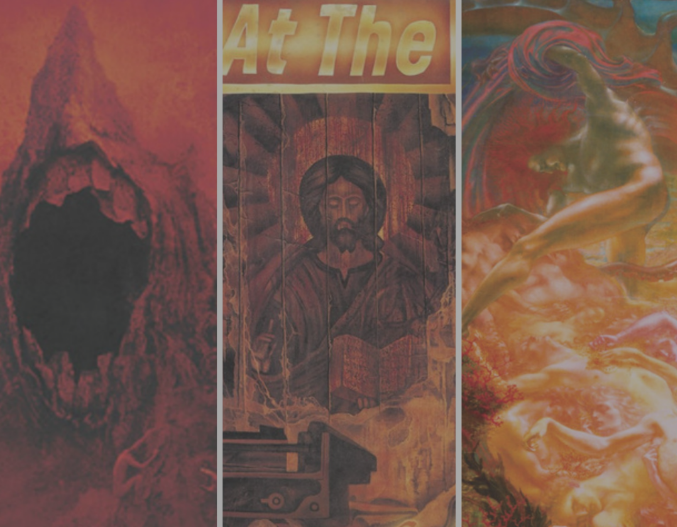
Into the Dead Sky serves a similar purpose and evokes a similar emotion. With Slaughter of the Soul, At The Gates created the blueprint for melodic death metal, where songs were meant to be powerful, overwhelming, and fierce. Tracks like Cold, Suicide Nation, and World of Lies hit hard, but this instrumental interlude stands apart, transforming tension into sorrow. Acoustic guitars open the track with gentle arpeggios, joined by clean, reverberated electric guitars, weaving a simple yet effective atmosphere. In the background, the bass holds long, deep notes, while the restrained drumming lightly marks the structure with subtle expressiveness. Towards the end, tension rises slightly but never becomes heavy, closing the piece with a mysterious yet introspective aura. While not the only instrumental on the album, it’s arguably the most epic, compared to the final track, The Flames of the End.
Into the Dead Sky serves a similar purpose and evokes a similar emotion. With Slaughter of the Soul, At The Gates created the blueprint for melodic death metal, where songs were meant to be powerful, overwhelming, and fierce. Tracks like Cold, Suicide Nation, and World of Lies hit hard, but this instrumental interlude stands apart, transforming tension into sorrow. Acoustic guitars open the track with gentle arpeggios, joined by clean, reverberated electric guitars, weaving a simple yet effective atmosphere. In the background, the bass holds long, deep notes, while the restrained drumming lightly marks the structure with subtle expressiveness. Towards the end, tension rises slightly but never becomes heavy, closing the piece with a mysterious yet introspective aura. While not the only instrumental on the album, it’s arguably the most epic, compared to the final track, The Flames of the End.
Into the Dead Sky serves a similar purpose and evokes a similar emotion. With Slaughter of the Soul, At The Gates created the blueprint for melodic death metal, where songs were meant to be powerful, overwhelming, and fierce. Tracks like Cold, Suicide Nation, and World of Lies hit hard, but this instrumental interlude stands apart, transforming tension into sorrow. Acoustic guitars open the track with gentle arpeggios, joined by clean, reverberated electric guitars, weaving a simple yet effective atmosphere. In the background, the bass holds long, deep notes, while the restrained drumming lightly marks the structure with subtle expressiveness. Towards the end, tension rises slightly but never becomes heavy, closing the piece with a mysterious yet introspective aura. While not the only instrumental on the album, it’s arguably the most epic, compared to the final track, The Flames of the End.
Into the Dead Sky serves a similar purpose and evokes a similar emotion. With Slaughter of the Soul, At The Gates created the blueprint for melodic death metal, where songs were meant to be powerful, overwhelming, and fierce. Tracks like Cold, Suicide Nation, and World of Lies hit hard, but this instrumental interlude stands apart, transforming tension into sorrow. Acoustic guitars open the track with gentle arpeggios, joined by clean, reverberated electric guitars, weaving a simple yet effective atmosphere. In the background, the bass holds long, deep notes, while the restrained drumming lightly marks the structure with subtle expressiveness. Towards the end, tension rises slightly but never becomes heavy, closing the piece with a mysterious yet introspective aura. While not the only instrumental on the album, it’s arguably the most epic, compared to the final track, The Flames of the End.
Into the Dead Sky serves a similar purpose and evokes a similar emotion. With Slaughter of the Soul, At The Gates created the blueprint for melodic death metal, where songs were meant to be powerful, overwhelming, and fierce. Tracks like Cold, Suicide Nation, and World of Lies hit hard, but this instrumental interlude stands apart, transforming tension into sorrow. Acoustic guitars open the track with gentle arpeggios, joined by clean, reverberated electric guitars, weaving a simple yet effective atmosphere. In the background, the bass holds long, deep notes, while the restrained drumming lightly marks the structure with subtle expressiveness. Towards the end, tension rises slightly but never becomes heavy, closing the piece with a mysterious yet introspective aura. While not the only instrumental on the album, it’s arguably the most epic, compared to the final track, The Flames of the End.


Blessed Are the Sick contains four instrumental tracks (three if the intro is counted as one with Fall from Grace), and Desolate Ways is by far the most memorable. On such a furious record, Morbid Angel chose to insert a completely unusual track, interrupting the ominous mood with pure melancholy. Composed by guitarist Richard Brunelle, the piece relies entirely on fingerpicked acoustic guitar, intertwining clear arpeggios and suspended chords in a meditative, free-flowing progression. Themes repeat and evolve without ever exploding, generating a silent yet constant tension that leads to a contemplative finale. With Desolate Ways, Morbid Angel began a tradition of interludes that would continue in future albums, but none left a more lasting impression.
Blessed Are the Sick contains four instrumental tracks (three if the intro is counted as one with Fall from Grace), and Desolate Ways is by far the most memorable. On such a furious record, Morbid Angel chose to insert a completely unusual track, interrupting the ominous mood with pure melancholy. Composed by guitarist Richard Brunelle, the piece relies entirely on fingerpicked acoustic guitar, intertwining clear arpeggios and suspended chords in a meditative, free-flowing progression. Themes repeat and evolve without ever exploding, generating a silent yet constant tension that leads to a contemplative finale. With Desolate Ways, Morbid Angel began a tradition of interludes that would continue in future albums, but none left a more lasting impression.
Blessed Are the Sick contains four instrumental tracks (three if the intro is counted as one with Fall from Grace), and Desolate Ways is by far the most memorable. On such a furious record, Morbid Angel chose to insert a completely unusual track, interrupting the ominous mood with pure melancholy. Composed by guitarist Richard Brunelle, the piece relies entirely on fingerpicked acoustic guitar, intertwining clear arpeggios and suspended chords in a meditative, free-flowing progression. Themes repeat and evolve without ever exploding, generating a silent yet constant tension that leads to a contemplative finale. With Desolate Ways, Morbid Angel began a tradition of interludes that would continue in future albums, but none left a more lasting impression.
Blessed Are the Sick contains four instrumental tracks (three if the intro is counted as one with Fall from Grace), and Desolate Ways is by far the most memorable. On such a furious record, Morbid Angel chose to insert a completely unusual track, interrupting the ominous mood with pure melancholy. Composed by guitarist Richard Brunelle, the piece relies entirely on fingerpicked acoustic guitar, intertwining clear arpeggios and suspended chords in a meditative, free-flowing progression. Themes repeat and evolve without ever exploding, generating a silent yet constant tension that leads to a contemplative finale. With Desolate Ways, Morbid Angel began a tradition of interludes that would continue in future albums, but none left a more lasting impression.
Blessed Are the Sick contains four instrumental tracks (three if the intro is counted as one with Fall from Grace), and Desolate Ways is by far the most memorable. On such a furious record, Morbid Angel chose to insert a completely unusual track, interrupting the ominous mood with pure melancholy. Composed by guitarist Richard Brunelle, the piece relies entirely on fingerpicked acoustic guitar, intertwining clear arpeggios and suspended chords in a meditative, free-flowing progression. Themes repeat and evolve without ever exploding, generating a silent yet constant tension that leads to a contemplative finale. With Desolate Ways, Morbid Angel began a tradition of interludes that would continue in future albums, but none left a more lasting impression.


Opeth takes a different approach. Their albums often feature long tracks alternating between intense death metal and melodic, introspective sections that, on their own, could function as instrumental interludes. On Blackwater Park, silent passages in Dirge for November or the title track exemplify this, but Mikael Åkerfeldt chose to create a standalone track that works perfectly as a brief interlude: Patterns in the Ivy. Built around a minor-key arpeggio alternating open chords and subtle dissonances, it has no drums or vocals. The piece balances space and resonance, with piano entering near the end to maintain a constant emotional charge up to the cryptic finale—a moment of pure introspection between the furious The Funeral Portrait and Blackwater Park.
Opeth takes a different approach. Their albums often feature long tracks alternating between intense death metal and melodic, introspective sections that, on their own, could function as instrumental interludes. On Blackwater Park, silent passages in Dirge for November or the title track exemplify this, but Mikael Åkerfeldt chose to create a standalone track that works perfectly as a brief interlude: Patterns in the Ivy. Built around a minor-key arpeggio alternating open chords and subtle dissonances, it has no drums or vocals. The piece balances space and resonance, with piano entering near the end to maintain a constant emotional charge up to the cryptic finale—a moment of pure introspection between the furious The Funeral Portrait and Blackwater Park.
Opeth takes a different approach. Their albums often feature long tracks alternating between intense death metal and melodic, introspective sections that, on their own, could function as instrumental interludes. On Blackwater Park, silent passages in Dirge for November or the title track exemplify this, but Mikael Åkerfeldt chose to create a standalone track that works perfectly as a brief interlude: Patterns in the Ivy. Built around a minor-key arpeggio alternating open chords and subtle dissonances, it has no drums or vocals. The piece balances space and resonance, with piano entering near the end to maintain a constant emotional charge up to the cryptic finale—a moment of pure introspection between the furious The Funeral Portrait and Blackwater Park.
Opeth takes a different approach. Their albums often feature long tracks alternating between intense death metal and melodic, introspective sections that, on their own, could function as instrumental interludes. On Blackwater Park, silent passages in Dirge for November or the title track exemplify this, but Mikael Åkerfeldt chose to create a standalone track that works perfectly as a brief interlude: Patterns in the Ivy. Built around a minor-key arpeggio alternating open chords and subtle dissonances, it has no drums or vocals. The piece balances space and resonance, with piano entering near the end to maintain a constant emotional charge up to the cryptic finale—a moment of pure introspection between the furious The Funeral Portrait and Blackwater Park.
Opeth takes a different approach. Their albums often feature long tracks alternating between intense death metal and melodic, introspective sections that, on their own, could function as instrumental interludes. On Blackwater Park, silent passages in Dirge for November or the title track exemplify this, but Mikael Åkerfeldt chose to create a standalone track that works perfectly as a brief interlude: Patterns in the Ivy. Built around a minor-key arpeggio alternating open chords and subtle dissonances, it has no drums or vocals. The piece balances space and resonance, with piano entering near the end to maintain a constant emotional charge up to the cryptic finale—a moment of pure introspection between the furious The Funeral Portrait and Blackwater Park.


It’s no surprise that Opeth appear twice in this category. Nearly every album contains at least one instrumental to soften the atmosphere: Pale Communion has Goblin, Heritage has two (Heritage and Marrow of the Earth), Deliverance and Damnation have For Absent Friends and Ending Credits, My Arms, Your Hearse has three (prologue, epilogue, and Madrigal), and Orchid has two. Requiem stands out as the most meditative. Entirely in E minor, two acoustic guitars engage in a melancholic dialogue with folk and Baroque influences. Without voice or drums, it acts as the calm before the storm, embodying an aesthetic principle that would define Opeth’s signature sound.
It’s no surprise that Opeth appear twice in this category. Nearly every album contains at least one instrumental to soften the atmosphere: Pale Communion has Goblin, Heritage has two (Heritage and Marrow of the Earth), Deliverance and Damnation have For Absent Friends and Ending Credits, My Arms, Your Hearse has three (prologue, epilogue, and Madrigal), and Orchid has two. Requiem stands out as the most meditative. Entirely in E minor, two acoustic guitars engage in a melancholic dialogue with folk and Baroque influences. Without voice or drums, it acts as the calm before the storm, embodying an aesthetic principle that would define Opeth’s signature sound.
It’s no surprise that Opeth appear twice in this category. Nearly every album contains at least one instrumental to soften the atmosphere: Pale Communion has Goblin, Heritage has two (Heritage and Marrow of the Earth), Deliverance and Damnation have For Absent Friends and Ending Credits, My Arms, Your Hearse has three (prologue, epilogue, and Madrigal), and Orchid has two. Requiem stands out as the most meditative. Entirely in E minor, two acoustic guitars engage in a melancholic dialogue with folk and Baroque influences. Without voice or drums, it acts as the calm before the storm, embodying an aesthetic principle that would define Opeth’s signature sound.
It’s no surprise that Opeth appear twice in this category. Nearly every album contains at least one instrumental to soften the atmosphere: Pale Communion has Goblin, Heritage has two (Heritage and Marrow of the Earth), Deliverance and Damnation have For Absent Friends and Ending Credits, My Arms, Your Hearse has three (prologue, epilogue, and Madrigal), and Orchid has two. Requiem stands out as the most meditative. Entirely in E minor, two acoustic guitars engage in a melancholic dialogue with folk and Baroque influences. Without voice or drums, it acts as the calm before the storm, embodying an aesthetic principle that would define Opeth’s signature sound.
It’s no surprise that Opeth appear twice in this category. Nearly every album contains at least one instrumental to soften the atmosphere: Pale Communion has Goblin, Heritage has two (Heritage and Marrow of the Earth), Deliverance and Damnation have For Absent Friends and Ending Credits, My Arms, Your Hearse has three (prologue, epilogue, and Madrigal), and Orchid has two. Requiem stands out as the most meditative. Entirely in E minor, two acoustic guitars engage in a melancholic dialogue with folk and Baroque influences. Without voice or drums, it acts as the calm before the storm, embodying an aesthetic principle that would define Opeth’s signature sound.


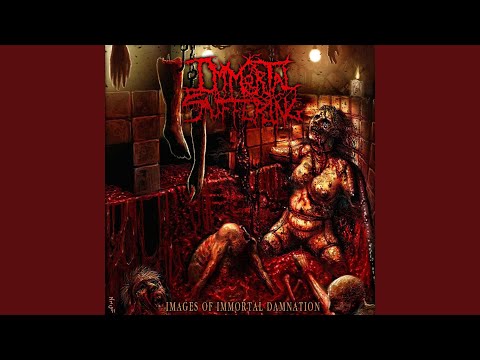
Among the lesser-known gems in this category is Immortal Suffering’s self-titled track. Hailing from New York and pioneers of slam, their work often flies under the radar. In brutal death metal, melancholic interludes are rare, especially in old-school, raw, and saturated contexts. Yet on their second EP, Eternal Damnation, they inserted an entirely singular piece. Built on softer guitar tones—less palm-muted aggression, more arpeggios—the bass and drums support rather than dominate, letting atmosphere take center stage. It’s an unusual track, but it works beautifully within the album’s narrative.
Among the lesser-known gems in this category is Immortal Suffering’s self-titled track. Hailing from New York and pioneers of slam, their work often flies under the radar. In brutal death metal, melancholic interludes are rare, especially in old-school, raw, and saturated contexts. Yet on their second EP, Eternal Damnation, they inserted an entirely singular piece. Built on softer guitar tones—less palm-muted aggression, more arpeggios—the bass and drums support rather than dominate, letting atmosphere take center stage. It’s an unusual track, but it works beautifully within the album’s narrative.
Among the lesser-known gems in this category is Immortal Suffering’s self-titled track. Hailing from New York and pioneers of slam, their work often flies under the radar. In brutal death metal, melancholic interludes are rare, especially in old-school, raw, and saturated contexts. Yet on their second EP, Eternal Damnation, they inserted an entirely singular piece. Built on softer guitar tones—less palm-muted aggression, more arpeggios—the bass and drums support rather than dominate, letting atmosphere take center stage. It’s an unusual track, but it works beautifully within the album’s narrative.
Among the lesser-known gems in this category is Immortal Suffering’s self-titled track. Hailing from New York and pioneers of slam, their work often flies under the radar. In brutal death metal, melancholic interludes are rare, especially in old-school, raw, and saturated contexts. Yet on their second EP, Eternal Damnation, they inserted an entirely singular piece. Built on softer guitar tones—less palm-muted aggression, more arpeggios—the bass and drums support rather than dominate, letting atmosphere take center stage. It’s an unusual track, but it works beautifully within the album’s narrative.
Among the lesser-known gems in this category is Immortal Suffering’s self-titled track. Hailing from New York and pioneers of slam, their work often flies under the radar. In brutal death metal, melancholic interludes are rare, especially in old-school, raw, and saturated contexts. Yet on their second EP, Eternal Damnation, they inserted an entirely singular piece. Built on softer guitar tones—less palm-muted aggression, more arpeggios—the bass and drums support rather than dominate, letting atmosphere take center stage. It’s an unusual track, but it works beautifully within the album’s narrative.

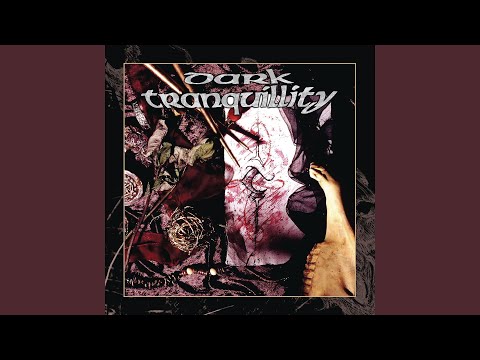
Melodic death metal wouldn’t be complete without Dark Tranquillity. While their discography is extensive, instrumental tracks are rare. One of the best is Star of Nothingness from the EP Zero Distance, but the most memorable is The Mind’s Eye. Opening with a cold, clean guitar, it immediately sets a haunting mood. When distorted guitars enter, they focus on intertwined melodies rather than impact, enhancing unease. The rhythm section remains restrained, favoring emotional engagement over sheer intensity, closing the album with a reflective exhale—proof of Dark Tranquillity’s ability to balance aggression and introspection.
Melodic death metal wouldn’t be complete without Dark Tranquillity. While their discography is extensive, instrumental tracks are rare. One of the best is Star of Nothingness from the EP Zero Distance, but the most memorable is The Mind’s Eye. Opening with a cold, clean guitar, it immediately sets a haunting mood. When distorted guitars enter, they focus on intertwined melodies rather than impact, enhancing unease. The rhythm section remains restrained, favoring emotional engagement over sheer intensity, closing the album with a reflective exhale—proof of Dark Tranquillity’s ability to balance aggression and introspection.
Melodic death metal wouldn’t be complete without Dark Tranquillity. While their discography is extensive, instrumental tracks are rare. One of the best is Star of Nothingness from the EP Zero Distance, but the most memorable is The Mind’s Eye. Opening with a cold, clean guitar, it immediately sets a haunting mood. When distorted guitars enter, they focus on intertwined melodies rather than impact, enhancing unease. The rhythm section remains restrained, favoring emotional engagement over sheer intensity, closing the album with a reflective exhale—proof of Dark Tranquillity’s ability to balance aggression and introspection.
Melodic death metal wouldn’t be complete without Dark Tranquillity. While their discography is extensive, instrumental tracks are rare. One of the best is Star of Nothingness from the EP Zero Distance, but the most memorable is The Mind’s Eye. Opening with a cold, clean guitar, it immediately sets a haunting mood. When distorted guitars enter, they focus on intertwined melodies rather than impact, enhancing unease. The rhythm section remains restrained, favoring emotional engagement over sheer intensity, closing the album with a reflective exhale—proof of Dark Tranquillity’s ability to balance aggression and introspection.
Melodic death metal wouldn’t be complete without Dark Tranquillity. While their discography is extensive, instrumental tracks are rare. One of the best is Star of Nothingness from the EP Zero Distance, but the most memorable is The Mind’s Eye. Opening with a cold, clean guitar, it immediately sets a haunting mood. When distorted guitars enter, they focus on intertwined melodies rather than impact, enhancing unease. The rhythm section remains restrained, favoring emotional engagement over sheer intensity, closing the album with a reflective exhale—proof of Dark Tranquillity’s ability to balance aggression and introspection.

In Flames, another pillar of the Gothenburg scene, also includes instrumentals in their works. On their debut, Lunar Strain, there are two: Dreamscape and Hårgalåten, which differ completely. While Dreamscape maintains constant tension, Hårgalåten offers an atmospheric break: clean guitar riffs and a folk-inspired violin create a melancholic, intimate interlude. Not the most introspective among these, but it successfully transforms the album’s aggression into a quieter breath.
In Flames, another pillar of the Gothenburg scene, also includes instrumentals in their works. On their debut, Lunar Strain, there are two: Dreamscape and Hårgalåten, which differ completely. While Dreamscape maintains constant tension, Hårgalåten offers an atmospheric break: clean guitar riffs and a folk-inspired violin create a melancholic, intimate interlude. Not the most introspective among these, but it successfully transforms the album’s aggression into a quieter breath.
In Flames, another pillar of the Gothenburg scene, also includes instrumentals in their works. On their debut, Lunar Strain, there are two: Dreamscape and Hårgalåten, which differ completely. While Dreamscape maintains constant tension, Hårgalåten offers an atmospheric break: clean guitar riffs and a folk-inspired violin create a melancholic, intimate interlude. Not the most introspective among these, but it successfully transforms the album’s aggression into a quieter breath.
In Flames, another pillar of the Gothenburg scene, also includes instrumentals in their works. On their debut, Lunar Strain, there are two: Dreamscape and Hårgalåten, which differ completely. While Dreamscape maintains constant tension, Hårgalåten offers an atmospheric break: clean guitar riffs and a folk-inspired violin create a melancholic, intimate interlude. Not the most introspective among these, but it successfully transforms the album’s aggression into a quieter breath.
In Flames, another pillar of the Gothenburg scene, also includes instrumentals in their works. On their debut, Lunar Strain, there are two: Dreamscape and Hårgalåten, which differ completely. While Dreamscape maintains constant tension, Hårgalåten offers an atmospheric break: clean guitar riffs and a folk-inspired violin create a melancholic, intimate interlude. Not the most introspective among these, but it successfully transforms the album’s aggression into a quieter breath.


Crossing political but not musical borders, the Finnish melodic death metal band Kalmah comes to mind. In a discography of nine albums, one standout moment is Svieri Doroga from The Black Waltz, an interlude that halts the album’s intensity with a contemplative atmosphere. Acoustic guitars dominate, with lightly played drums keeping rhythm. The melody carries a nostalgic, folk-like character, like a melancholic ballad, immersing the listener in a cold, desolate landscape. A dark, enveloping, meditative track revealing the band’s deepest emotions.
Crossing political but not musical borders, the Finnish melodic death metal band Kalmah comes to mind. In a discography of nine albums, one standout moment is Svieri Doroga from The Black Waltz, an interlude that halts the album’s intensity with a contemplative atmosphere. Acoustic guitars dominate, with lightly played drums keeping rhythm. The melody carries a nostalgic, folk-like character, like a melancholic ballad, immersing the listener in a cold, desolate landscape. A dark, enveloping, meditative track revealing the band’s deepest emotions.
Crossing political but not musical borders, the Finnish melodic death metal band Kalmah comes to mind. In a discography of nine albums, one standout moment is Svieri Doroga from The Black Waltz, an interlude that halts the album’s intensity with a contemplative atmosphere. Acoustic guitars dominate, with lightly played drums keeping rhythm. The melody carries a nostalgic, folk-like character, like a melancholic ballad, immersing the listener in a cold, desolate landscape. A dark, enveloping, meditative track revealing the band’s deepest emotions.
Crossing political but not musical borders, the Finnish melodic death metal band Kalmah comes to mind. In a discography of nine albums, one standout moment is Svieri Doroga from The Black Waltz, an interlude that halts the album’s intensity with a contemplative atmosphere. Acoustic guitars dominate, with lightly played drums keeping rhythm. The melody carries a nostalgic, folk-like character, like a melancholic ballad, immersing the listener in a cold, desolate landscape. A dark, enveloping, meditative track revealing the band’s deepest emotions.
Crossing political but not musical borders, the Finnish melodic death metal band Kalmah comes to mind. In a discography of nine albums, one standout moment is Svieri Doroga from The Black Waltz, an interlude that halts the album’s intensity with a contemplative atmosphere. Acoustic guitars dominate, with lightly played drums keeping rhythm. The melody carries a nostalgic, folk-like character, like a melancholic ballad, immersing the listener in a cold, desolate landscape. A dark, enveloping, meditative track revealing the band’s deepest emotions.


Related articles

AT THE GATES – Slaughter of the Soul

When Metal Meets Masterpieces: Classic Art on Album Covers