


When you have a favorite or highly regarded band, it’s easy to recognize them—but it’s also surprisingly common to get them mixed up with others that share the same name. This happens especially in the deepest corners of the underground, where bands often draw from the same extreme genres and themes. But would the same happen with more famous acts? Absolutely.
Today, it’s much easier to track how many projects exist, where they originate, and how many albums they release. But in the early ‘80s and ‘90s, there was no way to know if halfway across the world a new band was forming under the same name—unless you became huge. Unfortunately, some bands were unlucky enough to be overshadowed by their more famous namesakes.
When you have a favorite or highly regarded band, it’s easy to recognize them—but it’s also surprisingly common to get them mixed up with others that share the same name. This happens especially in the deepest corners of the underground, where bands often draw from the same extreme genres and themes. But would the same happen with more famous acts? Absolutely.
Today, it’s much easier to track how many projects exist, where they originate, and how many albums they release. But in the early ‘80s and ‘90s, there was no way to know if halfway across the world a new band was forming under the same name—unless you became huge. Unfortunately, some bands were unlucky enough to be overshadowed by their more famous namesakes.
When you have a favorite or highly regarded band, it’s easy to recognize them—but it’s also surprisingly common to get them mixed up with others that share the same name. This happens especially in the deepest corners of the underground, where bands often draw from the same extreme genres and themes. But would the same happen with more famous acts? Absolutely.
Today, it’s much easier to track how many projects exist, where they originate, and how many albums they release. But in the early ‘80s and ‘90s, there was no way to know if halfway across the world a new band was forming under the same name—unless you became huge. Unfortunately, some bands were unlucky enough to be overshadowed by their more famous namesakes.
When you have a favorite or highly regarded band, it’s easy to recognize them—but it’s also surprisingly common to get them mixed up with others that share the same name. This happens especially in the deepest corners of the underground, where bands often draw from the same extreme genres and themes. But would the same happen with more famous acts? Absolutely.
Today, it’s much easier to track how many projects exist, where they originate, and how many albums they release. But in the early ‘80s and ‘90s, there was no way to know if halfway across the world a new band was forming under the same name—unless you became huge. Unfortunately, some bands were unlucky enough to be overshadowed by their more famous namesakes.
When you have a favorite or highly regarded band, it’s easy to recognize them—but it’s also surprisingly common to get them mixed up with others that share the same name. This happens especially in the deepest corners of the underground, where bands often draw from the same extreme genres and themes. But would the same happen with more famous acts? Absolutely.
Today, it’s much easier to track how many projects exist, where they originate, and how many albums they release. But in the early ‘80s and ‘90s, there was no way to know if halfway across the world a new band was forming under the same name—unless you became huge. Unfortunately, some bands were unlucky enough to be overshadowed by their more famous namesakes.

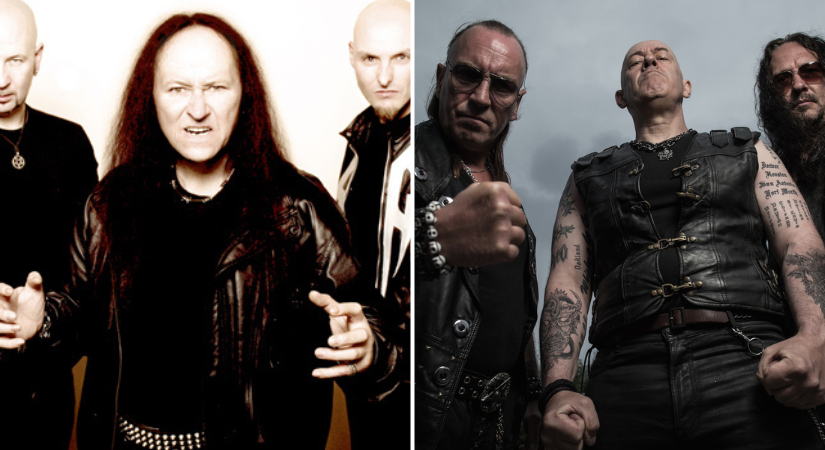
Venom is now a legendary name in the metal world, but in England, when Cronos and company formed, they weren’t the only Venom. There were several: Rox, part of the full NWOBHM wave, NWOBHM, were called Venom before 1981, when they changed their name to stand out. Another Venom, a quartet from Guernsey (pictured), toured the UK spreading heavy metal with the same intensity as the then-emerging Iron Maiden. Even in Swansea, Wales, other Venom existed—though they played oi! rather than metal.
Venom is now a legendary name in the metal world, but in England, when Cronos and company formed, they weren’t the only Venom. There were several: Rox, part of the full NWOBHM wave, NWOBHM, were called Venom before 1981, when they changed their name to stand out. Another Venom, a quartet from Guernsey (pictured), toured the UK spreading heavy metal with the same intensity as the then-emerging Iron Maiden. Even in Swansea, Wales, other Venom existed—though they played oi! rather than metal.
Venom is now a legendary name in the metal world, but in England, when Cronos and company formed, they weren’t the only Venom. There were several: Rox, part of the full NWOBHM wave, NWOBHM, were called Venom before 1981, when they changed their name to stand out. Another Venom, a quartet from Guernsey (pictured), toured the UK spreading heavy metal with the same intensity as the then-emerging Iron Maiden. Even in Swansea, Wales, other Venom existed—though they played oi! rather than metal.
Venom is now a legendary name in the metal world, but in England, when Cronos and company formed, they weren’t the only Venom. There were several: Rox, part of the full NWOBHM wave, NWOBHM, were called Venom before 1981, when they changed their name to stand out. Another Venom, a quartet from Guernsey (pictured), toured the UK spreading heavy metal with the same intensity as the then-emerging Iron Maiden. Even in Swansea, Wales, other Venom existed—though they played oi! rather than metal.
Venom is now a legendary name in the metal world, but in England, when Cronos and company formed, they weren’t the only Venom. There were several: Rox, part of the full NWOBHM wave, NWOBHM, were called Venom before 1981, when they changed their name to stand out. Another Venom, a quartet from Guernsey (pictured), toured the UK spreading heavy metal with the same intensity as the then-emerging Iron Maiden. Even in Swansea, Wales, other Venom existed—though they played oi! rather than metal.
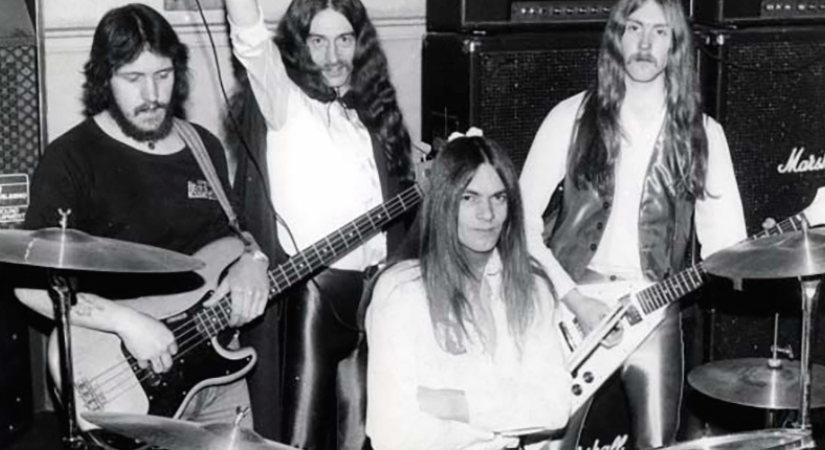
From Rochdale, England, came another band called Slayer. Strange, right? At the same time as the Slayer we all know, this English NWOBHM quartet—Tony Mamwell (vocals), Phil Odins (guitar), Steve Morgan (bass), and Dave Phillips (drums)—released a demo in 1982 and an EP titled I Want Your Life in 1983, now a rare collector’s item. They changed their name to Dragonslayer in 1983 but disbanded in 1987 after releasing only another demo tape.
From Rochdale, England, came another band called Slayer. Strange, right? At the same time as the Slayer we all know, this English NWOBHM quartet—Tony Mamwell (vocals), Phil Odins (guitar), Steve Morgan (bass), and Dave Phillips (drums)—released a demo in 1982 and an EP titled I Want Your Life in 1983, now a rare collector’s item. They changed their name to Dragonslayer in 1983 but disbanded in 1987 after releasing only another demo tape.
From Rochdale, England, came another band called Slayer. Strange, right? At the same time as the Slayer we all know, this English NWOBHM quartet—Tony Mamwell (vocals), Phil Odins (guitar), Steve Morgan (bass), and Dave Phillips (drums)—released a demo in 1982 and an EP titled I Want Your Life in 1983, now a rare collector’s item. They changed their name to Dragonslayer in 1983 but disbanded in 1987 after releasing only another demo tape.
From Rochdale, England, came another band called Slayer. Strange, right? At the same time as the Slayer we all know, this English NWOBHM quartet—Tony Mamwell (vocals), Phil Odins (guitar), Steve Morgan (bass), and Dave Phillips (drums)—released a demo in 1982 and an EP titled I Want Your Life in 1983, now a rare collector’s item. They changed their name to Dragonslayer in 1983 but disbanded in 1987 after releasing only another demo tape.
From Rochdale, England, came another band called Slayer. Strange, right? At the same time as the Slayer we all know, this English NWOBHM quartet—Tony Mamwell (vocals), Phil Odins (guitar), Steve Morgan (bass), and Dave Phillips (drums)—released a demo in 1982 and an EP titled I Want Your Life in 1983, now a rare collector’s item. They changed their name to Dragonslayer in 1983 but disbanded in 1987 after releasing only another demo tape.

No Chuck Billy, no Eric Peterson, no Alex Skolnick. The Testament we know wasn’t the only one in the ‘80s—there was another band from Belfast, Northern Ireland, led by John Harbison, who now heads Stormzone. Following a traditional British heavy metal style, they were far from Birmingham’s metal hubs. They disbanded in 1987 after releasing only a demo—the same year California’s Testament adopted the name, previously known as The Legacy.
No Chuck Billy, no Eric Peterson, no Alex Skolnick. The Testament we know wasn’t the only one in the ‘80s—there was another band from Belfast, Northern Ireland, led by John Harbison, who now heads Stormzone. Following a traditional British heavy metal style, they were far from Birmingham’s metal hubs. They disbanded in 1987 after releasing only a demo—the same year California’s Testament adopted the name, previously known as The Legacy.
No Chuck Billy, no Eric Peterson, no Alex Skolnick. The Testament we know wasn’t the only one in the ‘80s—there was another band from Belfast, Northern Ireland, led by John Harbison, who now heads Stormzone. Following a traditional British heavy metal style, they were far from Birmingham’s metal hubs. They disbanded in 1987 after releasing only a demo—the same year California’s Testament adopted the name, previously known as The Legacy.
No Chuck Billy, no Eric Peterson, no Alex Skolnick. The Testament we know wasn’t the only one in the ‘80s—there was another band from Belfast, Northern Ireland, led by John Harbison, who now heads Stormzone. Following a traditional British heavy metal style, they were far from Birmingham’s metal hubs. They disbanded in 1987 after releasing only a demo—the same year California’s Testament adopted the name, previously known as The Legacy.
No Chuck Billy, no Eric Peterson, no Alex Skolnick. The Testament we know wasn’t the only one in the ‘80s—there was another band from Belfast, Northern Ireland, led by John Harbison, who now heads Stormzone. Following a traditional British heavy metal style, they were far from Birmingham’s metal hubs. They disbanded in 1987 after releasing only a demo—the same year California’s Testament adopted the name, previously known as The Legacy.

Back to England for Annihilator. Not the famous Canadian thrashers, but still a group with highly skilled musicians, including Frank Healy, who played in Sacrilege, Napalm Death, Benediction, and Cerebral Fix, and Tony Dickens, later in Extreme Noise Terror. They were active from 1985 to 1987, releasing two demos that were eventually lost when a friend left the tapes on a bus seat. Without surviving recordings, their sound remains a mystery.
Back to England for Annihilator. Not the famous Canadian thrashers, but still a group with highly skilled musicians, including Frank Healy, who played in Sacrilege, Napalm Death, Benediction, and Cerebral Fix, and Tony Dickens, later in Extreme Noise Terror. They were active from 1985 to 1987, releasing two demos that were eventually lost when a friend left the tapes on a bus seat. Without surviving recordings, their sound remains a mystery.
Back to England for Annihilator. Not the famous Canadian thrashers, but still a group with highly skilled musicians, including Frank Healy, who played in Sacrilege, Napalm Death, Benediction, and Cerebral Fix, and Tony Dickens, later in Extreme Noise Terror. They were active from 1985 to 1987, releasing two demos that were eventually lost when a friend left the tapes on a bus seat. Without surviving recordings, their sound remains a mystery.
Back to England for Annihilator. Not the famous Canadian thrashers, but still a group with highly skilled musicians, including Frank Healy, who played in Sacrilege, Napalm Death, Benediction, and Cerebral Fix, and Tony Dickens, later in Extreme Noise Terror. They were active from 1985 to 1987, releasing two demos that were eventually lost when a friend left the tapes on a bus seat. Without surviving recordings, their sound remains a mystery.
Back to England for Annihilator. Not the famous Canadian thrashers, but still a group with highly skilled musicians, including Frank Healy, who played in Sacrilege, Napalm Death, Benediction, and Cerebral Fix, and Tony Dickens, later in Extreme Noise Terror. They were active from 1985 to 1987, releasing two demos that were eventually lost when a friend left the tapes on a bus seat. Without surviving recordings, their sound remains a mystery.

Even Canadian band Exciter had namesakes. This one was from Amsterdam, playing classic heavy metal with themes of sex and lust, reflected in their single All Night in Red Light. They vanished after 1982, unlike the Ottawa metallers, who went on to a long career starting with Heavy Metal Maniac.
Even Canadian band Exciter had namesakes. This one was from Amsterdam, playing classic heavy metal with themes of sex and lust, reflected in their single All Night in Red Light. They vanished after 1982, unlike the Ottawa metallers, who went on to a long career starting with Heavy Metal Maniac.
Even Canadian band Exciter had namesakes. This one was from Amsterdam, playing classic heavy metal with themes of sex and lust, reflected in their single All Night in Red Light. They vanished after 1982, unlike the Ottawa metallers, who went on to a long career starting with Heavy Metal Maniac.
Even Canadian band Exciter had namesakes. This one was from Amsterdam, playing classic heavy metal with themes of sex and lust, reflected in their single All Night in Red Light. They vanished after 1982, unlike the Ottawa metallers, who went on to a long career starting with Heavy Metal Maniac.
Even Canadian band Exciter had namesakes. This one was from Amsterdam, playing classic heavy metal with themes of sex and lust, reflected in their single All Night in Red Light. They vanished after 1982, unlike the Ottawa metallers, who went on to a long career starting with Heavy Metal Maniac.

From Sweden to Mexico: Marduk, one of black metal’s legends, had Mexican namesakes forming in León in 1988. They played raw thrash, releasing three demos from 1990 to 1994, the most notable being Vida Derramada. They renamed themselves Votan in 1996, while Sweden’s Marduk became iconic.
From Sweden to Mexico: Marduk, one of black metal’s legends, had Mexican namesakes forming in León in 1988. They played raw thrash, releasing three demos from 1990 to 1994, the most notable being Vida Derramada. They renamed themselves Votan in 1996, while Sweden’s Marduk became iconic.
From Sweden to Mexico: Marduk, one of black metal’s legends, had Mexican namesakes forming in León in 1988. They played raw thrash, releasing three demos from 1990 to 1994, the most notable being Vida Derramada. They renamed themselves Votan in 1996, while Sweden’s Marduk became iconic.
From Sweden to Mexico: Marduk, one of black metal’s legends, had Mexican namesakes forming in León in 1988. They played raw thrash, releasing three demos from 1990 to 1994, the most notable being Vida Derramada. They renamed themselves Votan in 1996, while Sweden’s Marduk became iconic.
From Sweden to Mexico: Marduk, one of black metal’s legends, had Mexican namesakes forming in León in 1988. They played raw thrash, releasing three demos from 1990 to 1994, the most notable being Vida Derramada. They renamed themselves Votan in 1996, while Sweden’s Marduk became iconic.

Mayhem is synonymous with Norwegian black metal, but they weren’t the only ones using the name. Many bands worldwide chose “Mayhem” for its meaning. One of theme are from Portland, Oregon, that released the full-length Burned Alive in 1987, a highlight of thrash/speed metal.
Mayhem is synonymous with Norwegian black metal, but they weren’t the only ones using the name. Many bands worldwide chose “Mayhem” for its meaning. One of theme are from Portland, Oregon, that released the full-length Burned Alive in 1987, a highlight of thrash/speed metal.
Mayhem is synonymous with Norwegian black metal, but they weren’t the only ones using the name. Many bands worldwide chose “Mayhem” for its meaning. One of theme are from Portland, Oregon, that released the full-length Burned Alive in 1987, a highlight of thrash/speed metal.
Mayhem is synonymous with Norwegian black metal, but they weren’t the only ones using the name. Many bands worldwide chose “Mayhem” for its meaning. One of theme are from Portland, Oregon, that released the full-length Burned Alive in 1987, a highlight of thrash/speed metal.
Mayhem is synonymous with Norwegian black metal, but they weren’t the only ones using the name. Many bands worldwide chose “Mayhem” for its meaning. One of theme are from Portland, Oregon, that released the full-length Burned Alive in 1987, a highlight of thrash/speed metal.

No Frank Mullen, Terrance Hobbs, or Mike Smith here. But if you recgnize a young Bastian Herzog in the picture, you can understand they are Fleshcrawl. Originally called Morgoth, the German deathsters briefly adopted this name the same year the New York pioneers emerged. After three demos, they quickly changed their name, while the Americans cemented their legacy.
No Frank Mullen, Terrance Hobbs, or Mike Smith here. But if you recgnize a young Bastian Herzog in the picture, you can understand they are Fleshcrawl. Originally called Morgoth, the German deathsters briefly adopted this name the same year the New York pioneers emerged. After three demos, they quickly changed their name, while the Americans cemented their legacy.
No Frank Mullen, Terrance Hobbs, or Mike Smith here. But if you recgnize a young Bastian Herzog in the picture, you can understand they are Fleshcrawl. Originally called Morgoth, the German deathsters briefly adopted this name the same year the New York pioneers emerged. After three demos, they quickly changed their name, while the Americans cemented their legacy.
No Frank Mullen, Terrance Hobbs, or Mike Smith here. But if you recgnize a young Bastian Herzog in the picture, you can understand they are Fleshcrawl. Originally called Morgoth, the German deathsters briefly adopted this name the same year the New York pioneers emerged. After three demos, they quickly changed their name, while the Americans cemented their legacy.
No Frank Mullen, Terrance Hobbs, or Mike Smith here. But if you recgnize a young Bastian Herzog in the picture, you can understand they are Fleshcrawl. Originally called Morgoth, the German deathsters briefly adopted this name the same year the New York pioneers emerged. After three demos, they quickly changed their name, while the Americans cemented their legacy.

German death metal legends Morgoth had contemporaries with the same name. Tolkien’s universe inspired many metal acts, influencing band names, concepts, and songwriting. Alongside Fleshcrawl, there was a Dutch quartet from Oss and a Polish thrash band from Bydgoszcz, now known as Wyrok.
German death metal legends Morgoth had contemporaries with the same name. Tolkien’s universe inspired many metal acts, influencing band names, concepts, and songwriting. Alongside Fleshcrawl, there was a Dutch quartet from Oss and a Polish thrash band from Bydgoszcz, now known as Wyrok.
German death metal legends Morgoth had contemporaries with the same name. Tolkien’s universe inspired many metal acts, influencing band names, concepts, and songwriting. Alongside Fleshcrawl, there was a Dutch quartet from Oss and a Polish thrash band from Bydgoszcz, now known as Wyrok.
German death metal legends Morgoth had contemporaries with the same name. Tolkien’s universe inspired many metal acts, influencing band names, concepts, and songwriting. Alongside Fleshcrawl, there was a Dutch quartet from Oss and a Polish thrash band from Bydgoszcz, now known as Wyrok.
German death metal legends Morgoth had contemporaries with the same name. Tolkien’s universe inspired many metal acts, influencing band names, concepts, and songwriting. Alongside Fleshcrawl, there was a Dutch quartet from Oss and a Polish thrash band from Bydgoszcz, now known as Wyrok.

Not the American glam metallers—these German Poison bands had nothing in common with them except the name. Their chaotic demo, Sons of Evil, laid early death-metal foundations in Germany. Other U.S. Poison bands briefly existed in Chicago and Sacramento around the same time.
Not the American glam metallers—these German Poison bands had nothing in common with them except the name. Their chaotic demo, Sons of Evil, laid early death-metal foundations in Germany. Other U.S. Poison bands briefly existed in Chicago and Sacramento around the same time.
Not the American glam metallers—these German Poison bands had nothing in common with them except the name. Their chaotic demo, Sons of Evil, laid early death-metal foundations in Germany. Other U.S. Poison bands briefly existed in Chicago and Sacramento around the same time.
Not the American glam metallers—these German Poison bands had nothing in common with them except the name. Their chaotic demo, Sons of Evil, laid early death-metal foundations in Germany. Other U.S. Poison bands briefly existed in Chicago and Sacramento around the same time.
Not the American glam metallers—these German Poison bands had nothing in common with them except the name. Their chaotic demo, Sons of Evil, laid early death-metal foundations in Germany. Other U.S. Poison bands briefly existed in Chicago and Sacramento around the same time.

The classic death metal name Massacre was also used by a Finnish hardcore punk band led by Pete Väisänen, formed in 1983. Unlike their Floridian namesakes, who shaped death metal, this band mostly released splits, though they did record a self-titled full-length in 1985.
The classic death metal name Massacre was also used by a Finnish hardcore punk band led by Pete Väisänen, formed in 1983. Unlike their Floridian namesakes, who shaped death metal, this band mostly released splits, though they did record a self-titled full-length in 1985.
The classic death metal name Massacre was also used by a Finnish hardcore punk band led by Pete Väisänen, formed in 1983. Unlike their Floridian namesakes, who shaped death metal, this band mostly released splits, though they did record a self-titled full-length in 1985.
The classic death metal name Massacre was also used by a Finnish hardcore punk band led by Pete Väisänen, formed in 1983. Unlike their Floridian namesakes, who shaped death metal, this band mostly released splits, though they did record a self-titled full-length in 1985.
The classic death metal name Massacre was also used by a Finnish hardcore punk band led by Pete Väisänen, formed in 1983. Unlike their Floridian namesakes, who shaped death metal, this band mostly released splits, though they did record a self-titled full-length in 1985.


testo minimo
Related articles

Slayer Returns Out of Nowhere – What’s Next for the Metal Legends?