


When it comes to the metal scene, true crime stories might seem inevitable—especially for those unfamiliar with the genre. But the reality is far from what outsiders often imagine: the metal world is one of the most peaceful communities out there, built on respect, camaraderie, and a shared passion that binds both fans and musicians. Still, as in any human environment, some individuals occasionally cross the line, sometimes committing acts that are criminal.
The following musicians are examples—some serving time for shocking crimes, others imprisoned for lesser offenses, and a few later cleared of wrongdoing entirely.
When it comes to the metal scene, true crime stories might seem inevitable—especially for those unfamiliar with the genre. But the reality is far from what outsiders often imagine: the metal world is one of the most peaceful communities out there, built on respect, camaraderie, and a shared passion that binds both fans and musicians. Still, as in any human environment, some individuals occasionally cross the line, sometimes committing acts that are criminal.
The following musicians are examples—some serving time for shocking crimes, others imprisoned for lesser offenses, and a few later cleared of wrongdoing entirely.Non è comune collegare un genere come il metal ai politici, soprattutto i più anziani, ma anche tra di loro si possono trovare molti appassionati. Alcuni sono fan sfegatati, altri veri e propri musicisti, i quali riescono sempre a trovare, tra le campagne elettorali e le varie interviste, il modo di dedicarsi alla propria passione e a mostrarla esplicitamente in ogni contesto.
When it comes to the metal scene, true crime stories might seem inevitable—especially for those unfamiliar with the genre. But the reality is far from what outsiders often imagine: the metal world is one of the most peaceful communities out there, built on respect, camaraderie, and a shared passion that binds both fans and musicians. Still, as in any human environment, some individuals occasionally cross the line, sometimes committing acts that are criminal.
The following musicians are examples—some serving time for shocking crimes, others imprisoned for lesser offenses, and a few later cleared of wrongdoing entirely.
When it comes to the metal scene, true crime stories might seem inevitable—especially for those unfamiliar with the genre. But the reality is far from what outsiders often imagine: the metal world is one of the most peaceful communities out there, built on respect, camaraderie, and a shared passion that binds both fans and musicians. Still, as in any human environment, some individuals occasionally cross the line, sometimes committing acts that are criminal.
The following musicians are examples—some serving time for shocking crimes, others imprisoned for lesser offenses, and a few later cleared of wrongdoing entirely.
When it comes to the metal scene, true crime stories might seem inevitable—especially for those unfamiliar with the genre. But the reality is far from what outsiders often imagine: the metal world is one of the most peaceful communities out there, built on respect, camaraderie, and a shared passion that binds both fans and musicians. Still, as in any human environment, some individuals occasionally cross the line, sometimes committing acts that are criminal.
The following musicians are examples—some serving time for shocking crimes, others imprisoned for lesser offenses, and a few later cleared of wrongdoing entirely.

Varg Vikernes hardly needs an introduction. Known for his exceptional artistic vision with Burzum, he also became notorious for his controversial behavior. The first headline-grabbing incident was the 1992 burning of Fantoft Church near Bergen, for which he served six months in prison. A year later came the murder of Euronymous, earning him a 21-year sentence. But the story didn’t end there: in 2009, after his release, Vikernes moved to France, where he and his wife were arrested in 2013 for allegedly planning a massacre after purchasing four hunting rifles. Ultimately, he was not convicted but returned to public attention with provocative statements.
Varg Vikernes hardly needs an introduction. Known for his exceptional artistic vision with Burzum, he also became notorious for his controversial behavior. The first headline-grabbing incident was the 1992 burning of Fantoft Church near Bergen, for which he served six months in prison. A year later came the murder of Euronymous, earning him a 21-year sentence. But the story didn’t end there: in 2009, after his release, Vikernes moved to France, where he and his wife were arrested in 2013 for allegedly planning a massacre after purchasing four hunting rifles. Ultimately, he was not convicted but returned to public attention with provocative statements.
Varg Vikernes hardly needs an introduction. Known for his exceptional artistic vision with Burzum, he also became notorious for his controversial behavior. The first headline-grabbing incident was the 1992 burning of Fantoft Church near Bergen, for which he served six months in prison. A year later came the murder of Euronymous, earning him a 21-year sentence. But the story didn’t end there: in 2009, after his release, Vikernes moved to France, where he and his wife were arrested in 2013 for allegedly planning a massacre after purchasing four hunting rifles. Ultimately, he was not convicted but returned to public attention with provocative statements.
Varg Vikernes hardly needs an introduction. Known for his exceptional artistic vision with Burzum, he also became notorious for his controversial behavior. The first headline-grabbing incident was the 1992 burning of Fantoft Church near Bergen, for which he served six months in prison. A year later came the murder of Euronymous, earning him a 21-year sentence. But the story didn’t end there: in 2009, after his release, Vikernes moved to France, where he and his wife were arrested in 2013 for allegedly planning a massacre after purchasing four hunting rifles. Ultimately, he was not convicted but returned to public attention with provocative statements.
Varg Vikernes hardly needs an introduction. Known for his exceptional artistic vision with Burzum, he also became notorious for his controversial behavior. The first headline-grabbing incident was the 1992 burning of Fantoft Church near Bergen, for which he served six months in prison. A year later came the murder of Euronymous, earning him a 21-year sentence. But the story didn’t end there: in 2009, after his release, Vikernes moved to France, where he and his wife were arrested in 2013 for allegedly planning a massacre after purchasing four hunting rifles. Ultimately, he was not convicted but returned to public attention with provocative statements.

Kristian Eivind Espedal, known as Gaahl, is recognized as the frontman of Gorgoroth, a black metal band noted for its controversial lyrics and theatrical performances. In 2002, during a party at his home, Gaahl became involved in an altercation with a 41-year-old man who accused him of assault, torture, and threatening to make him drink his blood. Gaahl was arrested, sentenced to 14 months in prison (serving 8), and ordered to pay 190,000 Norwegian kroner in damages. The case led to public criticism, particularly because Gaahl was also rumored to support far-right ideologies, accusations he has consistently denied.
Kristian Eivind Espedal, known as Gaahl, is recognized as the frontman of Gorgoroth, a black metal band noted for its controversial lyrics and theatrical performances. In 2002, during a party at his home, Gaahl became involved in an altercation with a 41-year-old man who accused him of assault, torture, and threatening to make him drink his blood. Gaahl was arrested, sentenced to 14 months in prison (serving 8), and ordered to pay 190,000 Norwegian kroner in damages. The case led to public criticism, particularly because Gaahl was also rumored to support far-right ideologies, accusations he has consistently denied.
Kristian Eivind Espedal, known as Gaahl, is recognized as the frontman of Gorgoroth, a black metal band noted for its controversial lyrics and theatrical performances. In 2002, during a party at his home, Gaahl became involved in an altercation with a 41-year-old man who accused him of assault, torture, and threatening to make him drink his blood. Gaahl was arrested, sentenced to 14 months in prison (serving 8), and ordered to pay 190,000 Norwegian kroner in damages. The case led to public criticism, particularly because Gaahl was also rumored to support far-right ideologies, accusations he has consistently denied.
Kristian Eivind Espedal, known as Gaahl, is recognized as the frontman of Gorgoroth, a black metal band noted for its controversial lyrics and theatrical performances. In 2002, during a party at his home, Gaahl became involved in an altercation with a 41-year-old man who accused him of assault, torture, and threatening to make him drink his blood. Gaahl was arrested, sentenced to 14 months in prison (serving 8), and ordered to pay 190,000 Norwegian kroner in damages. The case led to public criticism, particularly because Gaahl was also rumored to support far-right ideologies, accusations he has consistently denied.
Kristian Eivind Espedal, known as Gaahl, is recognized as the frontman of Gorgoroth, a black metal band noted for its controversial lyrics and theatrical performances. In 2002, during a party at his home, Gaahl became involved in an altercation with a 41-year-old man who accused him of assault, torture, and threatening to make him drink his blood. Gaahl was arrested, sentenced to 14 months in prison (serving 8), and ordered to pay 190,000 Norwegian kroner in damages. The case led to public criticism, particularly because Gaahl was also rumored to support far-right ideologies, accusations he has consistently denied.

Bård Guldvik Eithun, aka Faust, started his career with a bang. At 18, he became the drummer for Emperor, recording their first self-titled EP in 1993 and the classic In the Nightside Eclipse in 1994. However, his promising trajectory soon took a drastic turn—for a serious reason: incarceration. In August 1992, in Lillehammer, Faust murdered Magne Andreassen, a man who had approached him in a forest after a night at the pub. Initially, Faust got away with the crime, but eventually confessed to members of the Inner Circle, including Euronymous and Varg Vikernes, which led to a 14-year prison sentence (serving nine). After his release, Faust returned to music with Aborym and Blood Tsunami, where he remained committed solely to his craft.
Bård Guldvik Eithun, aka Faust, started his career with a bang. At 18, he became the drummer for Emperor, recording their first self-titled EP in 1993 and the classic In the Nightside Eclipse in 1994. However, his promising trajectory soon took a drastic turn—for a serious reason: incarceration. In August 1992, in Lillehammer, Faust murdered Magne Andreassen, a man who had approached him in a forest after a night at the pub. Initially, Faust got away with the crime, but eventually confessed to members of the Inner Circle, including Euronymous and Varg Vikernes, which led to a 14-year prison sentence (serving nine). After his release, Faust returned to music with Aborym and Blood Tsunami, where he remained committed solely to his craft.
Bård Guldvik Eithun, aka Faust, started his career with a bang. At 18, he became the drummer for Emperor, recording their first self-titled EP in 1993 and the classic In the Nightside Eclipse in 1994. However, his promising trajectory soon took a drastic turn—for a serious reason: incarceration. In August 1992, in Lillehammer, Faust murdered Magne Andreassen, a man who had approached him in a forest after a night at the pub. Initially, Faust got away with the crime, but eventually confessed to members of the Inner Circle, including Euronymous and Varg Vikernes, which led to a 14-year prison sentence (serving nine). After his release, Faust returned to music with Aborym and Blood Tsunami, where he remained committed solely to his craft.
Bård Guldvik Eithun, aka Faust, started his career with a bang. At 18, he became the drummer for Emperor, recording their first self-titled EP in 1993 and the classic In the Nightside Eclipse in 1994. However, his promising trajectory soon took a drastic turn—for a serious reason: incarceration. In August 1992, in Lillehammer, Faust murdered Magne Andreassen, a man who had approached him in a forest after a night at the pub. Initially, Faust got away with the crime, but eventually confessed to members of the Inner Circle, including Euronymous and Varg Vikernes, which led to a 14-year prison sentence (serving nine). After his release, Faust returned to music with Aborym and Blood Tsunami, where he remained committed solely to his craft.
Bård Guldvik Eithun, aka Faust, started his career with a bang. At 18, he became the drummer for Emperor, recording their first self-titled EP in 1993 and the classic In the Nightside Eclipse in 1994. However, his promising trajectory soon took a drastic turn—for a serious reason: incarceration. In August 1992, in Lillehammer, Faust murdered Magne Andreassen, a man who had approached him in a forest after a night at the pub. Initially, Faust got away with the crime, but eventually confessed to members of the Inner Circle, including Euronymous and Varg Vikernes, which led to a 14-year prison sentence (serving nine). After his release, Faust returned to music with Aborym and Blood Tsunami, where he remained committed solely to his craft.

Jon Nödtveidt, leader of Dissection, faced a similarly dark trajectory but with a different ending. In 1997, he shot and killed Josef ben Meddour, a 36-year-old Algerian man, in Gothenburg. According to authorities, the killing was motivated by homophobia, unlike Faust’s case. Nödtveidt and his accomplice Vlad, were sentenced to ten years, serving seven. Following his release, Jon returned to record Reinkaos (2006), his final album. Tragically, on August 13, 2006, Nödtveidt was found dead by suicide in his apartment near Stockholm, marking the definitive end of Dissection.
Jon Nödtveidt, leader of Dissection, faced a similarly dark trajectory but with a different ending. In 1997, he shot and killed Josef ben Meddour, a 36-year-old Algerian man, in Gothenburg. According to authorities, the killing was motivated by homophobia, unlike Faust’s case. Nödtveidt and his accomplice Vlad, were sentenced to ten years, serving seven. Following his release, Jon returned to record Reinkaos (2006), his final album. Tragically, on August 13, 2006, Nödtveidt was found dead by suicide in his apartment near Stockholm, marking the definitive end of Dissection.
Jon Nödtveidt, leader of Dissection, faced a similarly dark trajectory but with a different ending. In 1997, he shot and killed Josef ben Meddour, a 36-year-old Algerian man, in Gothenburg. According to authorities, the killing was motivated by homophobia, unlike Faust’s case. Nödtveidt and his accomplice Vlad, were sentenced to ten years, serving seven. Following his release, Jon returned to record Reinkaos (2006), his final album. Tragically, on August 13, 2006, Nödtveidt was found dead by suicide in his apartment near Stockholm, marking the definitive end of Dissection.
Jon Nödtveidt, leader of Dissection, faced a similarly dark trajectory but with a different ending. In 1997, he shot and killed Josef ben Meddour, a 36-year-old Algerian man, in Gothenburg. According to authorities, the killing was motivated by homophobia, unlike Faust’s case. Nödtveidt and his accomplice Vlad, were sentenced to ten years, serving seven. Following his release, Jon returned to record Reinkaos (2006), his final album. Tragically, on August 13, 2006, Nödtveidt was found dead by suicide in his apartment near Stockholm, marking the definitive end of Dissection.
Jon Nödtveidt, leader of Dissection, faced a similarly dark trajectory but with a different ending. In 1997, he shot and killed Josef ben Meddour, a 36-year-old Algerian man, in Gothenburg. According to authorities, the killing was motivated by homophobia, unlike Faust’s case. Nödtveidt and his accomplice Vlad, were sentenced to ten years, serving seven. Following his release, Jon returned to record Reinkaos (2006), his final album. Tragically, on August 13, 2006, Nödtveidt was found dead by suicide in his apartment near Stockholm, marking the definitive end of Dissection.

Marilyn Manson has long been a polarizing figure in metal, both due to his provocative image and several controversial incidents. In 2001, during a show in Michigan, he used a security guard as a prop in a lap-dance routine, which landed him a weekend behind bars. A nearly identical incident occurred in New Hampshire in 2019, when Manson spat on a cameraman and his equipment during a performance. In both cases, Manson faced minor legal consequences—mostly fines—but these episodes only fueled the media frenzy surrounding him.
Marilyn Manson has long been a polarizing figure in metal, both due to his provocative image and several controversial incidents. In 2001, during a show in Michigan, he used a security guard as a prop in a lap-dance routine, which landed him a weekend behind bars. A nearly identical incident occurred in New Hampshire in 2019, when Manson spat on a cameraman and his equipment during a performance. In both cases, Manson faced minor legal consequences—mostly fines—but these episodes only fueled the media frenzy surrounding him.
Marilyn Manson has long been a polarizing figure in metal, both due to his provocative image and several controversial incidents. In 2001, during a show in Michigan, he used a security guard as a prop in a lap-dance routine, which landed him a weekend behind bars. A nearly identical incident occurred in New Hampshire in 2019, when Manson spat on a cameraman and his equipment during a performance. In both cases, Manson faced minor legal consequences—mostly fines—but these episodes only fueled the media frenzy surrounding him.
Marilyn Manson has long been a polarizing figure in metal, both due to his provocative image and several controversial incidents. In 2001, during a show in Michigan, he used a security guard as a prop in a lap-dance routine, which landed him a weekend behind bars. A nearly identical incident occurred in New Hampshire in 2019, when Manson spat on a cameraman and his equipment during a performance. In both cases, Manson faced minor legal consequences—mostly fines—but these episodes only fueled the media frenzy surrounding him.
Marilyn Manson has long been a polarizing figure in metal, both due to his provocative image and several controversial incidents. In 2001, during a show in Michigan, he used a security guard as a prop in a lap-dance routine, which landed him a weekend behind bars. A nearly identical incident occurred in New Hampshire in 2019, when Manson spat on a cameraman and his equipment during a performance. In both cases, Manson faced minor legal consequences—mostly fines—but these episodes only fueled the media frenzy surrounding him.

Se volete sapere di che forma è fatta la pazzia, chiedetelo a Pat O’Brien. L’ex chitarrista dei Cannibal Corpse si è reso protagonista di una vicenda tanto improvvisa, quanto assurda: il 10 dicembre 2018 dà prima fuoco alla sua casa, poi si introduce senza permesso nell’abitazione dei vicini e, all’arrivo della polizia, prende un coltello e cerca di affrontare un agente, ovviamente senza successo. Una volta spento l’incendio, le forze dell’ordine trovano anche 80 armi da fuoco (tra cui due lanciafiamme militari) di cui il musicista è un grande appassionato. Il giorno dopo, quindi, viene arrestato con 4 capi di accusa: incendio doloso, violazione di domicilio, furto con scasso e aggressione a pubblico ufficiale. Dopo aver trascorso una settimana in prigione, arriva la condanna a 5 anni di libertà vigilata, risarcimento di 24.000 dollari ai vicini e 150 ore di servizi sociali senza l’assunzione di alcol e droghe.
Se volete sapere di che forma è fatta la pazzia, chiedetelo a Pat O’Brien. L’ex chitarrista dei Cannibal Corpse si è reso protagonista di una vicenda tanto improvvisa, quanto assurda: il 10 dicembre 2018 dà prima fuoco alla sua casa, poi si introduce senza permesso nell’abitazione dei vicini e, all’arrivo della polizia, prende un coltello e cerca di affrontare un agente, ovviamente senza successo. Una volta spento l’incendio, le forze dell’ordine trovano anche 80 armi da fuoco (tra cui due lanciafiamme militari) di cui il musicista è un grande appassionato. Il giorno dopo, quindi, viene arrestato con 4 capi di accusa: incendio doloso, violazione di domicilio, furto con scasso e aggressione a pubblico ufficiale. Dopo aver trascorso una settimana in prigione, arriva la condanna a 5 anni di libertà vigilata, risarcimento di 24.000 dollari ai vicini e 150 ore di servizi sociali senza l’assunzione di alcol e droghe.
Pat O’Brien, former guitarist for Cannibal Corpse, was involved in one of the most bizarre criminal episodes in metal history. On December 10, 2018, he first set fire to his own home, then trespassed into his neighbors’ property. When police arrived, he brandished a knife in their direction. Authorities also discovered 80 firearms, including two military flamethrowers. He was arrested for arson, trespassing, burglary, and assault on a law enforcement officer. O’Brien spent a week in jail and was later sentenced to five years of probation, 150 hours of community service, and restitution of $24,000 to his neighbors, under the condition of abstaining from drugs and alcohol.
Pat O’Brien, former guitarist for Cannibal Corpse, was involved in one of the most bizarre criminal episodes in metal history. On December 10, 2018, he first set fire to his own home, then trespassed into his neighbors’ property. When police arrived, he brandished a knife in their direction. Authorities also discovered 80 firearms, including two military flamethrowers. He was arrested for arson, trespassing, burglary, and assault on a law enforcement officer. O’Brien spent a week in jail and was later sentenced to five years of probation, 150 hours of community service, and restitution of $24,000 to his neighbors, under the condition of abstaining from drugs and alcohol.
Pat O’Brien, former guitarist for Cannibal Corpse, was involved in one of the most bizarre criminal episodes in metal history. On December 10, 2018, he first set fire to his own home, then trespassed into his neighbors’ property. When police arrived, he brandished a knife in their direction. Authorities also discovered 80 firearms, including two military flamethrowers. He was arrested for arson, trespassing, burglary, and assault on a law enforcement officer. O’Brien spent a week in jail and was later sentenced to five years of probation, 150 hours of community service, and restitution of $24,000 to his neighbors, under the condition of abstaining from drugs and alcohol.

Allen West, a key figure in death metal—having played in Massacre and Obituary and founded Six Feet Under—has had a troubled legal history. In 2007, he was arrested for DUI and served eight months in prison. Then, in 2013, he was arrested for possession and production of methamphetamine. The circumstances of the arrest were bizarre: West called the police, claiming intruders had broken into his home. Officers found not burglars, but a room filled with equipment and chemicals for producing meth. West served three years in prison, followed by an additional three years for subsequent theft convictions.
Allen West, a key figure in death metal—having played in Massacre and Obituary and founded Six Feet Under—has had a troubled legal history. In 2007, he was arrested for DUI and served eight months in prison. Then, in 2013, he was arrested for possession and production of methamphetamine. The circumstances of the arrest were bizarre: West called the police, claiming intruders had broken into his home. Officers found not burglars, but a room filled with equipment and chemicals for producing meth. West served three years in prison, followed by an additional three years for subsequent theft convictions.
Allen West, a key figure in death metal—having played in Massacre and Obituary and founded Six Feet Under—has had a troubled legal history. In 2007, he was arrested for DUI and served eight months in prison. Then, in 2013, he was arrested for possession and production of methamphetamine. The circumstances of the arrest were bizarre: West called the police, claiming intruders had broken into his home. Officers found not burglars, but a room filled with equipment and chemicals for producing meth. West served three years in prison, followed by an additional three years for subsequent theft convictions.
Allen West, a key figure in death metal—having played in Massacre and Obituary and founded Six Feet Under—has had a troubled legal history. In 2007, he was arrested for DUI and served eight months in prison. Then, in 2013, he was arrested for possession and production of methamphetamine. The circumstances of the arrest were bizarre: West called the police, claiming intruders had broken into his home. Officers found not burglars, but a room filled with equipment and chemicals for producing meth. West served three years in prison, followed by an additional three years for subsequent theft convictions.
Allen West, a key figure in death metal—having played in Massacre and Obituary and founded Six Feet Under—has had a troubled legal history. In 2007, he was arrested for DUI and served eight months in prison. Then, in 2013, he was arrested for possession and production of methamphetamine. The circumstances of the arrest were bizarre: West called the police, claiming intruders had broken into his home. Officers found not burglars, but a room filled with equipment and chemicals for producing meth. West served three years in prison, followed by an additional three years for subsequent theft convictions.

Jon Schaffer, guitarist and leader for Iced Earth, is also widely known outside the metal community for his political actions. On January 6, 2021, he participated in the Capitol riot photographed wearing an Oath Keepers hat, a far-right anti-government group. He was arrested 11 days later, charged with unlawful entry and disruption of government proceedings, and used pepper spray during his actions. On April 16, 2021, he pled guilty, becoming the first participant to admit guilt, facing a maximum sentence of 4.5 years, which he is still serving.
Jon Schaffer, guitarist and leader for Iced Earth, is also widely known outside the metal community for his political actions. On January 6, 2021, he participated in the Capitol riot photographed wearing an Oath Keepers hat, a far-right anti-government group. He was arrested 11 days later, charged with unlawful entry and disruption of government proceedings, and used pepper spray during his actions. On April 16, 2021, he pled guilty, becoming the first participant to admit guilt, facing a maximum sentence of 4.5 years, which he is still serving.
Jon Schaffer, guitarist and leader for Iced Earth, is also widely known outside the metal community for his political actions. On January 6, 2021, he participated in the Capitol riot photographed wearing an Oath Keepers hat, a far-right anti-government group. He was arrested 11 days later, charged with unlawful entry and disruption of government proceedings, and used pepper spray during his actions. On April 16, 2021, he pled guilty, becoming the first participant to admit guilt, facing a maximum sentence of 4.5 years, which he is still serving.
Jon Schaffer, guitarist and leader for Iced Earth, is also widely known outside the metal community for his political actions. On January 6, 2021, he participated in the Capitol riot photographed wearing an Oath Keepers hat, a far-right anti-government group. He was arrested 11 days later, charged with unlawful entry and disruption of government proceedings, and used pepper spray during his actions. On April 16, 2021, he pled guilty, becoming the first participant to admit guilt, facing a maximum sentence of 4.5 years, which he is still serving.
Jon Schaffer, guitarist and leader for Iced Earth, is also widely known outside the metal community for his political actions. On January 6, 2021, he participated in the Capitol riot photographed wearing an Oath Keepers hat, a far-right anti-government group. He was arrested 11 days later, charged with unlawful entry and disruption of government proceedings, and used pepper spray during his actions. On April 16, 2021, he pled guilty, becoming the first participant to admit guilt, facing a maximum sentence of 4.5 years, which he is still serving.

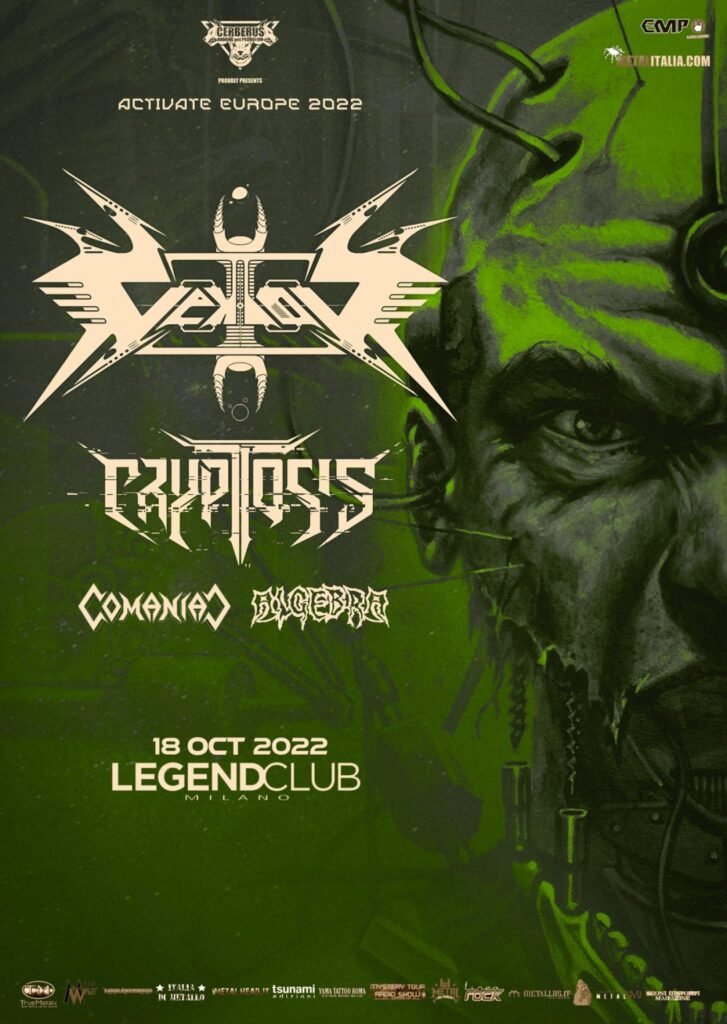
David DiSanto, frontman of Vektor, has had minor brushes with the law. In 2013, during a show at the Scion Metal Fest in Memphis, a Christian protester disrupted the concert. DiSanto, angered by the disturbance, threw a glass of beer at him and spent two days in jail. He was released without further legal proceedings, and the incident had no lasting impact on his career.
David DiSanto, frontman of Vektor, has had minor brushes with the law. In 2013, during a show at the Scion Metal Fest in Memphis, a Christian protester disrupted the concert. DiSanto, angered by the disturbance, threw a glass of beer at him and spent two days in jail. He was released without further legal proceedings, and the incident had no lasting impact on his career.
David DiSanto, frontman of Vektor, has had minor brushes with the law. In 2013, during a show at the Scion Metal Fest in Memphis, a Christian protester disrupted the concert. DiSanto, angered by the disturbance, threw a glass of beer at him and spent two days in jail. He was released without further legal proceedings, and the incident had no lasting impact on his career.
David DiSanto, frontman of Vektor, has had minor brushes with the law. In 2013, during a show at the Scion Metal Fest in Memphis, a Christian protester disrupted the concert. DiSanto, angered by the disturbance, threw a glass of beer at him and spent two days in jail. He was released without further legal proceedings, and the incident had no lasting impact on his career.
David DiSanto, frontman of Vektor, has had minor brushes with the law. In 2013, during a show at the Scion Metal Fest in Memphis, a Christian protester disrupted the concert. DiSanto, angered by the disturbance, threw a glass of beer at him and spent two days in jail. He was released without further legal proceedings, and the incident had no lasting impact on his career.

Tim Lambesis, leader of As I Lay Dying, had a more serious case. In 2013, he was arrested for hiring a hitman to murder his ex-wife, Meggan Murphy—a crime he never personally committed. He was sentenced to six years in prison, serving three. During his imprisonment, the band disbanded. After release, Lambesis returned to music, reforming As I Lay Dying and continuing his career without further legal trouble.
Tim Lambesis, leader of As I Lay Dying, had a more serious case. In 2013, he was arrested for hiring a hitman to murder his ex-wife, Meggan Murphy—a crime he never personally committed. He was sentenced to six years in prison, serving three. During his imprisonment, the band disbanded. After release, Lambesis returned to music, reforming As I Lay Dying and continuing his career without further legal trouble.
Tim Lambesis, leader of As I Lay Dying, had a more serious case. In 2013, he was arrested for hiring a hitman to murder his ex-wife, Meggan Murphy—a crime he never personally committed. He was sentenced to six years in prison, serving three. During his imprisonment, the band disbanded. After release, Lambesis returned to music, reforming As I Lay Dying and continuing his career without further legal trouble.
Tim Lambesis, leader of As I Lay Dying, had a more serious case. In 2013, he was arrested for hiring a hitman to murder his ex-wife, Meggan Murphy—a crime he never personally committed. He was sentenced to six years in prison, serving three. During his imprisonment, the band disbanded. After release, Lambesis returned to music, reforming As I Lay Dying and continuing his career without further legal trouble.
Tim Lambesis, leader of As I Lay Dying, had a more serious case. In 2013, he was arrested for hiring a hitman to murder his ex-wife, Meggan Murphy—a crime he never personally committed. He was sentenced to six years in prison, serving three. During his imprisonment, the band disbanded. After release, Lambesis returned to music, reforming As I Lay Dying and continuing his career without further legal trouble.

German band Absurd is infamous both for their extreme NSBM ideology and a shocking criminal case. In 1993, band members Sebastian Schauseil, Andreas Kirchner, and Hendrik Möbus were involved in the murder of a teenage fan, Sandro Beyer, who had tried to join their group. The three strangled him and buried his body. Arrested as minors, they remained in prison until 1998. Kirchner and Schauseil returned to normal lives, while Möbus continued facing legal troubles tied to his far-right beliefs.
German band Absurd is infamous both for their extreme NSBM ideology and a shocking criminal case. In 1993, band members Sebastian Schauseil, Andreas Kirchner, and Hendrik Möbus were involved in the murder of a teenage fan, Sandro Beyer, who had tried to join their group. The three strangled him and buried his body. Arrested as minors, they remained in prison until 1998. Kirchner and Schauseil returned to normal lives, while Möbus continued facing legal troubles tied to his far-right beliefs.
German band Absurd is infamous both for their extreme NSBM ideology and a shocking criminal case. In 1993, band members Sebastian Schauseil, Andreas Kirchner, and Hendrik Möbus were involved in the murder of a teenage fan, Sandro Beyer, who had tried to join their group. The three strangled him and buried his body. Arrested as minors, they remained in prison until 1998. Kirchner and Schauseil returned to normal lives, while Möbus continued facing legal troubles tied to his far-right beliefs.
German band Absurd is infamous both for their extreme NSBM ideology and a shocking criminal case. In 1993, band members Sebastian Schauseil, Andreas Kirchner, and Hendrik Möbus were involved in the murder of a teenage fan, Sandro Beyer, who had tried to join their group. The three strangled him and buried his body. Arrested as minors, they remained in prison until 1998. Kirchner and Schauseil returned to normal lives, while Möbus continued facing legal troubles tied to his far-right beliefs.
German band Absurd is infamous both for their extreme NSBM ideology and a shocking criminal case. In 1993, band members Sebastian Schauseil, Andreas Kirchner, and Hendrik Möbus were involved in the murder of a teenage fan, Sandro Beyer, who had tried to join their group. The three strangled him and buried his body. Arrested as minors, they remained in prison until 1998. Kirchner and Schauseil returned to normal lives, while Möbus continued facing legal troubles tied to his far-right beliefs.

Polish death metal band Decapitated also faced criminal allegations, though the outcome differed. In 2017, during a U.S. tour promoting Anticult, members Rafał Piotrowski, Wacław Kiełtyka, Michał Łysejko, and Hubert Więcek were arrested for allegedly kidnapping and raping a woman during a previous show. They spent three months in custody during the investigation and trial, but were eventually acquitted when evidence confirmed their innocence. They returned to Poland free, their names cleared.
Polish death metal band Decapitated also faced criminal allegations, though the outcome differed. In 2017, during a U.S. tour promoting Anticult, members Rafał Piotrowski, Wacław Kiełtyka, Michał Łysejko, and Hubert Więcek were arrested for allegedly kidnapping and raping a woman during a previous show. They spent three months in custody during the investigation and trial, but were eventually acquitted when evidence confirmed their innocence. They returned to Poland free, their names cleared.
Polish death metal band Decapitated also faced criminal allegations, though the outcome differed. In 2017, during a U.S. tour promoting Anticult, members Rafał Piotrowski, Wacław Kiełtyka, Michał Łysejko, and Hubert Więcek were arrested for allegedly kidnapping and raping a woman during a previous show. They spent three months in custody during the investigation and trial, but were eventually acquitted when evidence confirmed their innocence. They returned to Poland free, their names cleared.
Polish death metal band Decapitated also faced criminal allegations, though the outcome differed. In 2017, during a U.S. tour promoting Anticult, members Rafał Piotrowski, Wacław Kiełtyka, Michał Łysejko, and Hubert Więcek were arrested for allegedly kidnapping and raping a woman during a previous show. They spent three months in custody during the investigation and trial, but were eventually acquitted when evidence confirmed their innocence. They returned to Poland free, their names cleared.
Polish death metal band Decapitated also faced criminal allegations, though the outcome differed. In 2017, during a U.S. tour promoting Anticult, members Rafał Piotrowski, Wacław Kiełtyka, Michał Łysejko, and Hubert Więcek were arrested for allegedly kidnapping and raping a woman during a previous show. They spent three months in custody during the investigation and trial, but were eventually acquitted when evidence confirmed their innocence. They returned to Poland free, their names cleared.


testo minimo
Related articles

CANNIBAL CORPSE – Chaos Horrific
OBITUARY – Dying of Everything