


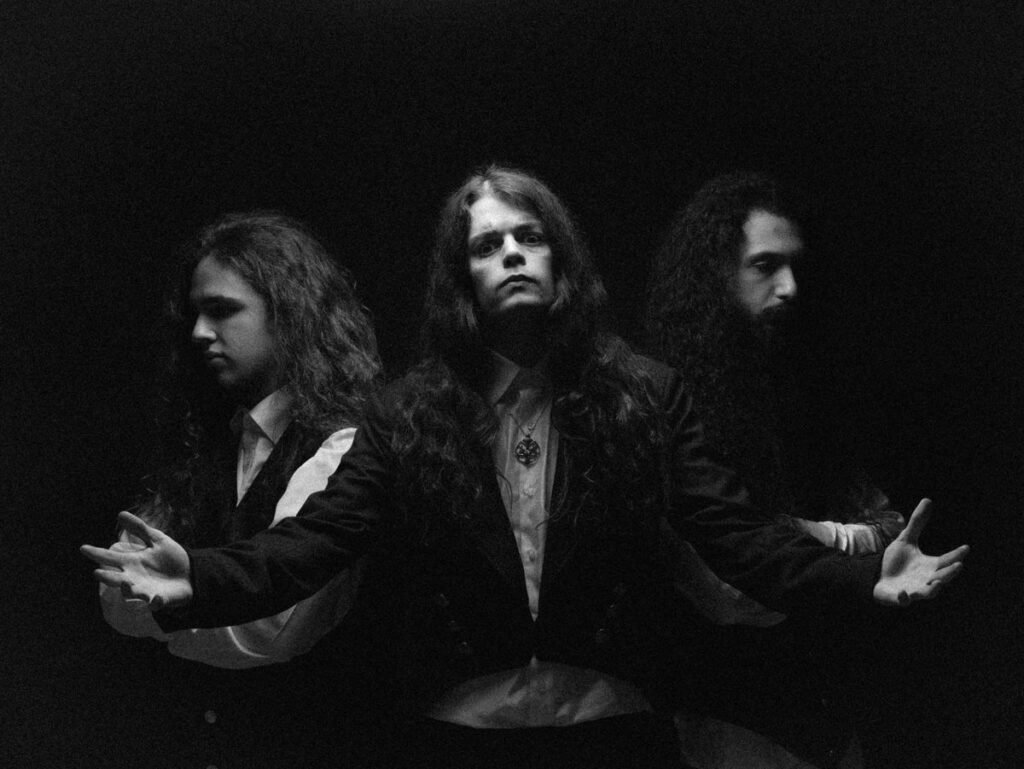
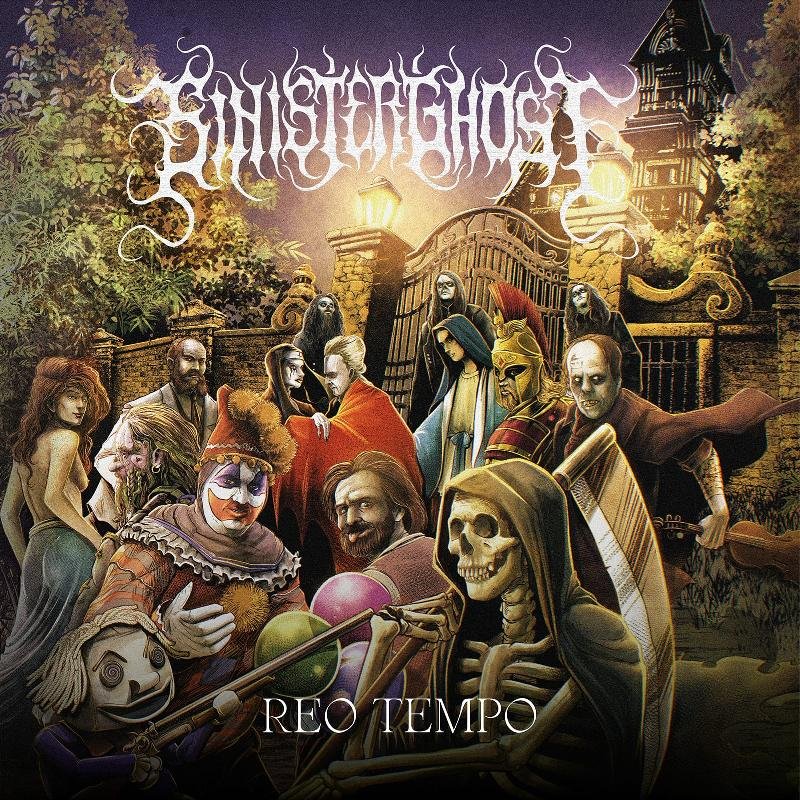
In recent years, Sinister Ghost has established itself as one of the most compelling acts in the Italian underground scene, skillfully blending emotional tension with sonic experimentation in a musical language that is both recognizable and constantly evolving. With their new EP, Reo Tempo, the band takes another step forward, not only confirming what they have already shown but also pushing the boundaries of their artistic capabilities.
Featuring Oscar Marino on Op.1 and drummer Astaroth, the record reflects on urgent issues like abortion, consumerism, and child soldier exploitation. The band takes a critical, provocative stance, blending dark, layered atmospheres with mature songwriting, so each track builds a larger narrative.
Such expressive depth merits attention, and with Reo Tempo’s release, a long conversation offered the chance to explore every aspect of the EP and the band’s future direction, as they continue to impress with coherence and renewal.
Hi guys, it’s great to chat with you again. Two years ago, we talked about your previous album, What’s Left of Human? Now we’re focusing on your latest EP. What has changed since then?
SYNUGOTH: “Our desire to make music hasn’t changed—it’s actually grown stronger. What has evolved are our abilities, knowledge, and the style of music we want to create. We’re always searching for new stimuli to shape our art. This time, we pushed in a more extreme direction while keeping the symphonic and melodic elements.”
The most immediate difference is the concept. While previous releases sometimes hinted at topical themes, this EP places them front and center. Where did this decision come from?
ASMORT: “It wasn’t really a decision—it happened naturally. I felt the need to write about things I dislike in everyday life, things we’re all inevitably exposed to. Today, society tends to hide the ‘ugly’ or, worse, ignore it entirely. People stop thinking about problems, so they remain unsolved. It’s worrying. It’s almost as if people prefer to retreat into an idealized, fake world rather than face reality. People are giving up on thinking just to feel better, to have their own opinion, even to complain. I hope this EP makes listeners engage their minds: to think, reflect, and, when possible, act.”
Moving to the technical and stylistic aspects, your working method has remained mostly the same, but there’s a noticeable increase in melodic elements. Is this purely an artistic choice, or is it meant to highlight the themes?
SYNUGOTH & AELODH: “These elements certainly help with the narrative, but it’s also a stylistic choice we really enjoy and continue to refine with each new release.”
Regarding the themes, what is the main one, and which track embodies the essence of the EP?
AELODH: “The central theme is metaphorically expressed in the EP’s title, Reo Tempo—‘guilty and evil time’—a reference to Ugo Foscolo. The title reflects the tracks’ subjects, which address different aspects of today’s societal decay, including war, human rights violations, and more. All the tracks can connect back to the opener, Who Is God Now?, a question that, just like on What’s Left of Human?, lingers after each song.”
Let’s focus on the instrumental closing of the EP. Its structure is clearly different, and it has a very introspective tone. What was the creative process behind it?
OSCAR MARINO: “I wrote Op.1 imagining it as a piano and string quartet, a nod to late 19th-century chamber music, highlighted by the waltz rhythm. What sets it apart, besides a few ‘exaggerated’ gestures, is the ending. Through dissonant harmonies and a mysterious tone, it conveys a sense of decay, as if remembering a beauty now distant and unrecognizable. I recorded the piano part myself, with Lucrezia Bussola on violin, Gabriele Scaioli on viola, and Monica Pilotti on cello.”
ASMORT: “Oscar’s imagination inspired the orchestral track—the ghost first appeared in The House of Violin on What’s Left of Human?. In this EP, Oscar returns with a prequel to his earthly life. Oscar… That Was My Name tells his own story: admired more for his looks than for his music, he was tormented enough to injure himself with a violin bow. The blood on the bandages becomes notes for Op. 1. Oscar decides to perform them in his last live concert, revealing his scarred face. That final performance would precede his retreat to the House of Violin, before an audience he found unworthy. Listening to Op.1, you hear both Oscar’s last work while alive and his first true self-respect. There’s subtle social critique here, if more hidden.”
Kill That Fetus was the lead track and generated a lot of buzz, including its video. What were your expectations before releasing it?
AELODH: “From the start, we knew Kill That Fetus would shock listeners, especially because of its highly topical and sensitive theme. It speaks both to those who want to criminalize abortion and to those affected by these laws. Musically, it has a catchy, immediate chorus that sticks in your head.”
ASMORT: “Several pro-life groups have promoted listening to a fetus’s heartbeat as a deterrent for abortion. The campaign, called ‘A Beating Heart’, gathered over 100,000 signatures. Our song is clearly provocative, starting with the title, especially with the word ‘Anti-Life.’ ”
SYNUGOTH: “Also, the heartbeat you hear around the middle of the track is real—we recorded it ourselves for authenticity and a bit of fun.”
You’ve reached your third release, and your skills are well established. Is there going to be a fourth?
SYNUGOTH: “We don’t want to repeat ourselves, but our desire to make music never stopped. Its form may evolve, but we’ll keep working behind the scenes. We are preparing to record, release, and share new material with the public. In the meantime, we hope this ‘transitional’ EP resonates worldwide. Thanks again for the interview—it’s always a pleasure. We hope to see you again, maybe this time in Canada.”
Related articles
SINISTER GHOST – Reo Tempo
5 December 2025
Sinister Ghost: Journey into Fascinating Horror
1 December 2023

Firenze Metal – Metal Blood Edition 2024
16 February 2024