Extreme is the way

Slam Death Metal: From Roots to Revolution – Part two

After its emergence, the new extreme subgenre breaks away from classic brutal death, spreading and evolving more and more.

The Birth of an Independent Subgenre

By the late ’90s, the stylistic skeleton of slam had finally taken shape. Its differences from classic brutal death metal were becoming impossible to ignore, yet it remained chained to its predecessor, a restless spirit yearning to break free. As long as only fleeting fragments haunted various songs, it couldn’t yet earn its own name—just a ghost within another’s shadow.
 
One crucial step was still missing: crystallization—the moment that would give slam its definitive form. This breakthrough occurred in Dallas, Texas, marking a clear break from the previous era. There, a band absorbed all the influence of the New York sound, made it their own, and eventually codified it into a universal sonic language. This pivotal transition signaled Slam’s transformation from fragments within songs to an emerging, independent genre.

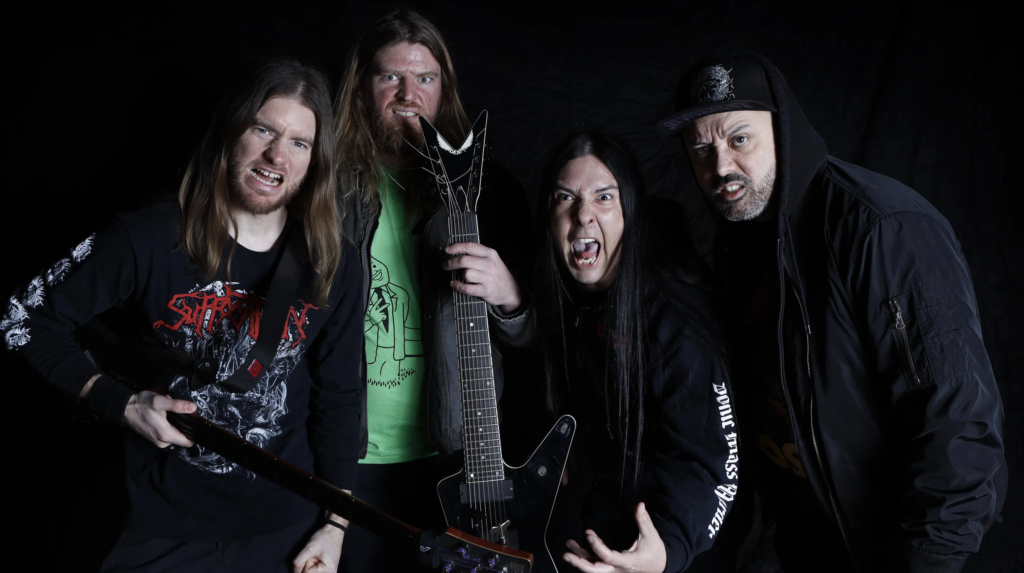
Devourment, the band that shaped slam. Devourment official website
Devourment formed in 1995 from the original core, which included Brad Fincher (drums), Braxton Henry (guitar), and vocalist Wayne Knupp. With the addition of second guitarist Kevin Clark and bassist Mike Majewski, they kept pace with contemporary bands and produced three demos. The first two kept the original lineup, while the last featured new vocalist Ruben Rosas, replacing Knupp.
 
Their tracks still bristled with furious speed and intricate chaos, but the band began to slow and thicken the riffs, simplifying guitar patterns and channeling raw, muscular energy. Toms and kicks heaved like tidal waves, shaking the ground beneath; guitars morphed into a relentless wall of sound, and the growls plunged deeper, guttural and primal. The deliberately raw production battered the senses, amplifying the brutality to a visceral, inescapable force.

Both singers were key in tracing Frank Mullen‘s growl style, which best suited the formula, but it was Rosas who gave it a heavier, more visceral imprint—turning it into a sound that felt bodily rather than lyrical. When the Texans realized their machinery was working, they delivered the first fully slam-focused album in history.
 
With Molesting the Decapitated (1999), those scattered fragments became structured: repetitive, obsessive breakdowns, minimalist yet massive riffs, and raw, direct drumming were consistently applied throughout tracks designed to unleash oppressive violence from start to finish. This album marked slam’s transition from a collection of scattered ideas to a cohesive musical identity.
 
Where Suffocation was technical, Devourment was ferocious. Where Disgorge was chaotic, they were methodical—and uncompromising. On Molesting the Decapitated, slam stopped being a mere bridge or break: it became the song’s framework, focusing solely on hitting as hard as possible.

Visual aesthetics mattered just as much. While brutal death was heavy sonically, Devourment made it explicit visually, too. The album title alone spoke volumes, but the cover sealed it: a gruesome depiction of a decapitated, nude body represented tracks with obscene titles, abandoning irony or introspection for sheer brutality.
 
From that point on, Devourment became not just a band, but the beating heart of a new subgenre. Their own chaos—arrests, breakups, raw reunions—fused legend with reality, weaving a mythos that drew in bands and fans alike. For those burned out on cold technicality, slam became a fierce sanctuary. In the sweltering southern U.S., it didn’t just become a sound—it became a way to survive.

A movement spread—quiet at first, hidden from the gaze of the major death metal labels. Slam was too wild, too rough for the sanitized sounds of Nile or Cryptopsy. But it was precisely this sense of exile that forged its power: music pulsing with underground fire, sustained by isolation, feverish passion, and basement tape-sharing rituals.

In the U.S., bands like Prophecy, Condemned, and Digested Flesh followed the Devourment model, pushing Texan brutality further—slower, denser, more monolithic. Early albums like Foretold… Foreseen (1998) and The Answer to Infection (2004) simplified song structures to near-ritual: repeated patterns, sudden pauses, groove explosions, and ever-guttural vocals.

Elsewhere, California’s Cephalotripsy, New Jersey’s Waking the Cadaver, and South Carolina’s Guttural Engorgement created new examples of visceral slam, with albums like Uterovaginal Insertion of Extirpated Anomalies (2007) defining the pure American style.

Slam was now fully born: a distinct sound, a recognizable image, and a dedicated roster of bands. However, despite these developments, the genre had not yet broken through to wider audiences, signaling the next necessary transition.
 
The early 2000s and the rise of the internet changed that. Forums like Ultimate Metal, alongside pioneering platforms like MySpace and Soulseek, enabled direct exchanges across the global underground. Slam spread through compressed files, scanned album covers, and long-distance user chats, growing organically and reaching every corner of the world.

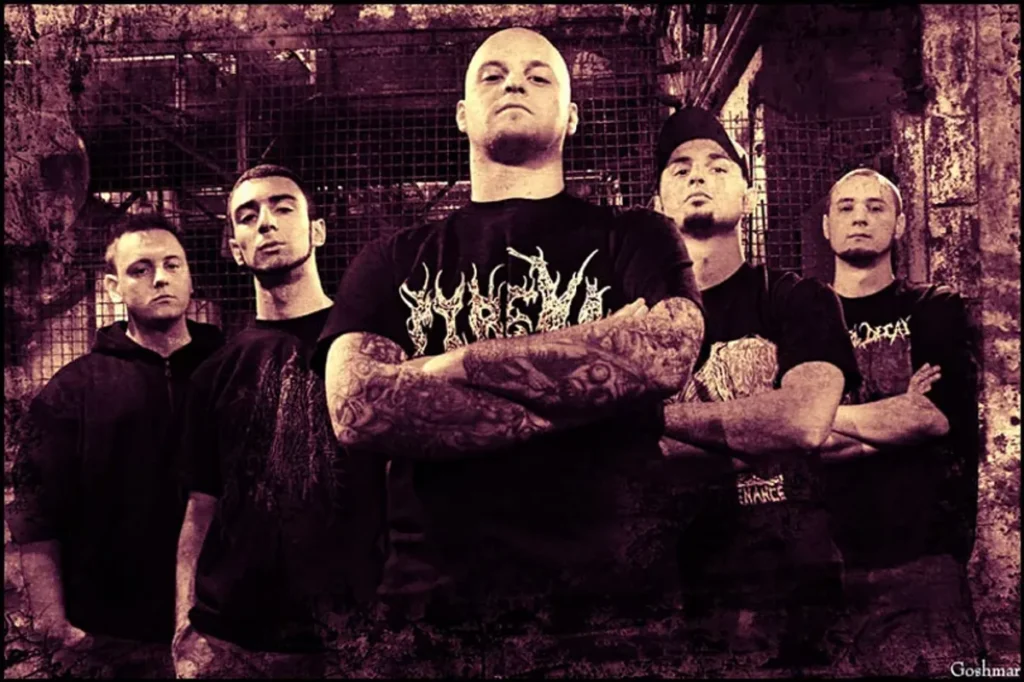
Abominable Putridity, one of the first European slam death metal bands. TV Tropes
Europe joined the movement, with Russia emerging as a new epicenter. Inspired by Devourment, bands like Abominable Putridity, Katalepsy, Guttural Decay, and Psychosurgical Intervention defined “Russian slam,” a more precise and impactful variant of the Texan sound.

Belarusian acts like Extermination Dismemberment added heaviness with efficient production and technical flair, while Estonia’s Hymenotomy contributed later on, alongside other European bands like Germany’s Chordotomy, Italy’s Vulvectomy, and Norway’s Kraanium—still considered top-tier European slam.

Asia saw its own boom. In Japan, Indonesia, the Philippines, and Malaysia, slam thrived in urban, countercultural contexts. Bands such as Down from the Wound, Viscera Infest, and Gorevent reinterpreted slam in a rawer, street-level style, with lo-fi recordings echoing the genre’s early instinctive brutality.

Globally, slam was now officially recognized. Fan bases grew, themed concerts multiplied, and the movement solidified.

Modern Evolution and Global Spread

By the 2010s, slam entered a new phase of growth. Platforms like YouTube, Bandcamp, and SoundCloud, alongside social media, gave labels and visionary channels greater visibility, helping the genre reach new heights.
 
Labels like Slam Worldwide, Comatose Music, and Pathologically Explicit Records promoted slam and related genres, connecting fans, bands, and producers worldwide and creating a global ecosystem for a style once confined to U.S. cities and small European and Asian scenes.

Comatose Music logo
Reviews, amateur live videos, and shared playlists became as powerful as physical releases, fueling an ever-growing community. Young bands emerged weekly—from Mexico, blending grindcore and traditional death influences, to Portugal and Western Europe, incorporating syncopated rhythms and hyper-technical riffs.
 
Analepsy from Lisbon exemplified this trend, adding heavy technicality to an already clean yet oppressive sound. Recently, bands have experimented with additional instruments, optimized mastering, and longer track lengths, focusing pure aggression into sections of slam, as with Fetid Bowel Infestation.

Contamination with deathcore, beatdown hardcore, and distorted industrial electronics created hybrid sounds, with tighter riffs, precise drumming, and clear, powerful production, yet still rooted in obsessive grooves and cyclical breakdowns.
 
Bands like Ingested, Vulvodynia, Acrania, and Stillbirth embody this modern stage, merging slam’s weight with contemporary precision to produce a devastating sound suitable even for major international festivals. Acts like PeelingFlesh incorporate sampling and rhythmic experimentation, integrating elements from hip-hop and EDM into the slam framework.

Debates over these evolutions persist, as digitalization and genre blending risk altering a style built to overwhelm rather than impress. Yet fundamentally, nothing has changed: slam still carries the primal, physical essence that defined it—from New York garage dust to high-quality online streams, pounding slowly and crushingly across decades and continents.
 
Today, festivals dedicated to slam continue to grow. The UK Slam Fest in Manchester and the Slamdakota Death Fest in the U.S. showcase both legends and newcomers, embodying the genre’s underground spirit with intimate yet fiercely devoted audiences.

UK Slam Fest 2023 flyer
Slam stands as the result of decades of transformation within extreme metal. Despite being a relatively recent subgenre, it has cemented its place through a clear sonic identity and a community that preserves its original spirit. Even as it hybridizes with other styles, slam never loses its core: destructive violence, obsessive groove, and dark, macabre humor.
 
After decades of evolution, slam death metal continues to reinvent itself without losing its essence—remaining true to its roots while embracing new generations and future experimentation.

Related articles

Leave a Reply

Your email address will not be published. Required fields are marked *

Share