


Adolescence and the First Steps in Music
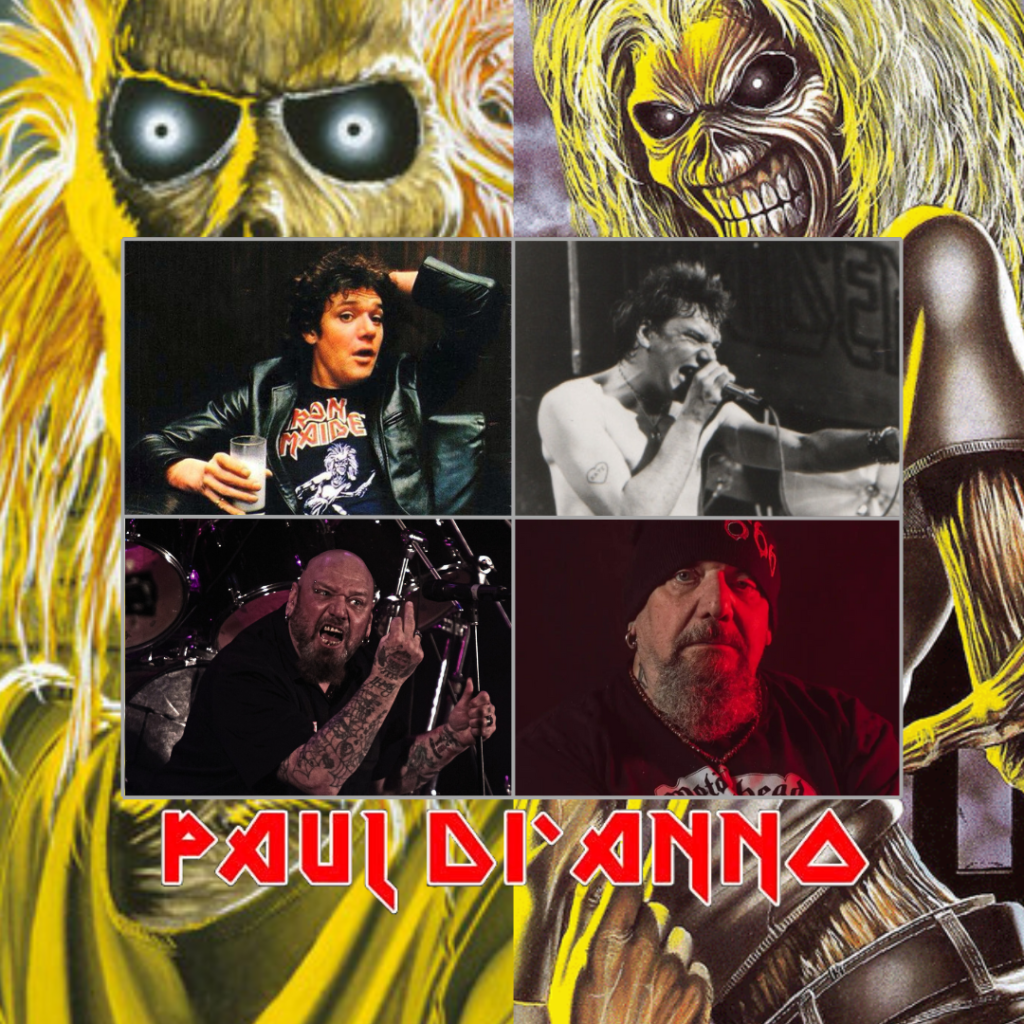
A tough look, dark curly hair, a leather jacket that never came off—and above all, an irreverent, angry, impulsive, larger-than-life personality that exuded restless energy and subtle vulnerability. The kind typical of those icons (or anti-icons) who would never want to be seen that way, yet inevitably become exactly that. That’s how Paul Di’Anno first introduced himself to the world, back when he was still a reckless kid from the outskirts of London, carrying both defiance and insecurity.
Born on May 17, 1958, Paul Andrews—his real name—grew up in Chingford, a suburb in northeast London, in a multicultural environment that was, at the same time, often described as racist. His openly acknowledged Brazilian and Italian roots didn’t help him avoid unpleasant incidents; police frequently mistreated him and his friends, many of whom were also of foreign descent. His troubled adolescence unfolded in a harsh environment that bred frustration, anger, and isolation, pushing him toward his first excesses. To make a living, he worked as a butcher on Station Road near Notting Hill, and also as a cook in several hotels and restaurants, carrying both weariness and defiance into adulthood.
Yet amid this chaotic lifestyle, another hobby kept him busy. Yes, a hobby—because at that time it still couldn’t really be called a passion. He began to enjoy punk, admired Bon Scott, and tried to follow in his footsteps, but mostly because it was a good way to impress girls and briefly boost his self-esteem. Becoming an artist wasn’t really on his mind. Others, however, noticed something deeper in his attitude and performance.
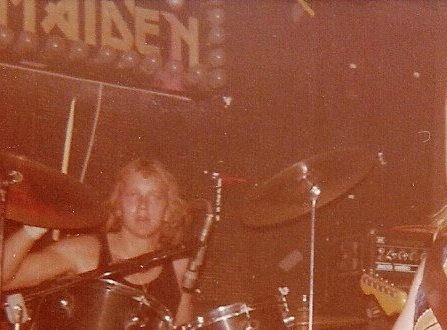
In 1978, while he was performing with the punk/rock band the Paedophiles, he caught the attention of Doug Sampson, drummer of the Smiler, who had recently joined the newly forming Iron Maiden, founded by his old friend Steve Harris. After Dennis Wilcock‘s departure, finding a singer had become a priority, so Sampson introduced Paul to the band and suggested he audition.
At the time, Paul had no particular desire to become the frontman of a band he used to mock with his friends. When he was called in for rehearsals, he showed up unconvinced and far from fully prepared, partly because of the constant drinking that filled his days. Beneath his bravado was clear ambivalence and even anxiety about pursuing something he wasn’t sure he truly wanted. But his vocal qualities impressed Harris immediately: “There’s a certain quality in Paul’s voice, a roughness—whatever you want to call it—that gave him a huge advantage.”
Those words were enough to decide who their new vocalist would be. He accepted the offer and joined the lineup. In an instant, Paul Andrews—the guy who sang as a hobby while working in hotels—became a full-time artist under the name that would make him known everywhere: Paul Di’Anno. An event that would soon prove historic.
The Years with Iron Maiden
By 1979, Iron Maiden had built a solid lineup. Alongside their newly recruited singer, they welcomed drummer Clive Burr and second guitarist Dennis Stratton, allowing them to finally record original material. Their first official releases were the demo The Soundhouse Tapes and the single Running Free. The sound stood out immediately: it wasn’t hard rock, it wasn’t punk—it was something new, faster, more direct, and more aggressive.
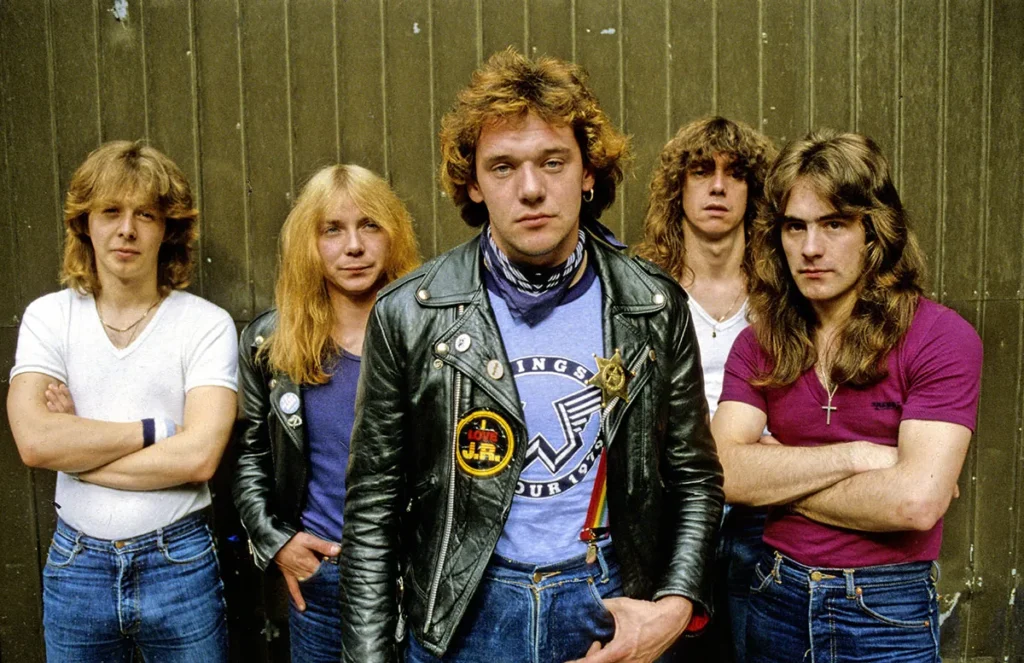
This formula exploded in 1980, a year that would become ground zero for heavy metal as we know it today, with the release of Iron Maiden‘s self-titled album. With its legendary cover introducing the first Eddie design, the band fused punk energy with classic hard rock riffs and the dynamism of progressive rock. Everything hit hard—but even more striking was Paul’s voice behind the microphone: raw, punk-tinged, yet capable of opening into more melodic, blues-styled passages. It was like an earthquake, a wave of innovation that revitalized a genre in need of evolution.
The success convinced the band to return to the studio to record a second album. If the first record was rough and aggressive, Killers, featuring new guitarist Adrian Smith, sounded sharper, more ambitious, and broader in scope. Songs like Wrathchild, Purgatory, and Murders in the Rue Morgue carried the same grit as Prowler, but even more pronounced, with Paul’s voice becoming more powerful during the higher peaks. The sound felt fresher, more intense and dynamic—qualities that would become hugely influential for the bands inspired by Maiden in the years to come.
By then, they had become the band of the decade. The NWOBHM movement’s recruits had a recognizable style, largely shaped by Iron Maiden, and everything seemed to be going perfectly. However, beneath their outward success, tensions built quietly—many fixated on Paul Di’Anno, whose impulsive energy was now mixed with self-doubt and strained relationships.
His role in the band didn’t pull him away from his bad habits. Alcohol and drug abuse became increasingly frequent, and during promotional tours, he sometimes struggled even to stand on stage. His impulsive personality only added fuel to the fire. His arrest in April 1980—far from the last—created serious problems, and his daily antics didn’t help matters. Paul became difficult to manage, pushing Harris and the rest of the band to distance themselves from him, along with conflicts involving manager Rod Smallwood.
Thus, on September 10, 1981, at Odd Fellow’s Mansion in Copenhagen, he performed his final concert with Iron Maiden. He left the band, carrying regret and resignation, without even asking for royalties, accepting only a simple severance payment.
It wasn’t an easy moment for the band. After finally finding their direction, losing a frontman like Di’Anno was a heavy blow, marked by disappointment and uncertainty. Later, however, with the arrival of Bruce Dickinson from Samson, Iron Maiden would become a global phenomenon and true professionals in every sense. An outcome that validated Steve Harris’ decision—but without diminishing the importance of the man who gave the band its first real identity, leaving a sense of both loss and gratitude.
The Projects That Followed
At that point, Paul had only two options: give up or move forward. It took a long break before he made his decision, which finally came in 1983 with the formation of Di’Anno, a hard rock band meant to relaunch his name. In 1984, they recorded a self-titled album and embarked on a tour with one strict rule: they would not play any Iron Maiden songs. At first, things seemed promising, stirring hope and cautious optimism, but both sales and attendance fell short of expectations, leading to inevitable disappointment and the band’s breakup.
After this unfortunate chapter, Di’Anno joined Gogmagog, a supergroup put together by manager Jonathan King. Among its members were two musicians connected to Iron Maiden—one from the past and one from the future: Clive Burr and Janick Gers. However, the project failed to convince him, and he left after just one EP.
Disappointment grew, but so did his determination to keep making music. In 1986, he founded Battlezone, a project that finally seemed to get things back on track. The albums Fighting Back and Children of Madness sounded fresh and original, carrying a charge similar to the work he had recorded six years earlier. But, again, there was no happy ending. Conflicting personalities, different ideas, and constant arguments undermined the band’s stability, and it dissolved after just three years.
Once again, Di’Anno found himself without a band. He tried to revive Praying Mantis—another NWOBHM act—together with former Iron Maiden guitarist Dennis Stratton, but it didn’t last. After only a year, he left. Determined to start something where he would be the main driving force, he formed another band, almost randomly named Killers. The goal was to recapture earlier glory—and for a moment, it seemed possible, infusing Paul with renewed confidence. The two heavy metal albums they released rode the wave of the era and gave Paul, now revitalized, a breath of fresh air. Everything seemed to be going well, especially when Dickinson left Iron Maiden in 1994, briefly fueling Paul‘s hopes for a comeback. But once again, events took a different turn.
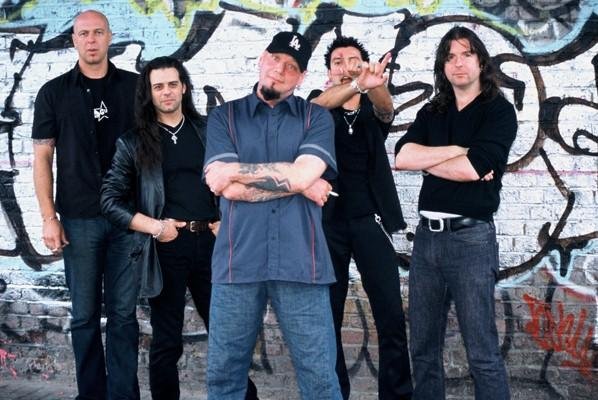
In 1997, Killers disbanded, Blaze Bayley joined Iron Maiden, and Paul was left with nothing once again. He attempted to relaunch his career with other solo releases, such as As Hard as Iron, but it wasn’t enough. His musical career stalled.
The Final Years: Arrests, Drugs, and Illness
A career full of highs and lows—like a rollercoaster—mirrored a life just as unstable, marked by a passion for women, weapons (including an illegally owned Uzi), and drugs such as cocaine and speed. These habits drained his fortune, often leaving him bankrupt, while his fiery, unpredictable personality continued to dominate his life.
In 1993, he was arrested in Los Angeles on charges of domestic violence after threatening his ex-girlfriend with a knife during an argument. Declaring him “a threat to society,” a judge sent him back to London and barred him from returning to the United States for nearly 20 years. Meanwhile, he moved to Brazil for economic and logistical reasons, where he formed Nomad and released a self-produced album aimed at the South American market. The record failed to achieve the hoped-for success, bringing the project to an end.

At the end of 2008, he relocated to southeastern Brazil and, under the nickname “Paulo Baiano,” formed a new project, Rockfellas, with three Brazilian musicians: Jean Dolabella (former Sepultura drummer), Marcão from Charlie Brown Jr., and Canisso of Raimundos, performing classic heavy metal songs.
But his health was deteriorating. He became overweight, bald, and increasingly affected by his old habits, eventually reaching a near-critical condition. In 2002, he stated that he was suffering from nerve problems in his back and received disability benefits from the British government for several years. Meanwhile, videos uploaded to YouTube showed him performing energetically on stages across Europe. Once again, Paul was arrested—this time for social security fraud amounting to more than £45,000. He served two months in prison.
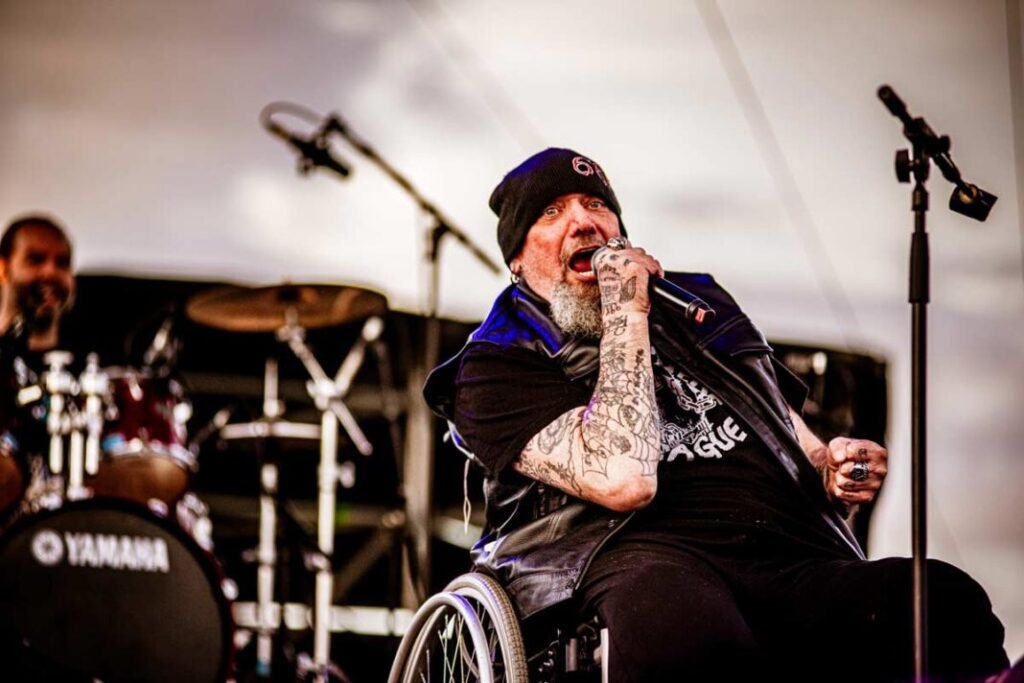
Afterward, he returned to performing around the world, but his health worsened further. In 2016, he appeared on stage in a wheelchair for the first time after the ligament in his right knee ruptured. He underwent surgery, but other complications followed—ones he chose not to reveal publicly.
In 2021, after years of complications, he launched a crowdfunding campaign to undergo another knee operation. A photo revealed how severely swollen it had become. Once the necessary funds were raised—thanks in part to support from his former Iron Maiden bandmates—he moved to Croatia, where he had surgery and continued performing with Warhorse, even managing to tour.
But it wasn’t enough to resolve his problems. They continued to grow, leading to the tragic end on October 21, 2024, when he was found dead at his home in Salisbury at the age of 66.
So who was Paul Di’Anno?
He can be described in many ways: genius, chaos, madness, excess. His constant contradictory statements—especially about his former bandmates—reflected his larger-than-life character. A pioneer of the musical genre he helped define with his voice, but also a symbol of how a person can fall from grace through their own actions, consumed by suffering. A symbol of a generation, of an imagination, of the metal music we know today.
A true legend.
Related articles
Heavy Feud: Bloodiest Rivalries in Metal History
11 October 2024
IRON MAIDEN – The Number of the Beast
22 March 2023